Data and analytics have long been central to B2B pricing. Even with traditional analytical AI continuing to drive value (though it still is yet to be fully adopted), new advances in AI are now poised to reshape how pricing decisions are executed. Pricing is moving from human-led processes supported by analytics to AI-orchestrated systems capable of using analytical insights at greater scale and consistency with human oversight.
The value of this shift is not theoretical. While these are still early days, the signs are encouraging. In one recent transformation, for example, a $15 billion B2B distributor built agentic capabilities onto its analytical AI foundations that included a price adviser and discount manager. This program delivered more than 50 basis points of margin improvement on top of the 200 basis points traditional AI already delivered before agentic AI, compressing value realization from years to weeks.
That level of promise has fueled enthusiasm for gen AI and agentic AI. Our new survey of more than 400 B2B pricing executives and decision-makers finds 65 to 85 percent of organizations expect to adopt gen AI or agentic AI in pricing over the next one to three years, up from just 10 to 30 percent today.1
If executed well, this shift could enable smarter, more precise pricing at a scale and speed that would be difficult to achieve with humans alone. Successfully driving this change has the potential to meaningfully affect a business’s profit and loss given the outsize role strong pricing practices already play. On average, a 1 percent price increase translates into an 8.7 percent increase in operating profits, assuming no loss of volume.2 This AI opportunity—propelled by customers’ own efforts developing AI for their procurement—is creating an important case for change.
Despite high aspirations, value from gen AI and agentic AI has been limited in pricing so far. Leaders will need to understand that results do not come from technology alone; results will require redesigned workflows that are optimized for humans and AI, strong data foundations, improved models, continuous investment in AI models, and effective change management. These realities should remain front of mind amid the promise of this next phase of analytical AI.
This article examines where pricing organizations stand today, what pricing leaders expect and hope to realize from adopting agentic AI, and the concrete actions required to enable a generational shift for the pricing function.
Why pricing is agentic AI’s next frontier
Analytical AI has already increased the rigor and precision of pricing, embedding data science into how decisions are informed. Yet execution remains largely human-intensive: Teams still spend significant time assembling inputs, interpreting signals, and translating recommendations into action across complex workflows.
The rapid rise of gen AI and agentic AI places pricing functions at a unique inflection point (for definitions, see sidebar “How we define AI in pricing”). The possibilities of these technologies extend beyond analytics and models, enabling the automation of complex workflow tasks, dynamic decision-making, and continuous optimization that unlock gains in both efficiency and effectiveness.
As a result, pricing is evolving from a largely human-executed analytical discipline to one powered by AI-orchestrated systems and guided by humans (Exhibit 1). Our own experience has demonstrated how AI systems can handle an increasing range of tasks, including cleaning and repairing data; ingesting customer requests for proposals; clarifying customer requests and developing response options; synthesizing market signals, customer feedback, and deal data; guiding pricing strategy; updating prices dynamically; notifying sales and customers; and even negotiating terms with customers, with clear escalation rules, human oversight, and audit trails (for more on McKinsey’s pricing capability, see sidebar “About Periscope”).
![This exhibit lists the pricing tasks gen AI and agentic AI can perform, describing the existing state and the state once the technologies have been implemented. The tasks in order are as follows: • Market and competitive intelligence evolves from teams now using dashboards or spreadsheets to compile competitor data and market feedback from public sources to AI agents monitoring competitor sites and syndicated data feeds, detecting pricing changes, and integrating insights into pricing in the future state. • Cost tracking moves from teams tracking input costs in databases (primarily sources from supply chain, ¬finance, and enterprise resource planning [ERP] systems) to AI agents continuously monitoring cost inputs and dynamically updating prices without human intervention. • List price setting moves from teams creating and maintaining price lists primarily in spreadsheets to AI agents monitoring costs, competitors, and customer data and updating list prices autonomously across regions, systems, and SKUs. • Promotion and campaign pricing evolves from teams designing promotion and campaign pricing manually using spreadsheets to AI agents launching, testing, and refi¬ning pricing autonomously across segments and channels • Configuration, quotes, and deal pricing moves from teams generating product configuration and quotes through spreadsheets with predefi¬ned rules (such as standard discount thresholds) to AI agents autonomously handling con¬figuration, quotes, and deal pricing (including contract creation). • Discount approval and governance evolves from teams tracking discounts, deal scores, and approvals in spreadsheets or emails (with some approval workflows built into con¬figuration, quote, deal pricing, and ERP systems) to AI agents governing all deals, enforcing discounting policies, routing approvals, and auto-escalating issues and exceptions. • Contract compliance moves from teams manually reviewing contracts on an ad hoc or scheduled basis to AI agents monitoring active contracts to ensure compliance and triggering penalty charges or alerts. • Last, renewals evolve from teams flagging renewal opportunities in customer relationship management platforms or spreadsheets with preset rules applied to adjust prices to AI agents autonomously generating renewal proposals, preapproving adjustments within guardrails, and sending renewal offers to customers.](/~/media/mckinsey/business%20functions/marketing%20and%20sales/our%20insights/b2b%20pricing%20navigating%20the%20next%20phase%20of%20the%20ai%20revolution/svgz_mck251203-agentic-ai-in-pricing_v6_exh1.svgz?cq=50&cpy=Center)
Human expertise will remain crucial to set strategy, configure systems, govern risk, and make high-stakes decisions. By shifting routine and analytical work to AI agents, pricing leaders can refocus scarce human skills on higher-value activities.
Intent is high, but scale is rare
While the vast majority of pricing leaders surveyed expected their organizations to adopt gen AI or agents in pricing during the next one to three years, only approximately 5 to 10 percent today have fully scaled agentic AI across any use case, while an additional 40 to 60 percent of organizations reported they are in the process of scaling.3
Current adoption patterns reveal a set of emerging maturity horizons rather than a uniform shift (Exhibit 2). The first horizon of more mature use cases in market and competitive intelligence and cost tracking are leading adoption by using existing gen AI platforms. The second horizon of midstage use cases (such as promotion pricing and configuration, quote, and deal pricing workflows) is comparatively less advanced, but it is emerging already. More governance-heavy areas, such as list price setting, discount approval, renewals, and contract compliance, remain in early development and form a third horizon. These areas often require additional safeguards to ensure compliance.
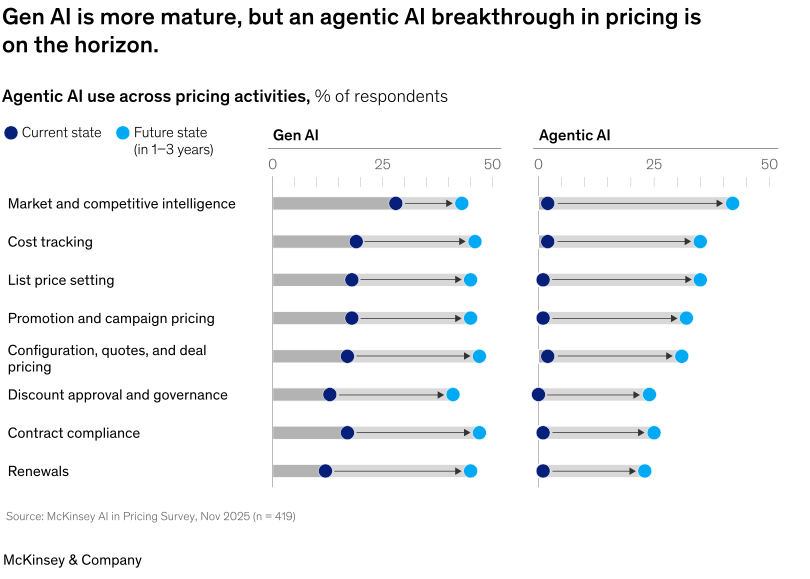
Pricing leaders expect commercial lift, not just improved productivity
Some of the optimism leaders express around the potential of AI is already being validated: Early adopters report tangible cost and productivity gains in pilots, with more than 65 percent of survey respondents expressing a moderate to high likelihood of realizing workforce efficiencies of anywhere from 10 to 30 percent (Exhibit 3).
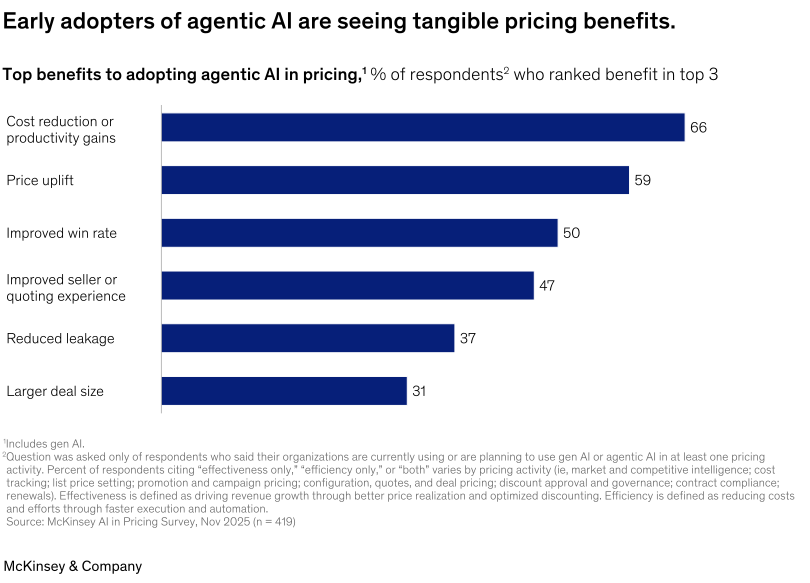
More distinctively, pricing stands out among enterprise functions for its ability to deliver both efficiency and effectiveness gains: More than 50 percent of leaders expect agentic AI to reduce effort while improving commercial outcomes. Beyond cost savings, agentic AI in pricing can directly enhance financial performance through improved realization, higher win rates, reduced leakage, and larger deal sizes—a combination few other functions can match.
Investments skew toward ‘easy to start’ use cases, with higher ROI use cases underfunded
Despite this potential, however, investment remains skewed toward easier analytical use cases such as market intelligence and cost tracking. High-impact yet governance-heavy areas such as discount approval and renewals are deprioritized when it comes to funding (Exhibit 4). That budget alignment improves productivity but not growth.
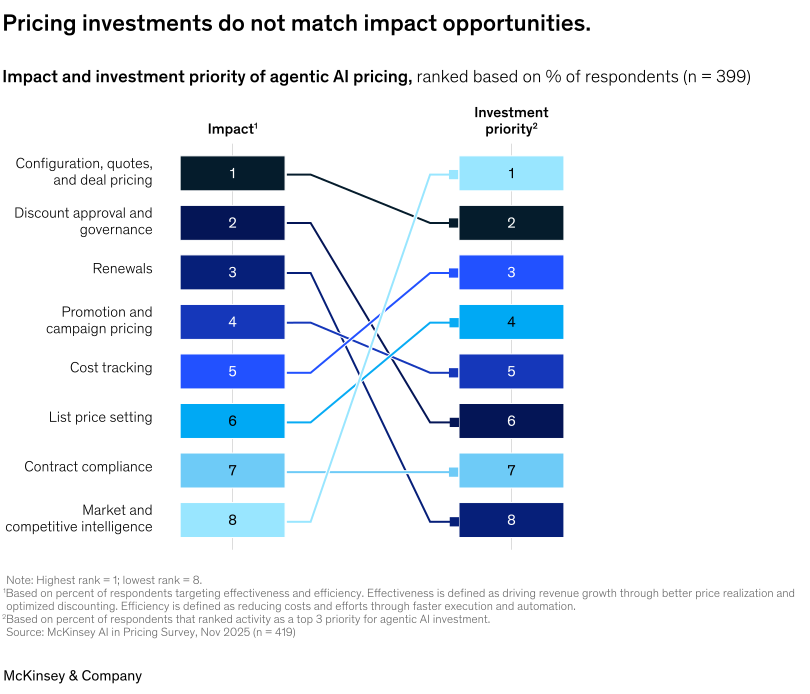
Correcting this mismatch will likely become more important. More than 55 percent of organizations plan to allocate more than 30 percent of their pricing technology budgets to agentic AI during the next one to three years, up from just 12 percent today.
Barriers to value evolve based on levels of AI maturity
More than 50 percent of respondents cited data quality and availability as well as integration complexity as the most common barriers to realizing the potential of agentic AI in pricing (Exhibit 5). More than 60 percent of early-stage respondents said they struggle with incomplete, inconsistent, or siloed data and systems, slowing implementation and hampering ROI realization.
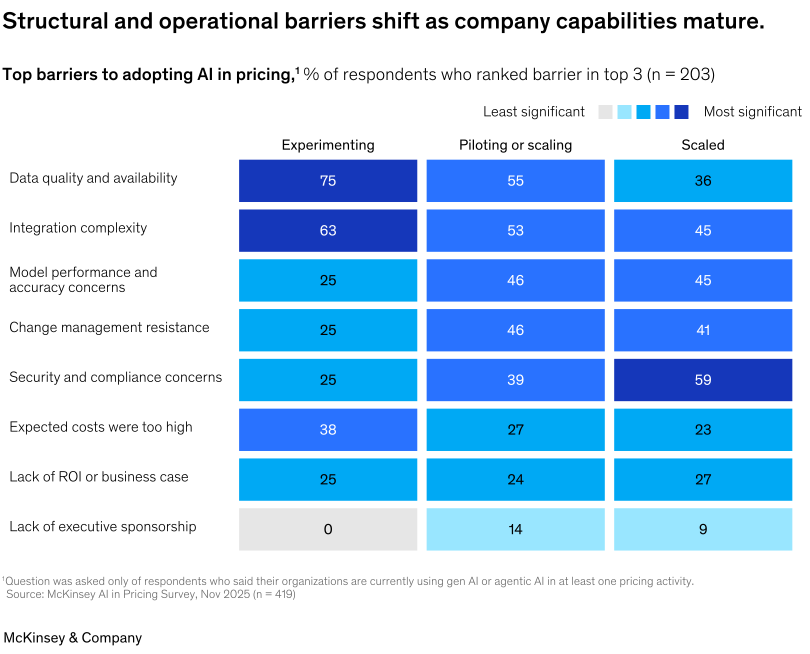
As companies move beyond experimentation, the obstacles evolve. Nearly 50 percent of firms that attempt to scale gen AI and agentic AI cite struggles with change management and accuracy as top issues. Close to 60 percent of adopters with high AI performance are most concerned with security and compliance as AI usage expands across sensitive commercial processes. And while data and integration pose smaller challenges for AI high performers than for those still scaling, change management and cultural resistance issues persist.
There are sector-specific nuances, too. Regulated industries such as financial services place greater emphasis on security and compliance, reflecting tighter data handling and audit requirements. In contrast, technology-intensive sectors report integration and change management challenges as the primary impediments to scale.
Enabling a generational shift in pricing
As the analysis of the barriers to value makes clear, capturing value from agentic AI in pricing is about much more than technology. Leaders should focus on the following four steps.
1. Establish momentum with early wins
The most effective starting point for building support is to pilot a meaningful use case that delivers rapid impact, such as more margin uplift, faster quote-to-deal cycles, or improved pricing consistency.
Select an initial use case through a clear ROI assessment, and aim for measurable impact within three to six months. The choice of pilot should be guided by data and systems maturity. Organizations with established data models and analytical AI capabilities can focus on accelerating quote turnaround or improving deal guidance where incremental integration is limited. Those with weaker data foundations may start with market intelligence or competitive analytics, which can often be deployed faster using existing platforms.
In all cases, early pilots should prioritize limited integration complexity, clear ownership, and tangible business outcomes.
2. Build solid foundations that enable scaling
The lesson of a successful pilot is not to continue to build pilots—that’s a recipe for dissipated resources and a dead end for scale. Shift the focus to strengthening foundations, including investment not only in data quality, integration, IT platforms, and governance but also in the continued advancement of pricing models themselves.
In practice, this means building robust data and infrastructure foundations, such as pricing data repositories, unified architectures, and clear compliance frameworks, while simultaneously upgrading the models that sit on top of them. Gen AI can accelerate data cleansing and integration. For example, a B2B materials distributor used AI-enabled tools to unify fragmented product data in roughly one-fifth the time previously required, improving data quality and unlocking downstream agentic pricing cases.
Scaling toward autonomous agents also requires more accurate, resilient, and explainable models capable of supporting real-time decisions, operating within guardrails, and being trustworthy. Building up these capabilities addresses concerns in AI-driven pricing decisions caused by fragmented data and insufficient model robustness. Continued investment in pricing model development, testing, and monitoring is therefore essential, not optional.
Progress need not stall while these foundations are built. A small number of high-value agentic AI use cases can advance in parallel, provided they are anchored in improving both data and pricing models.
3. Redesign processes to reach escape velocity
To move beyond isolated wins, organizations must redesign pricing processes from the ground up, treating AI agents as core rather than add-ons to human-centric workflows. The focus should be on how to redesign workflows that build on the advantages of both humans and AI agents. In practical terms, that means designing workflows based on the tasks that AI agents do best and integrating humans where and when needed, such as to approve actions and to resolve ambiguity or conflicting objectives.
Achieving this shift requires a pricing command center to achieve tight coordination across pricing, IT, finance, sales, and data science, anchored in shared objectives and agile delivery models. Some of the highest-value opportunities sit at the intersection of pricing and adjacent commercial workflows. For example, a homebuilder with a captive-lending arm created an affordability agent to create a smoother handoff in the sales-to-mortgage journey, reducing the time from purchase agreement to underwriting for buyers by an estimated 40 percent.
This integrated approach helps organizations move beyond isolated wins to reach “escape velocity” that scales impact.
4. Build the human–agentic AI system
As pricing organizations evolve, companies need to redefine roles and upgrade skills. Future pricing teams will combine existing capabilities (such as driving adoption and interpreting insights) with new ones, including supervising AI agents, setting guardrails, and governing autonomous decisions.
A practical way to guide this transition is to shift the conversation from where AI can be used to where decisions can be safely delegated.4 When decisions can be executed with clear rules, auditability, and reversibility, agentic AI can operate with greater automation at scale. Where those conditions do not yet hold, gen AI still plays a powerful role by supporting humans with faster analysis, better explanations, and improved confidence to act.
This graduated approach to autonomy helps organizations build trust, capability, and confidence over time. Humans remain firmly at the center and oversee strategy, ethics, and exceptions, while AI agents manage analytics and transaction flow within defined guardrails.
A case example
Consider a $15 billion B2B distributor that embarked on a multiyear pricing transformation: In the first phase, the company spent roughly 18 months reimagining pricing processes and deploying AI tools, including a price adviser and discount manager. These changes replaced largely manual pricing across more than 1.5 million SKUs with data-driven guidance and governance, delivering more than 200 basis points of margin improvement.
The company then layered agentic AI on top of this foundation. Within just ten weeks, a pricing copilot identified an additional approximately 50 basis points of margin opportunity by defining a new price architecture and generating real-time recommendations and explanations across hundreds of thousands of weekly price changes. Human teams reviewed and approved the changes over the following month before deployment. More than 1,000 sales consultants were equipped with not only new prices but also clear, defensible language to explain those prices in customer conversations.
The result was a total margin uplift exceeding 250 basis points, achieved through a combination of analytic rigor and agentic speed—along with a pipeline of more than 15 additional ideas for further value creation.
Agentic AI can rapidly unlock incremental value on top of strong analytical AI and data foundations, compressing value realization from years to weeks. For pricing leaders, the opportunity is no longer theoretical. The question now is how fast they choose to act.