In the aftermarket for automotive parts, pricing strategies drive significant value. However, today’s aftermarket industry is evolving rapidly, and in a recent McKinsey survey, aftermarket executives expressed that they expect a higher risk of margin compression in the years to come. This is driven in part by increasing transparency in pricing, powered by the rise of e-commerce channels and shop software that facilitates direct SKU-level price comparisons.
Players have traditionally used point solutions to tackle aftermarket-specific complexities, such as making category-level price changes or addressing low-velocity parts, a strategy that has been historically beneficial for margins. In the past few years, more-sophisticated pricing strategies have developed, enabled by new technologies such as AI and machine learning (ML). These more cohesive, holistic strategies allow for surgical SKU-level pricing, which has become increasingly essential to capture value from pricing and maintain margins.
In today’s shifting aftermarket landscape, players need to adapt as e-commerce and other digital technologies rise in prominence. This article outlines the opportunities of the new technology-powered price-setting paradigm and delves into critical aspects of setting prices through robust AI and ML processes.
Challenges to traditional aftermarket parts pricing
Traditional aftermarket parts pricing has a proven history, but a recent aftermarket executive survey indicates that 65 percent of executives see risk of margin compression in the future, up 22 percentage points from last year (Exhibit 1).1 Today’s market softening is driven by changes in consumer confidence and economic uncertainty.
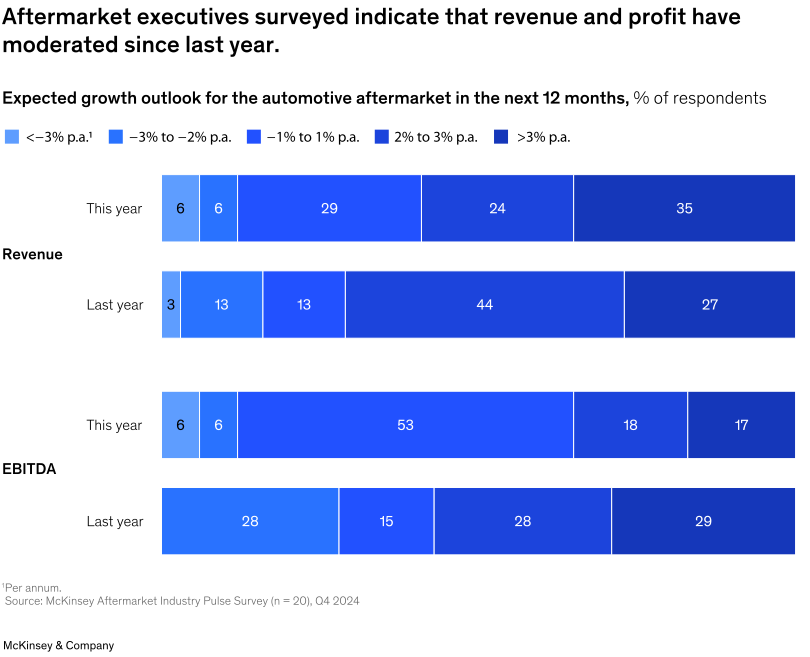
Image description: Segmented bar charts depict survey respondents’ expected growth outlooks for automotive aftermarket revenue and EBITDA in the next 12 months using survey results from last year and this year. For revenue, from last year to this year, fewer respondents (a 20 percentage-point difference) expected per annum growth of 2% to 3%, leaving about one-fourth to one-third of respondents predicting –1% to 1%, 2% to 3%, and more than 3%. For EBITDA, last year, 28% to 29% of respondents predicted per annum growth of –3% to –2%, positive 2% to 3%, or more than 3%. This year, the share of respondents predicting moderate growth ballooned by 38 percentage points, with 53% of respondents expecting growth of –1% to 1% and only 35% of respondents expecting higher growth.
Source: McKinsey Aftermarket Industry Pulse Survey (n = 20), Q4 2024
End image description
In the midst of overall softening for the automotive aftermarket, traditional pricing mechanisms are being challenged by the rise of e-commerce, AI, and ML. E-commerce channels, including shop software, have increased direct price comparison and overall pricing transparency, making outlier pricing clearer to players and customers alike. At the same time, AI has opened up possibilities for pricing. In real-world applications, these technologies have enhanced margins by 2 to 6 percent of sales while allowing players to maintain coordinated pricing strategies (for example, price ladder maintenance or competitive guardrails), according to McKinsey analysis.
These, alongside other global shifts, have put pressure on conventional pricing mechanisms; as a result, aftermarket parts players have felt pressure to adapt (see sidebar, “Global tariff policy shifts and pricing”).
A new pricing paradigm, powered by AI
Today, AI has reached a critical maturity juncture that has allowed aftermarket players to address classic aftermarket pricing problems (Exhibit 2).
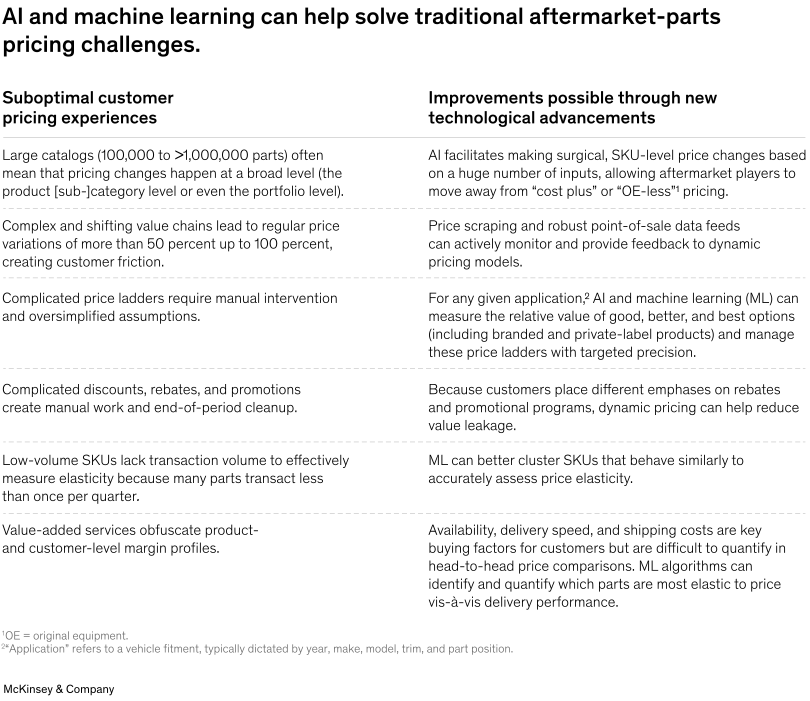
Image description: A table lists suboptimal customer pricing experiences improvements for those issues, made possible through new technological advancements. The table is as follows:
Experience: Large catalogs (100,000 to >1,000,000 parts) often mean that pricing changes happen at a broad level (the product [sub-]category level or even the portfolio level). Corresponding improvement: AI facilitates making surgical, SKU-level price changes based on a huge number of inputs, allowing aftermarket players to move away from “cost plus” or “original-equipment-less” pricing.
Experience: Complex and shifting value chains lead to regular price variations of more than 50 percent up to 100 percent, creating customer friction. Corresponding improvement: Price scraping and robust point-of-sale data feeds can actively monitor and provide feedback to dynamic pricing models.
Experience: Complicated price ladders require manual intervention and oversimplified assumptions. Corresponding improvement: For any given application, AI and machine learning (ML) can measure the relative value of good, better, and best options (including branded and private-label products) and manage these price ladders with targeted precision.
Experience: Complicated discounts, rebates, and promotions create manual work and end-of-period cleanup. Corresponding improvement: Because customers place different emphases on rebates and promotional programs, dynamic pricing can help reduce value leakage.
Experience: Low-volume SKUs lack transaction volume to effectively measure elasticity because many parts transact less than once per quarter. Corresponding improvement: ML can better cluster SKUs that behave similarly to accurately assess price elasticity.
Experience: Value-added services obfuscate product and customer-level margin profiles. Corresponding improvement: Availability, delivery speed, and shipping costs are key buying factors for customers but are difficult to quantify in head-to-head price comparisons. ML algorithms can identify and quantify which parts are most elastic to price vis-à-vis delivery performance.
End image description
Part of what makes AI so compelling is the automotive aftermarket’s rich data sources. These include vehicle registrations by zip code, consumer data, survey data, and aggregated pricing data (for example, e-commerce web scraping, dealer management systems, shop management software, and catalog providers). Historically, this data has been messy and unstructured, making it difficult to address multiple considerations analytically.
Gen AI has addressed many of these challenges (Exhibit 3). Increasingly, gen AI models can dynamically clean data at scale, enrich data frames from multiple sources, and integrate directional inputs from aftermarket pricing specialists to create new data structured by SKU and customer. This structured data can, in turn, be used to generate more-sophisticated pricing models.
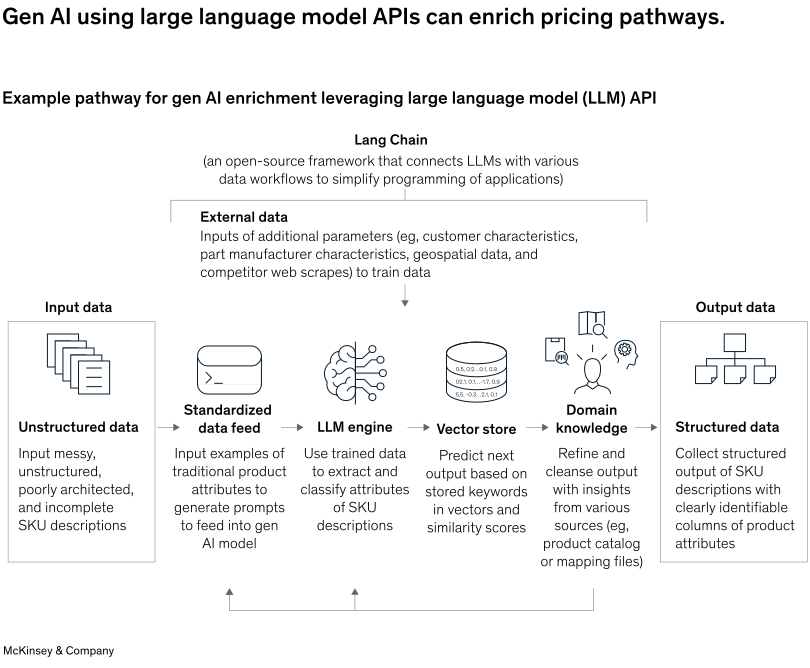
Image description: A hierarchical flowchart depicts an example pathway for gen AI enrichment leveraging large language model (LLM) API. There’s an overarching Lang Chain, an open-source framework that connects LLMs with various data workflows to simplify programming of applications. Within that Lang Chain are input data, output data, and external data. Input data is unstructured data, such as messy, unstructured, poorly architected, and incomplete SKU descriptions. This is fed into a standardized data feed, in which examples of traditional product attributes are also inputted to generate prompts to feed into the gen AI model. The model uses external data of inputs of additional parameters such as customer and manufacturer characteristics, geospatial data, and competitor web scrapes to train data. The LLM engine uses this training and the standardized data feed to extract and classify attributes of SKU descriptions. A vector store uses the model to predict the next output based on stored keywords in vectors and similarity scores. Within domain knowledge, the vector store is used to refine and cleanse output with insights from various sources such as the product catalog and mapping files. Domain knowledge can feed back into the standardized data feed and LLM engine. Last, the output data comes from the domain knowledge and is considered structured data. It collects the structured output of SKU descriptions with clearly identifiable columns of product attributes.
End image description
Given the abundance of large data sets, aftermarket is an ideal environment for applying AI and ML in pricing strategies. In fact, the benefits of doing so have already been seen in action in several ways across a number of companies—for example, clustering similar SKUs in “microsegments” to measure elasticity and defining customer segments analytically.
Clustering similar SKUs in microsegments to measure elasticity
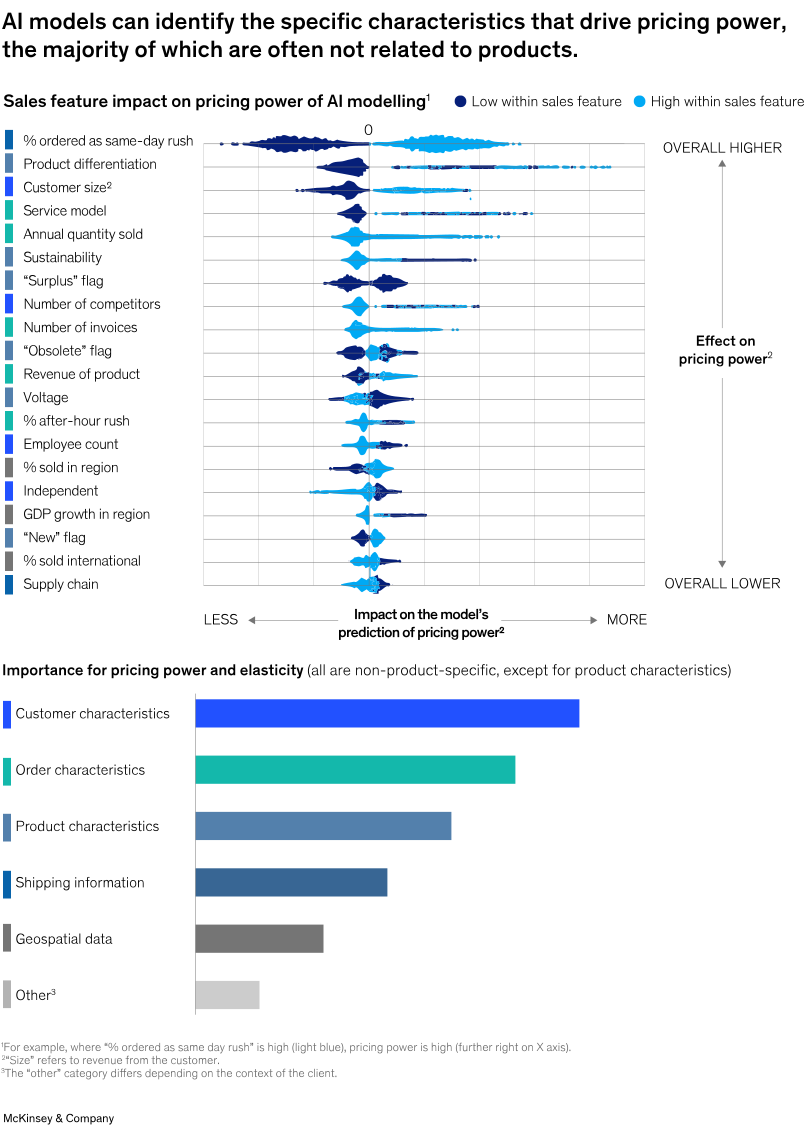
Often, pricing power and elasticity are determined by factors beyond the product itself (Exhibit 4). AI large language models (LLMs) can enrich traditional data on product hierarchies with additional parameters (for example, customer characteristics, manufacturer characteristics, and geospatial data). Deep learning (that is, ML) models can then assess the pricing power of each parameter. The result is a microsegment of SKUs with similar pricing power grouped, in part, by similarities beyond human computational capacity. Aftermarket players can use these microsegments to more accurately estimate elasticity, cutting through the noise of the market, especially in low-volume SKUs.
Defining customer segments analytically
Many discount programs, as well as sales initiatives, rely on customer segmentation. Similarly to SKU info, AI LLMs can enrich customer data (for example, purchasing behavior, demographics, customer revenue, and number of employees), and ML can cluster customers into different strategic segments. This allows for targeted discount strategies that maximize growth, margin, and even customer satisfaction.
Key aspects of pricing transformations in the era of AI
AI can power a new level of value in the automotive aftermarket, but players need to undertake pricing transformations thoughtfully. Three areas that should be addressed are how new technologies can be bridged with traditional pricing levers, the capabilities needed to successfully implement pricing transformations, and the typical steps companies need to take.
Bridging new technologies with traditional pricing levers
Aftermarket parts players need to assess how and where it could be most effective to introduce AI and ML into their pricing strategies. Notably, it’s important to understand how conventional pricing-optimization levers can be used as a bridge while AI- and ML-powered systems are implemented, given that these conventional levers are proven and can still generate significant impact.
For example, in price-setting, the common pricing lever of differentiating key value items from the long tail can continue to be useful. This can be especially applicable when ensuring low-volume parts or parts at the extremes of their life cycle (first to market or last to remain) are priced appropriately. In price execution, regularly right-sizing discounts and rebates can minimize value leakage. This can be facilitated by defining simple and clear guardrails, such as pre-approved delegations of authority, to improve sales rep agency.
Although AI is a powerful tool, conventional aftermarket pricing-optimization techniques remain essential not only to capture value but also to provide strategic guardrails to algorithms and processes as they are built.
Capabilities needed to succeed
To effectively implement an AI-led pricing transformation, companies need to build specialized capabilities. First, companies need clean internal data and a clear data hierarchy. While a unified enterprise resource planning system is not necessary, clean and well-organized data is crucial. Data cleaning can be achieved in a matter of weeks, providing a solid foundation for AI applications.
Second, companies need competitive pricing data, using increased transparency to build actionable intelligence. This data might include SKU-level interchanges across brands as well as across supplier and distributor part numbers.
Third, companies need IT integration. Especially among distributors, best-in-class organizations have advanced IT integration of all data inputs. They incorporate real-time external inputs (for example, from web scraping) and differentiate pricing based on customer browsing behaviors and localized demand signals. To reap the full benefits of IT integration, best-in-class players establish weekly or daily pricing updates with dedicated pricing software (which can be homegrown or purchased) that can assess elasticity and competitive positioning. If implemented tactically, these functional pricing processes can be stood up in months, not years.
Steps of a transformation
With these capabilities in place, companies can pursue pricing transformations that are implemented in a cross-functional way, with support from sales, IT, and senior leadership. Successful aftermarket transformations focus on all aspects of pricing and typically follow the following steps:
- See. Gather up-to-date competitive prices across channels, with the ability to compare like-for-like parts.
- Set. Set base prices by SKU via elasticity analytics, tied to category strategy, that maximize margin across channels by way of comprehensive architecture.
- Get. Tailor discount, rebate, and contract structures with differentiated pricing models based on channel partner cost-to-serve, powered by promos and minimum advertised price, aligned across channels. Success requires buy-in from sales leadership and strategic input. For OEMs and aftermarket manufacturers, it is critical to create win–win pricing structures for both dealers and customers.
- Sustain. Establish a robust tech infrastructure. This might include data lakes, clean data streams for market pricing and external data, the right pricing software, and strong training and testing approaches. Success requires early IT involvement from the first steps of defining vendor requirements.
The automotive aftermarket is increasingly dynamic. The next generation of pricing models can address new complexities, such as increasing price transparency, while helping players tackle historically challenging issues. As these new models proliferate, a new pricing environment could emerge, with success determined by how well players perform across categories, rather than on a niche basis. Embracing the AI opportunity now could change the equation for aftermarket players in the years to come.