For years, banks’ relationship managers (RMs) around the world have struggled with balky systems, weak leads, and too much admin. RMs are not nearly as effective as they and their leadership want them to be. There’s often too much wasted motion, not enough time spent with clients, and too many missed opportunities.
A solution may finally be within reach. As banks face margin pressure, slowing growth, and rising cost-to-income ratios, agentic AI represents not just a productivity tool but a new operating model for relationship management. Agentic AI—executed with intention, coordination, and focus—offers a way out of the current problems and a new way of working that can flex as needs change in the future. The early results are tantalizing. Agentic AI can lift RM productivity and growth in months—not years—when banks rewire a single frontline domain (prospecting, say) end to end. In our work, banks that do this enjoy between 3 and 15 percent higher revenues per RM and 20 to 40 percent lower cost to serve.
By now, most business leaders are familiar with the broad outlines of agentic AI. The technology moves beyond the reactive content generation of gen AI to independent action in collaboration with human users. Agents can interpret objectives, break them down into subtasks, interact with both people and systems, execute actions, adapt dynamically, and communicate in a sophisticated way with clients—all with minimal human input.
In frontline sales, the potential is vast. Agentic AI makes it possible to automate the complex workflows characteristic of financial services—something that bankers have long wanted to do but at which they have never fully succeeded. And agentic AI is beginning to go beyond that, to fundamentally reshape frontline sales by acting not just as a tool but as an adaptive partner that can sense, decide, and act in real time. Instead of waiting for humans to analyze dashboards or chase leads, agentic systems prioritize prospects, tailor outreach with context-rich messaging, and even negotiate within guardrails, all while continually learning from outcomes. This allows RMs to shift their client relationships from transactional to strategic, freeing them to focus on building trust, navigating complex deals, and crafting long-term relationships. All the while, agents hum in the background, conducting the “always-on” tasks of qualification, follow-up, and optimization.
We recently interviewed about 400 US and Canadian bankers, relationship managers, and sales leaders in several segments—retail, small business, commercial and corporate, private banking, wealth and asset management, and payments—to understand the problems confronting the front line today and the ways agentic AI can help.1 Eighty-five percent say they’re already using AI in some form, and respondents are optimistic about further applications, including agentic AI. In this article, we’ll look at challenges that chafe the front line and the AI solutions for them, examine the uses of AI that frontline teams are keenest to get right, and offer some ideas on how to get started on the journey to reimagine frontline sales with AI.
AI is good for what ails you
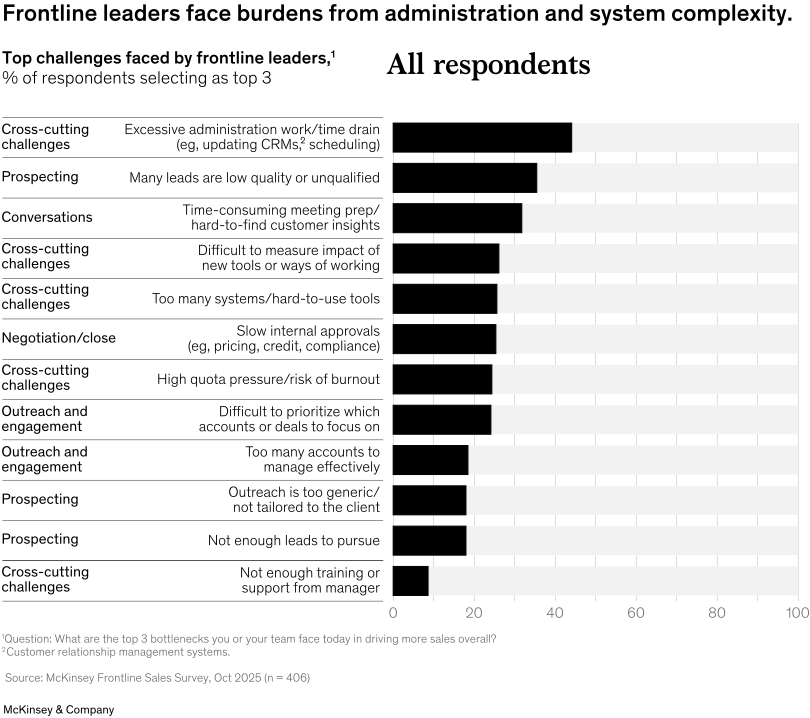
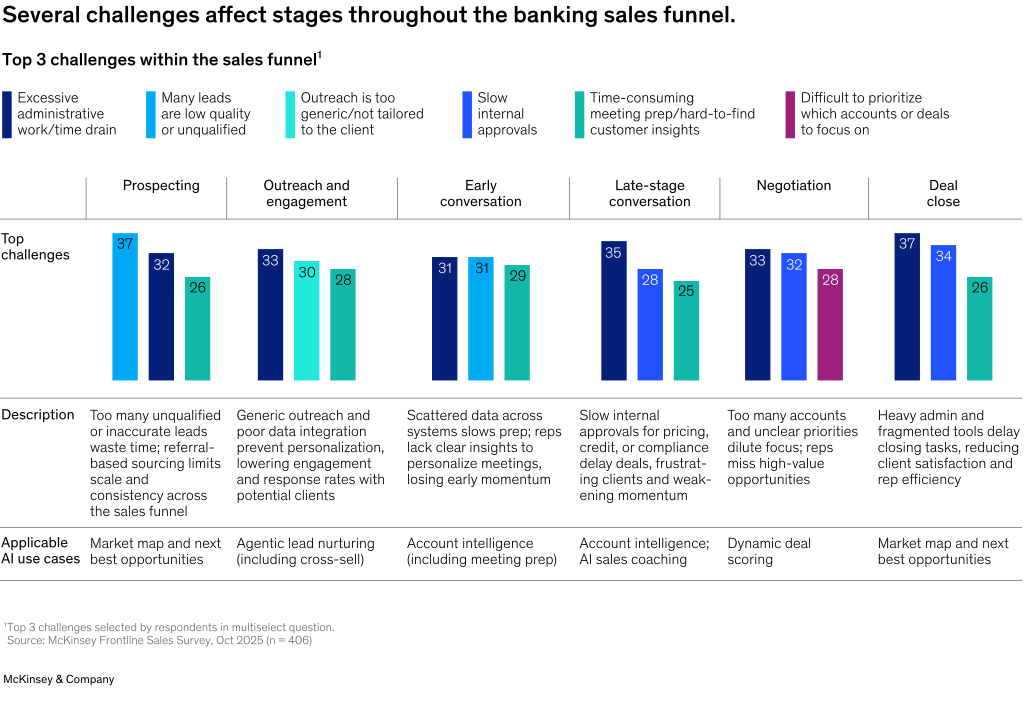
Frontline bankers are caught in a cycle that limits their effectiveness. Prospecting is inefficient, with more than half of respondents (53 percent) citing a shortage of high-quality leads as their biggest barrier (Exhibit 1). Hours are lost chasing outdated lists or prospects already claimed by competitors, leaving bankers frustrated. And good leads are sometimes squandered. One banker told us, “Preparing for client meetings means digging through old decks for one decent insight. Half the day vanishes like that.” Another problem: Administrative and compliance demands consume more time than client engagement does. Relationship managers often describe themselves as “data-entry clerks,” buried under making updates to the customer relationship management (CRM) system and other documentation when they’d rather be building relationships with clients. As a result, churn in RMs is high, ranging from 15 to 35 percent at many banks.
Across all respondents, excessive admin, low-quality leads, and difficult meeting prep were the top three challenges.
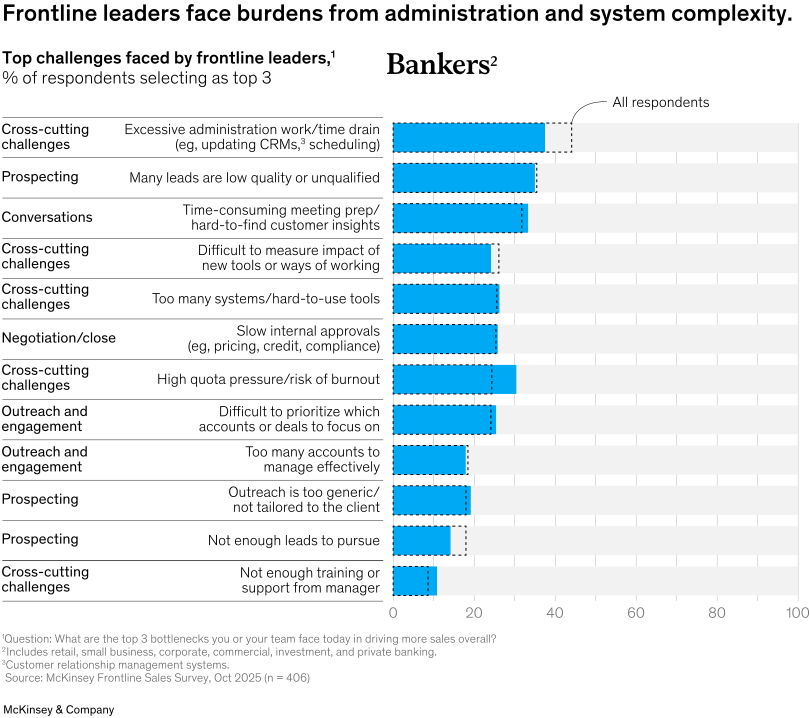
Bankers had less trouble with administrative tasks than others and more quota pressure and risk of burnout.
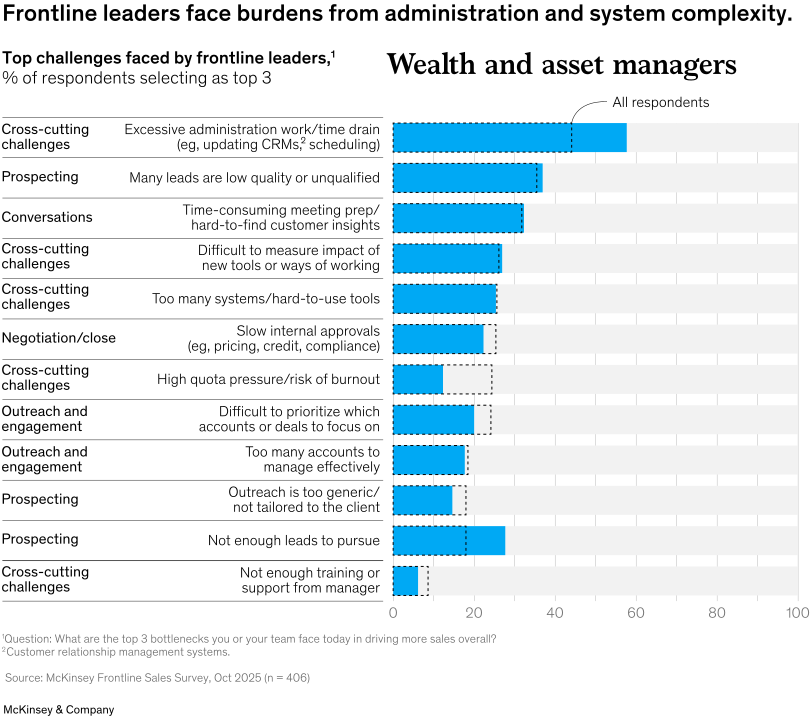
Frontline leaders at wealth and asset managers were particularly affected by excessive admin and did not feel the same quota pressure as others.
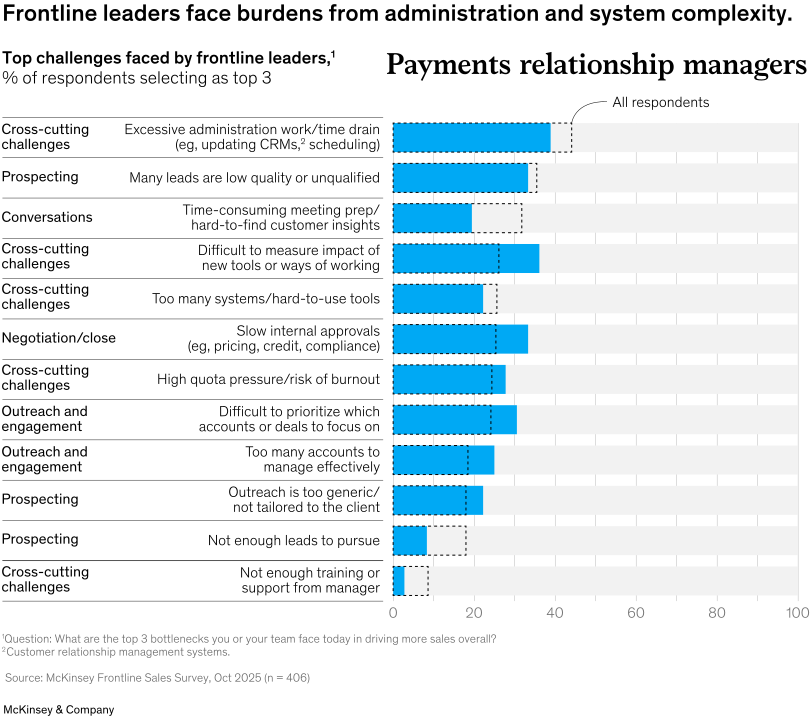
Payments RMs reported fewer problems with the top three challenges and had more trouble with issues such as slow internal approvals and too many accounts to manage effectively.
These challenges point to a distribution model overdue for reinvention—one that agentic AI is now making possible. Agentic AI can radically rebalance the distribution equation for bankers. Intelligent systems can continually scan markets, qualify prospects, and prioritize real opportunities, eliminating the wasted effort of manual prospecting. AI can also automate routine compliance and documentation tasks, reducing reliance on back-office teams and freeing bankers to focus on client conversations. We’ve seen that in many commercial banks, relationship managers spend just 25 to 30 percent of their time in client dialogue, far below RMs in top-quartile institutions. More than three quarters of the leaders we surveyed have great expectations for the technology (Exhibit 2).
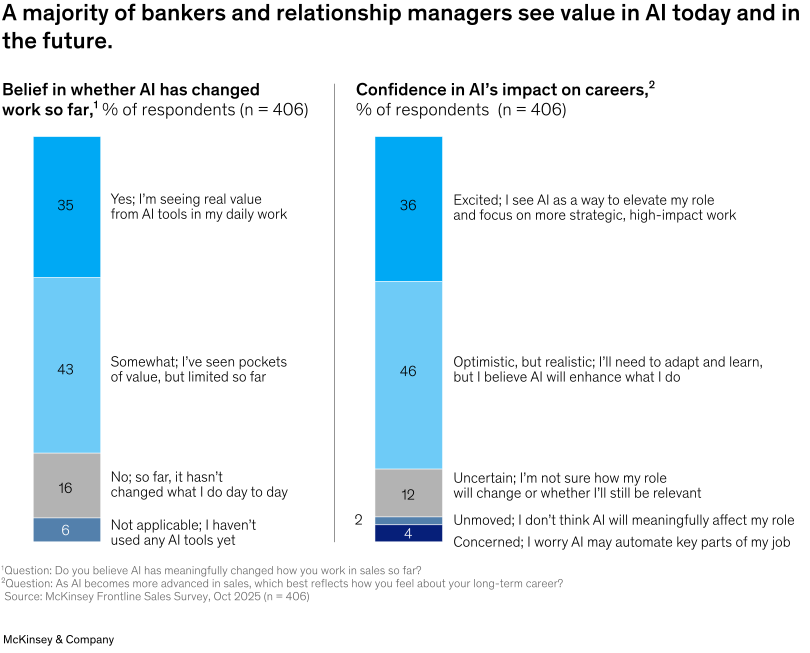
Translating these expectations into time spent, the gains will be material: ten to 12 hours a week returned to each banker, which could be used to talk with more clients, improving the coverage ratio by about 40 percent (and some bankers have told us they expect a gain of up to 120 percent)—not because bankers are stretched thinner but because they are finally working smarter.
The deeper impact lies beyond efficiency. As one senior leader told us, “The biggest value of AI is not that it saves time. It’s that it changes what my bankers do with their time.” With agents handling the routines, bankers have the chance to step into a higher-value role: trusted advisors who win through insight, empathy, and the kind of human connection that AI can never replicate. That’s the kind of job that RMs want, and if banks can make it happen, it could put an end to the plague of burnout.
Five essential uses of agentic AI
Survey respondents pinpointed five tasks where current ways of working are painful and agentic AI offers truly transformative potential (Exhibit 3).
Prospecting
Pain point: Finding new clients is slow and inefficient. Bankers rely on referrals, local insight, and incomplete data to find new clients.
How AI changes the game: Agent-powered market maps combine structured and unstructured data—from business registries to transaction patterns—to produce prioritized lists of high-potential clients. Agents continually refresh these lists, flagging new opportunities as market conditions evolve. Instead of spending hours cold-calling, bankers receive curated, ranked prospects that offer a higher chance of conversion. (Watch the video.)
Impact: In our experience, banks using AI-driven market maps report about 30 percent growth in the pipeline and 10 percent higher revenues. One commercial bank found that RMs using AI-generated lists achieved twice the conversion rate of traditional lead sources.
Lead nurturing
Pain point: Banks generate extensive lead lists, yet most prospects receive little or no follow-up. Relationship managers can’t reach every potential client, and they often drop cold leads after one or two attempts.
How AI changes the game: An agent independently nurtures leads—replying to inquiries, sending personalized content, and scheduling meetings once interest is confirmed. The agent acts as a virtual RM, engaging thousands of leads simultaneously and passing along only qualified opportunities.
Impact: Early pilots show a two- to threefold increase in qualified leads and a 5 percent boost in conversion. Bankers get to focus on warm prospects. As one wealth advisor put it, “I used to spend half my week chasing leads that went nowhere. Now, I only talk to clients who already want to meet.”
Account planning and meeting preparation
Pain point: Bankers spend hours compiling account plans, drawing from the CRM, emails, and reports. Preparing for one client meeting can take half a day, especially with complex clients.
How AI changes the game: AI agents aggregate data from multiple sources to generate account plans within minutes—complete with tailored notes, insights, and talking points. Some tools even simulate likely client questions. In one pilot, a banker received a concise briefing summarizing a client’s expansion, its key suppliers, and cross-sell opportunities—all automatically synthesized.
Impact: At some banks, preparation time fell by about 25 percent, freeing up 10 percent more time for client interactions. Beyond efficiency, bankers reported feeling more prepared and confident, leading to stronger client engagement.
Deal structuring and pricing
Pain point: Pricing decisions are inconsistent and slow, often taking days for approval. Outcomes depend heavily on bankers’ instincts rather than analytics. As one banker said, “Sometimes I discount because I’m unsure what’s fair—it’s guesswork.”
How AI changes the game: Deal-scoring agents analyze discount behaviors across RMs, customer attributes, and willingness to pay to recommend optimal pricing and discounts in real time. They streamline approvals with transparent rationales that managers and risk teams trust, accelerating decisions and enforcing pricing discipline.
Impact: Early results show that banks using AI-powered deal scoring see 10 percent margin gains and faster quote cycles. In one case, deal turnaround dropped from five days to two, the kind of speed that helps bankers close more deals with less friction.
Getting coaching
Pain point: Training is infrequent, adoption of new tools fades, and banker practices vary widely. Managers struggle to spot performance gaps, and traditional training rarely sticks.
How AI changes the game: AI coaches analyze call transcripts, highlight areas for improvement, and deliver personalized guidance. They reinforce tool adoption in real time, adapting to each banker’s style and providing increasingly targeted feedback over time.
Impact: Early deployments lifted customer satisfaction scores by seven percentage points and helped new bankers ramp up 20 percent faster. Managers noted that AI coaching freed them to focus on higher-value mentoring instead of routine reviews. At one North American bank, AI-based coaching helped team leaders identify top-performing call behaviors that then were replicated across branches.
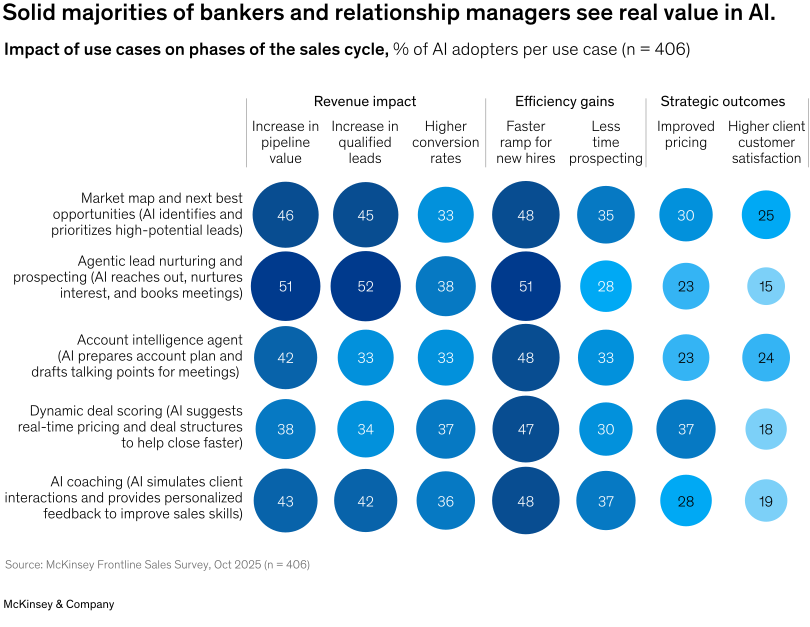
Exhibit 4 summarizes the impact that bankers are reporting from the agents mentioned above.
Realizing the value
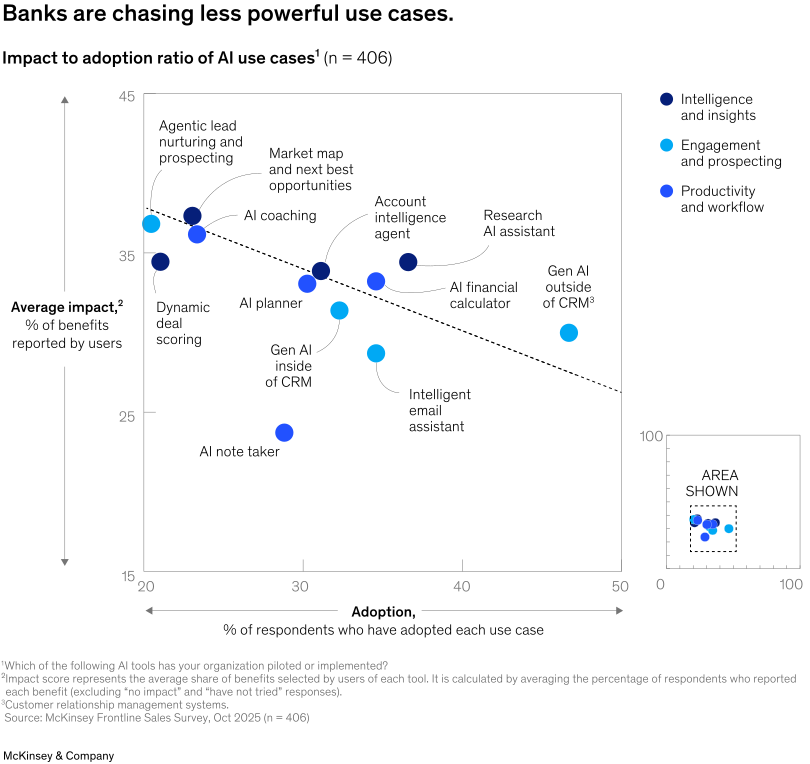
The momentum to embed agentic AI is already strong and still growing. But a critical finding from our research is that banks are moving fastest on the least valuable tools (Exhibit 5).
There’s a better way. Capturing the value from agentic AI requires a fundamental shift in the way banks should go after the opportunities. Banks that capture the full value of agentic AI take a disciplined approach grounded in five principles:
- Clearly define the business model and value creation thesis. Leading banks are intentional about which use cases to lead versus those to follow and about the impact they expect through frontline productivity gains, net asset growth, customer experience improvements, and strategic distance in the marketplace.
- Reimagine the operating model for frontline domains end to end. Forward-thinking banks don’t just complement existing processes with agentic AI. They reimagine entire workflows, create proofs of value that demonstrate feasibility, and establish a repeatable playbook for scaling the processes. Because agentic works across departments, leading banks rethink organizational boundaries and put in place new human–agent collaboration models.
- Create reusable technology capabilities, including a data foundation. Three capabilities are common at leading banks, starting with an agentic AI mesh—a composable, distributed orchestration layer that lets agents reason, collaborate, and act independently across customer interactions, notes, tasks, emails, and language models. A second is data: These banks build the “ontology” that captures the bank’s workflows, decisions, and knowledge and use it as the foundation for agents’ work. The third is trust and security. Agentic AI raises the bar for data privacy, so banks must prioritize end-to-end encryption.
- Develop governance guardrails for resilience. Banks need to put in place robust governance frameworks to manage risks, ensure compliance, and maintain operational resilience as agentic scales. This includes defining agent autonomy levels (for example, setting limits on agents’ credit increase decisions and the level of integration of the human in the loop), monitoring protocols, and creating audit mechanisms.
- Upskill the workforce. One of the common gaps in achieving the potential of agentic AI is management bandwidth to reimagine roles and deliver the reskilling needed for today’s RMs to collaborate with agents. This includes both technical skills and new ways of working. As bankers gain more capacity, they can focus on delivering differentiated insights and orchestrating expertise across the bank to serve clients better. Over time, leading banks are adjusting their hiring approach, career progression, and employee value proposition. New roles are emerging, such as business engineers and agent orchestrators. Core roles such as RMs, branch managers, and client advisors are fundamentally changing. As the people in these roles free up their capacity, there will be a greater focus on providing more—and better—insights to clients and on orchestrating across their organizations to bring the best of their capabilities to clients.
The feelings of freedom expressed by our survey respondents were palpable. One said, “AI lets us spend more time on what matters most—building relationships and closing.”
Another said AI “frees our teams to focus on strategic selling and deeper client engagement.” It’s clear that AI is making a difference for these leaders and their institutions. For banks on the sidelines, moving now is fast becoming an imperative. A 30 percent uplift in revenue is too material to ignore.