The past two years have seen strong performance in corporate and investment banking (CIB), with players benefiting from rising revenues and returns on equity that are comfortably above the cost of capital. However, three trends threaten to upend the industry: macroeconomic and geopolitical volatility and uncertainty; the rise of attacker firms challenging traditional CIBs in some of their most profitable business lines; and changes at the digital frontier as agentic AI and digital assets gain ground.
In our annual CIB report, we examine these trends and lay out a four-part playbook anchored on strategic agility. The playbook includes ways to respond to the immediate uncertainty, create a lean and scalable operating model that gives flexibility across different scenarios, get ahead of the ongoing transformation of the financing and credit business—including the rise of private credit—and move the AI agenda from pilot projects to impact at scale.
We conclude with an estimate showing that employing the full set of levers could improve profitability versus the current baseline by 20 to 30 percent before the impact of macroeconomic factors and before investment costs for a representative and more commercially oriented firm.
CIB today: Solid economics, but what comes next?
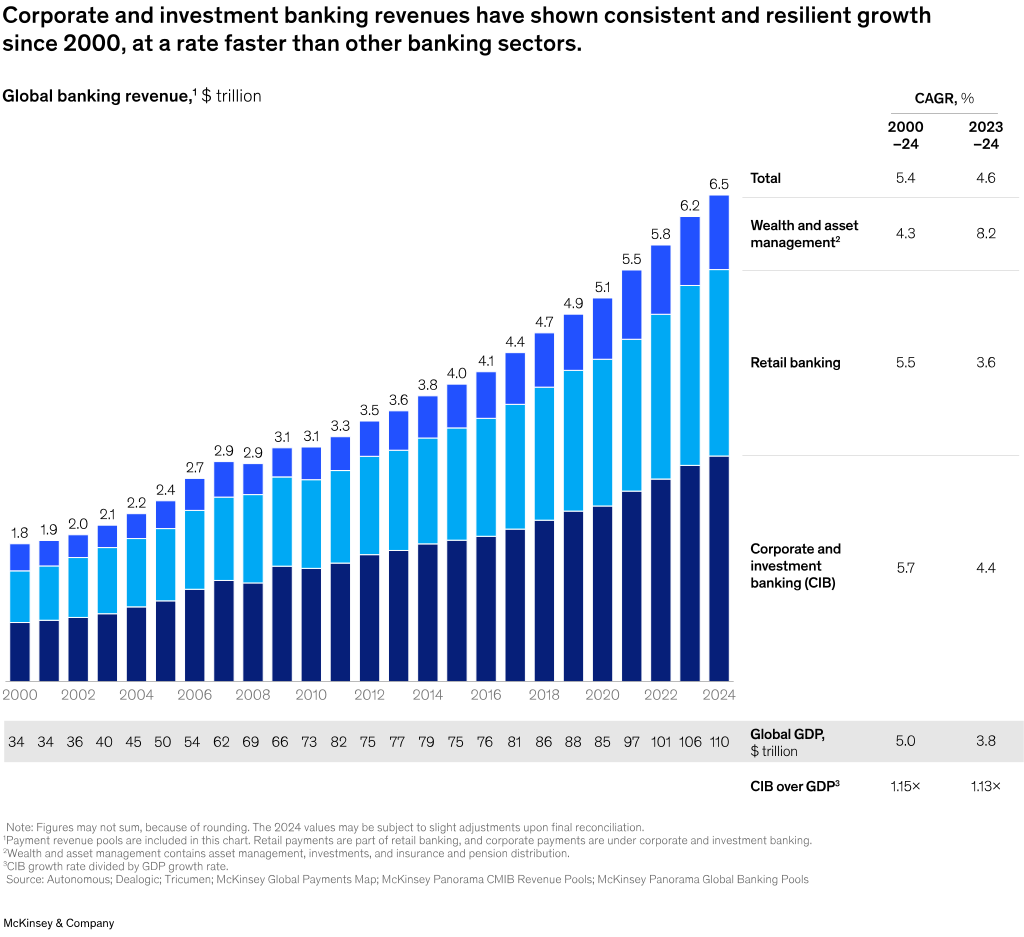
CIB revenues reached $3.0 trillion in 2024, with year-over-year revenue growth of 4.4 percent, slightly lower than long-term average growth. ROE for the industry averaged above 13 percent, comfortably higher than the cost of capital, though with a persistent spread between top and bottom performers within individual segments.
CIB revenues represented 46.0 percent of the global banking revenue pool in 2024, having grown at 5.7 percent per annum since 2000, ahead of other banking subsectors. This result in the face of multiple challenges over the past two decades reflects the sector’s tight link to the real economy (Exhibit 1).
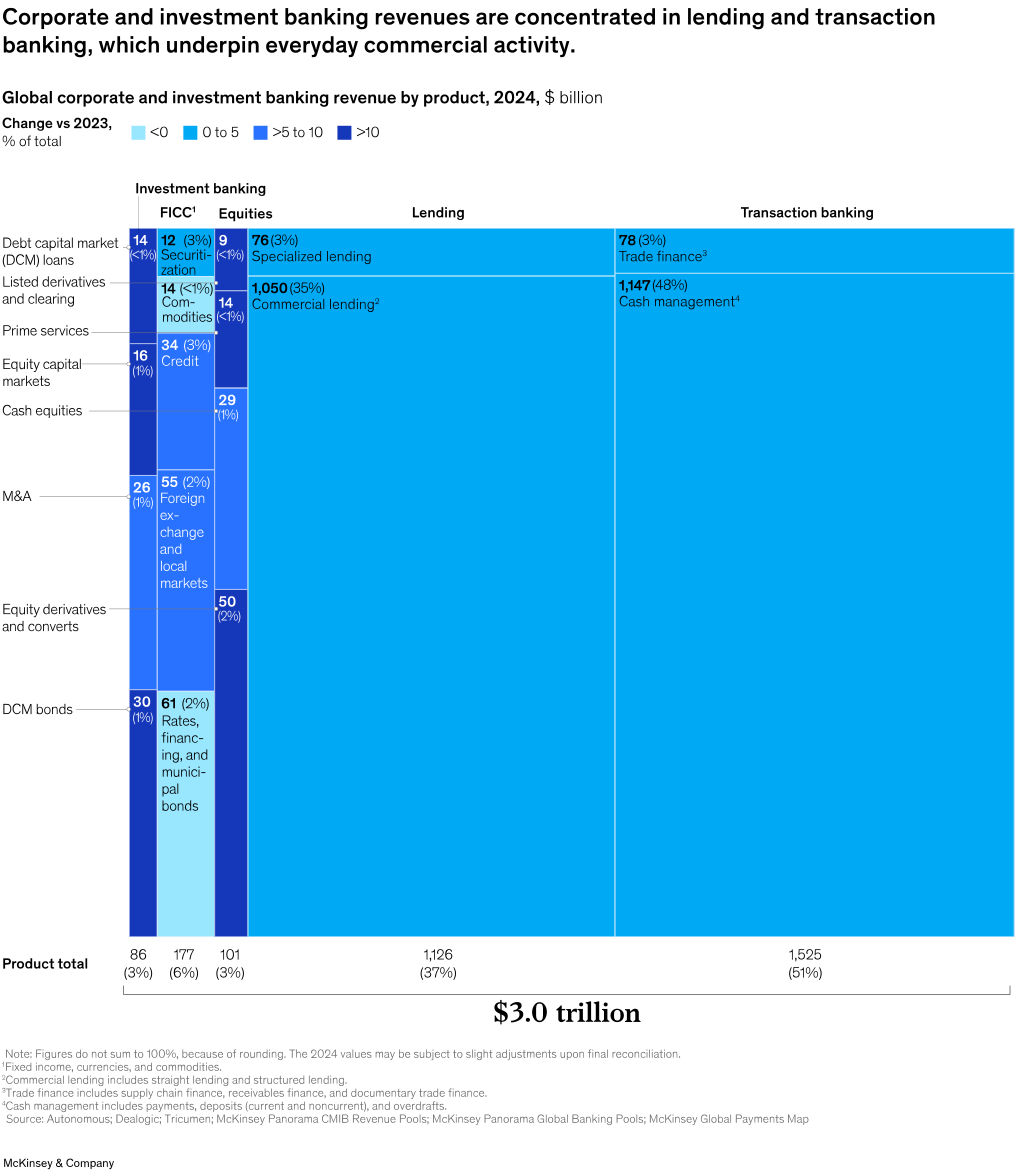
Core commercial lending and cash management—products underpinning GDP growth—accounted for more than 85 percent of CIB revenues in 2024, supported by the high-interest-rate environment. More-complex and volatile products, such as specialized lending, investment banking, and sales and trading, accounted for less than 15 percent (Exhibit 2).
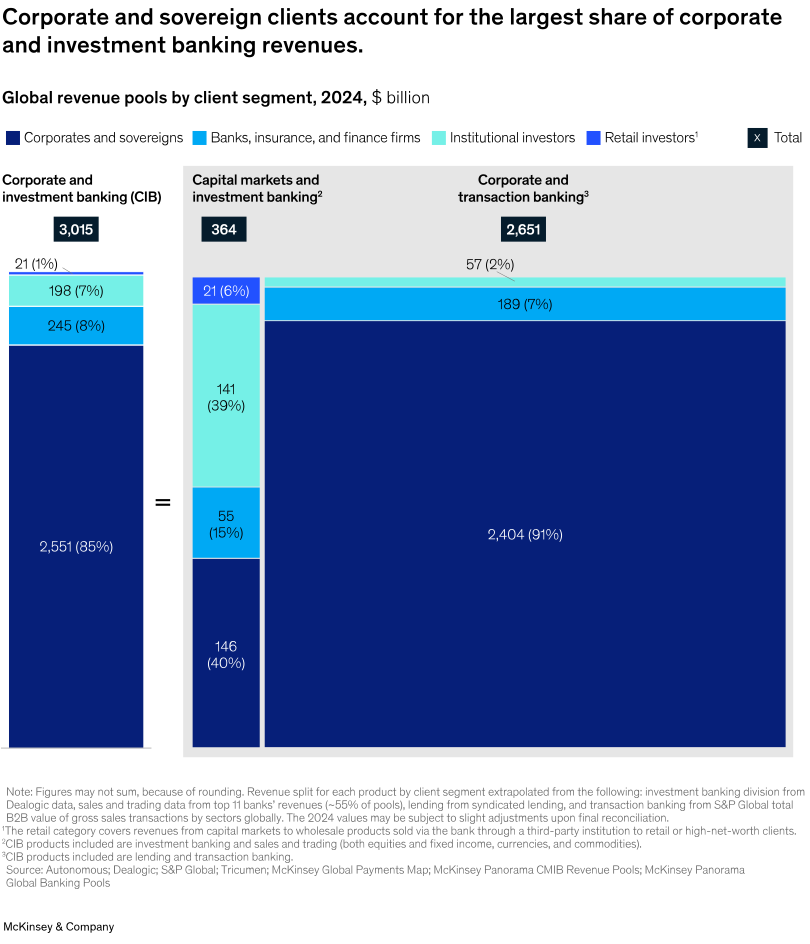
Among clients, corporate and sovereign clients drove 85 percent of CIB revenues and 91 percent of corporate and transaction banking (CTB) revenues in 2024. Banks, insurance companies, finance organizations, and investors with more market- and trading-driven needs accounted for the remaining 15 percent of CIB revenues (Exhibit 3).
Finally, CIB revenues are split geographically, with 31 percent in the Americas; 26 percent in Europe, the Middle East, and Africa (EMEA); and the remaining 43 percent in the Asia–Pacific (APAC) region, where China continues to be the largest geography by far but is not easily accessible for many foreign banks. The Americas and EMEA saw faster-than-average growth; APAC came in lower, largely due to slower growth in China.
CIB organizations achieve varying profitability
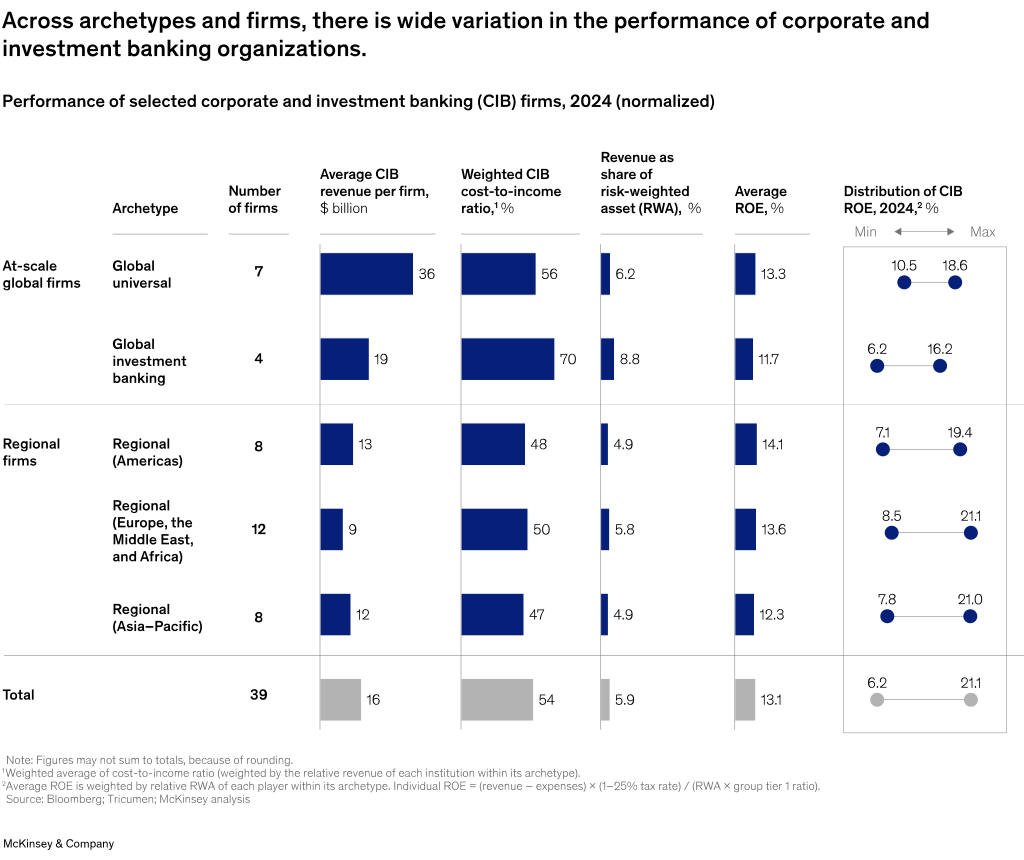
In 2024, the CIB organizations in our sample1 achieved an average ROE of 13.1 percent, with an average cost-to-income ratio of 54.0 percent. In doing so, they easily covered their cost of equity, estimated at about 10 percent (Exhibit 4).
This strong performance carried into the first three quarters of 2025. Lending and cash management continue to perform well, partly driven by still-high interest rates. While there are emerging signs of credit challenges, including some recent high-profile bankruptcies, these appear to be contained at least for now. Increased geopolitical and macroeconomic volatility is supporting a positive sales and trading environment on the institutional side. Investment banking has also continued to regain momentum, with deal volumes picking up and private equity players again deploying capital.
Overall, CIB units continue to deliver returns above the cost of equity and are accretive to group performance. Their success stems from depth and density as banks achieve local scale in specific products, client segments, or regions.
Three major industry-shaping themes
We expect the CIB environment to change dramatically. Three themes loom large.
Theme 1: Coping with geopolitical volatility
Geopolitics has emerged as a significant driver of market volatility over the past year. A wide range of structural and longer-lasting drivers is at play. These include demographics, income distribution, technological change, disruption of multiple industries, and heightened focus on national security, among others.
One implication for CIB players is to brace for a potential slowdown in growth while managing the resulting effects on rates and inflation.
A second implication relates to the fundamental shifts in underlying economics of sectors and geographies. Examples include slower growth in the China–US trade corridor and a growing emphasis on defense, infrastructure, and energy.
A third implication relates to the longer-term changes likely in the loans and capital market assets CIBs hold and the end customers they serve. Potential shifts include greater international diversification, which could take the form of global corporations and investors diversifying their asset holdings across currencies and geographies, or a broader “risk diversification” posture, which entails a reallocation out of speculative assets such as high-growth equities and sub-investment-grade credit and into comparatively safer assets. A third possible shift would be a gradual potential East–West separation, which would compel banks to prioritize specific regions of the world, with ripple effects on business lines such as trade finance. To respond to these shifts, CIBs need to rethink their footprint and integrate geopolitical implications and scenarios into their planning and resource allocation.
Theme 2: The attackers are here to stay and achieving CIB-level scale
The increasing scale of specialized attacker firms that challenge traditional CIBs with more-universal models is a second major development. These firms typically concentrate on one or two high-margin areas in which they build deep expertise, achieve scale, and deliver exceptional value. By competing head-on and gaining traction in these higher-margin products, the attackers may leave CIBs focused on products that are more capital-intensive and less profitable.
We see four sets of attackers. First are independent investment banks. These focus primarily on M&A, equity capital markets, debt capital markets advisory, private capital advisory, restructuring, and other capital-light activities. The largest of these firms, once considered boutiques, now command market capitalizations exceeding $10 billion and trade at price-to-earnings multiples greater than 20 times.
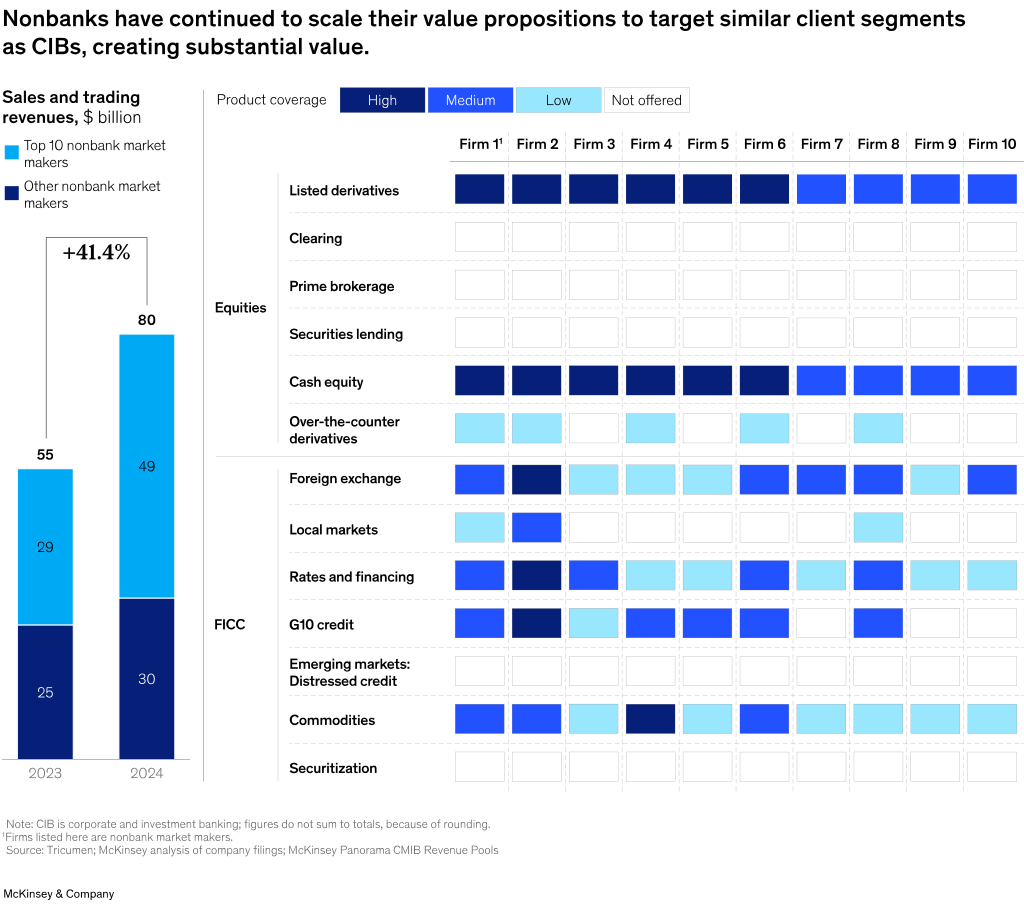
Second are nonbank market makers, which are already a viable alternative to the traditional sell-side investment banks in several products including cash equities, foreign exchange (FX), futures, exchange-traded funds (ETFs), interest rate swaps, government bonds, and, increasingly, corporate bonds. The largest of these firms generate revenues of about $10 billion to $20 billion annually, according to our research (Exhibit 5). Now, they are focused on the next frontier for growth. This could involve further geographical expansion; expanding into less-liquid products such as to-be-announced mortgages, less-liquid bonds and loans; or emerging products, including cryptocurrencies and digital assets.
Third are private credit firms. McKinsey research suggests that private credit has grown into a $2 trillion global asset class based on managed assets by 2023, with perhaps a similar quantum in separately managed accounts and direct investments. Private credit currently finances more than 80 percent of middle market sponsored deals, substantially disintermediating banks. Private credit firms have now turned their attention to the $30 trillion market in US loan balances across a broad range of segments, including asset-based finance, real estate, infrastructure, and other areas. While aggregate exposure by institutional investors to private credit still remains small at the time of writing (often less than 3 to 5 percent of assets), banks should carefully monitor their overall exposure to these firms and the quality of their portfolios.
Fourth are FX and payments specialists. These firms compete based on competitive pricing, convenience and ease of use, and speed. Industry statistics suggest that they have gained material share, accounting for 15 or more percent of cross-border payments and FX flows.
Theme 3: Dramatic changes at the digital frontier
While gen AI pilots dominated conversations throughout 2023 and early 2024, attention has now shifted to the emergence of agentic AI—autonomous agents capable of executing complex, multistep workflows with minimal human intervention. This latest tech transformation has changed the focus from marginal efficiency gains to a fundamental reset of how work is organized and gets done. The rise of agentic AI is paving the way for an entirely new organizational paradigm, one in which teams of interoperable AI agents are deployed across a range of banking areas, including not only front-office coverage but also middle- and back-office transaction processing, onboarding, settlements, surveillance, portfolio optimization, and more. For example, for transaction banking and treasury, monthly or daily workflows could become continuous, as AI agents monitor balances and exposures across accounts, currencies, and rails, and then execute sweep, hedge, and settle in real time.
In parallel to the rise of agentic AI, stablecoins are moving into the payments core on the back of clearer rules in major markets, more mature infrastructure, and visible institutional pilots. Stablecoin circulation has more than doubled in 18 months to exceed $300 billion; on‑chain transactions now average $20 billion to $30 billion per day and topped $27 trillion in 2024, a very rapid rate of growth. For CIBs, the strategic question is where in the stack to take a position, for example by issuing tokenized deposits for intragroup and client settlement or joining a stablecoin consortium.
A playbook for strategic agility
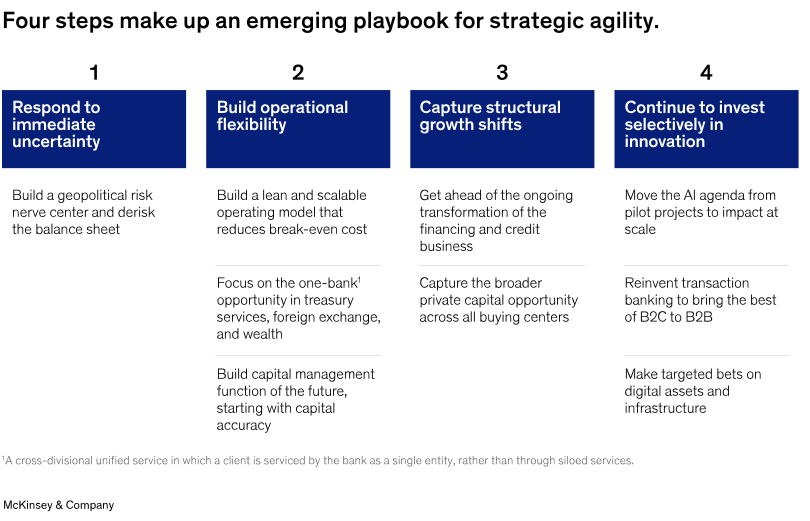
CIB leaders can equip themselves to navigate the unpredictable nature of the world by focusing on four dimensions of strategic agility: responding to the immediate uncertainty, building operational flexibility, capitalizing on structural shifts that cannot be ignored to drive long-term growth and resilience, and continuing to invest selectively in innovation (Exhibit 6).
Responding to the immediate uncertainty
McKinsey analysis suggests that there are ten distinct geopolitical elements that demand attention. What can CIBs do to manage this uncertainty across multiple and very different forward-looking scenarios?
The immediate task for leadership is not to track all ten equally. Rather, it is to surgically identify the four or five elements that matter most for their franchise based on sectoral and client exposure. An initial focus for CIBs could be on ensuring organizational readiness. One way to do this would be to establish or build on an existing “nerve center” that monitors country actions, sector and customer activities, and any required shifts to models.
A second step is to shift to continually identifying differential impact from geopolitics on sectors and firms and set the actions to be taken. This could include identifying immediate new product needs or assessing elevated risk exposures by segment or sub-businesses.
The final step is to identify “no regret” moves to manage uncertainty while preparing for the long term. These include enabling frontline staff to have informed discussions, reconsidering their client offerings amid ongoing volatility (for example, expand working capital lines of credit), and refreshing the current strategy given scenarios.
In short, CIBs need to rethink their footprint and integrate geopolitical implications and scenarios into their planning and resource allocation. The winners will be those who treat geopolitics not just as a risk to manage but also as a catalyst to redefine where and how they compete.
Building operational flexibility
We see three areas of focus that can improve operational flexibility.
Building a lean and scalable operating model. Achieving the lowest possible cost-to-income ratio gives firms the financial cushion to weather substantial revenue declines; very healthy firms are at 50 percent.
For many firms, we find that adopting a radical simplification strategy, inspired by a private equity–style management transformation, proves to be the most effective. This includes, first, a governance structure with strong top-down sponsorship, dedicated leaders, and ambitious targets; second, an initial diligence and bottom-up planning phase that quickly creates a bankable plan of initiatives that are calibrated, sequenced, and consistent; third, a weekly delivery cadence supported by a single source of truth for tracking and finance processes that easily reconcile the impact of the program into overall financials; fourth, investment in a winning culture to drive and sustain change; and fifth, a one-bank approach that cuts across businesses and silos.
We consistently see this approach drive savings of 20 percent or more in the near term on the addressable cost baseline, often well beyond what CIB leaders thought was initially possible.
Focusing on the one-bank opportunity. Nearly every CIB has set “one bank” as a strategic priority—and for good reason. The biggest wins lie at the intersection of business lines, namely between transaction banking and lending, enterprise-wide FX, and synergies between commercial and wealth. Liquidity relationships that add transaction banking generate about three times more revenue than those without it.
Capturing the bankwide FX opportunity is another high-leverage play. The idea centers on ensuring that FX trading capabilities are seamlessly embedded wherever a bank client makes a cross-border payment, whether they are a customer of the CIB unit, wealth management, or retail banking.
Synergies between commercial and wealth also present a sizable opportunity. A winning model starts with building a systematic analytical engine and processes for at-scale lead identification and referral, which are crucial for finding new clients.
To make the one-bank strategy real, CIB organizations need dedicated cross-unit teams or initiatives, integrated client journeys, and incentive plans that reward collaboration. The firms that succeed here will convert fragmentation into franchise value and build stickier, more profitable relationships that competitors cannot easily replicate.
Building the capital management function of the future. Amid evolving regulatory requirements, rising funding costs, and growing demand for their balance sheets, CIBs must sharpen how they measure, allocate, and deploy capital.
A high-value starting point is capital accuracy. A critical success factor lies in ensuring that capital management teams not only recognize the broad implications of their work on overall bank profitability but also act as proactive drivers of enterprise-wide value while providing a more accurate capital management approach.
For our research, we sampled 30 banks of varying sizes and found that conducting a structured and holistic review of the entire risk-weighted asset (RWA) book resulted in an average 30- to 70-basis-point improvement in ROE.
Capturing structural growth shifts, including the rise of private capital, to drive long-term growth and resilience
The growth of private markets creates two challenges for CIBs. The first is to get ahead of the ongoing transformation of the financing and credit business by private credit. The second is to capture the broader private capital opportunity across all buying centers.
We see six potential financing and credit models:
- Agency originate-to-distribute models. The bank retains the “last mile” to the client but builds distribution relationships with a small club of private credit firms that can ultimately hold the paper it originates.
- Targeted balance-sheet allocation. The bank allocates a portion of the balance sheet to direct lending and other private credit lending formats, which it holds through maturity. This model allows banks to compete directly with the offerings of private credit firms.
- Scaling lender and portfolio finance. The bank concedes that it might not be able to match the leverage or deal-term flexibility that borrowers want from private credit firms but retains exposure to the asset class by lending to the private credit firms themselves.
- Forward-flow partnerships. Banks partner with a specific private credit firm, originating loans that fit a credit box pre-agreed with a private credit firm, which holds some of or all the originated debt.
- Capital solutions and secondary distribution. Banks originate loans but periodically lay off the risk through “first out” agreements, synthetic risk transfer, or even asset sales. In this model, the bank continues to face the borrower, owns the origination process, and manages the overall client relationship but lays off risk and reduces capital requirements through ongoing secondary transactions.
- Dedicated asset management vehicles. Banks create asset management funds of their own, raising third-party capital to house loans in an off-balance-sheet fund vehicle. These asset management vehicles can be set up and managed entirely by the bank, or the bank can partner with a more experienced asset manager.
Investment in enhanced risk management capabilities in this space will be critical. At the time of writing, credit markets are beginning to show signs of stress. Banks should continue to carefully monitor the credit quality of existing portfolios and ensure both stringent underwriting criteria for new private lending and appropriate restructuring and workout capabilities are in place.
Capturing the broader private capital opportunity across all buying centers
According to Preqin data, there are about 1,900 private capital players that raised more than $1 billion in AUM in the past ten years. The largest firms require not only advisory and financing support for individual deals but also support at the fund level, including private capital advisory, fund finance, GP M&A, secondaries, and more. To capture the private capital opportunity effectively, banks have a range of options:
- They could become more scientific about segmentation and tiering, given the substantial number of large private capital players.
- They could drive a “top of house” dialogue at priority funds to ensure an understanding of needs at the portfolio company level, at the fund level, and across the full set of their investment platforms.
- They could industrialize account planning to touch the full set of relevant buying centers, with a systematic mapping of touchpoints and a disciplined sales routine and tracking.
- They could build out the product shelf as needed, including at-scale fund-level financing (subscription, net asset value, or portfolio financing), private capital advisory, secondaries advisory, GP M&A, venture capital, and growth company financing.
- They could take a comprehensive view on the distribution of credit assets the bank originates and build a proposition for the credit investing arms of these funds that is win–win for both sides.
- They could actively leverage synergies with other parts of the bank that would enable them to bring the best of the firm.
- They could adjust downstream processes as appropriate with tailored “swim lanes” to accommodate these new services. For example, banks could train risk teams to better understand transaction types and ensure access to specialized experts who can properly assess them.
- They could carefully track client profitability, monitor potential disintermediation risk, and adjust the bank’s approach accordingly.
Credit cycles inevitably turn and this one will be no different. But the sheer scale of the asset class means that banks cannot afford to have an unstructured approach to private capital.
Continuing to invest selectively in innovation for AI, transaction banking, and stablecoins
The rapid developments in AI have the potential to transform CIB, along with other banking sectors. Transaction banking also presents unique opportunities for innovation and growth. Last, banks have the opportunity to make targeted bets on digital assets and infrastructure, which represent an entirely new and emerging asset class.
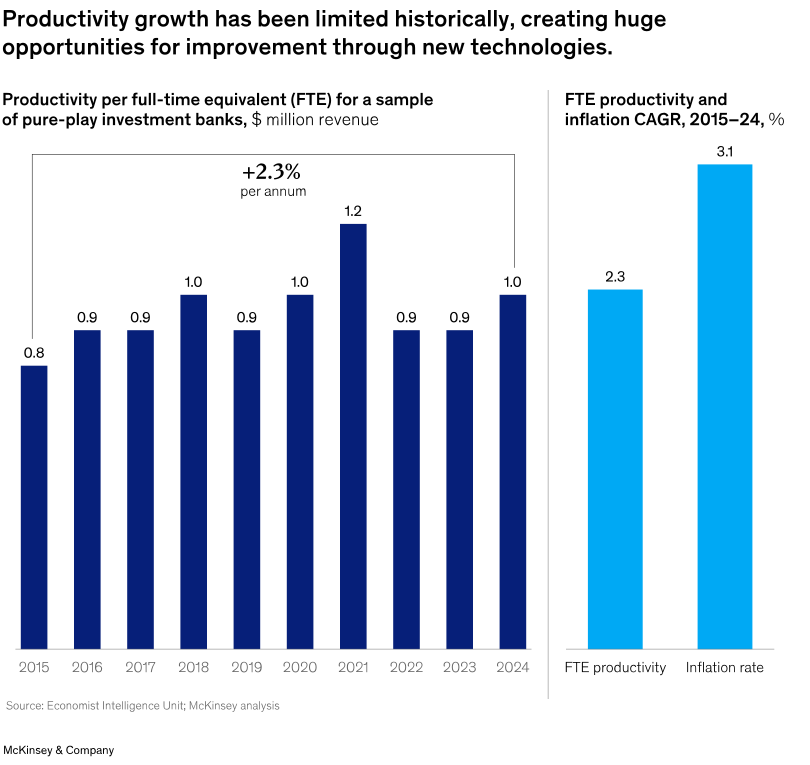
Moving the AI agenda from pilot projects to impact at scale. While some technologies, such as electronic trading and digital payments, have had a radical impact on parts of CIB, core relationship management and advisory workflows remain fundamentally unchanged over the past 30 years. An analysis of productivity at primarily pure-play investment banking firms over the past ten years is striking. Productivity growth has failed to outpace inflation over the cycle, showing the limited impact of technology on these firms’ underlying workflows and economics (Exhibit 7).
Fundamental change is now on the way. Over the next five years, to 2030, we expect AI to transform operating models in CIB. For example, AI is ideally suited to handle less-structured data and doesn’t require complicated rules logic. This will have numerous consequences through the organization. At the top level, it will give rise to AI-enabled senior bankers. At a lower level in the organization, the focus of the role will shift from analysis and work product creation to synthesizing, generating differentiating insights, and interacting more frequently with clients.
Such changes will give rise to a radically different staffing model, including the ratio of junior to senior bankers. While much of the senior-banking role will likely remain as it currently is, the fundamental shift in the junior role will result in novel team structures. Associates and analysts may end up managing squads of AI agents focused on specific tasks. Many of the skills required, including digital and AI fluency, will be new, especially as agents evolve from acting as “interns” to becoming experienced “peers” alongside human colleagues.
At the same time, we see a radical new model for risk, finance, operations, and engineering. Use cases abound here and include credit process, know-your-customer, onboarding, trade processing, loan settlement, and more. Similarly, engineering practices are fundamentally shifting across the industry.
Thus far, progress against this bold vision has been inconsistent. While most banks have multiple proofs of concepts and use cases, they have not yet delivered either revenue growth or efficiency gains at scale. We see three major steps forward. The first is to move to a full embrace of agentic AI. The second entails focusing on adoption and talent. Many banks have come to realize that AI is not primarily a technology challenge but a people one. Last, firms must ensure that guardrails around model explainability, regulatory compliance, and risk controls are robust and continually updated.
Reinventing transaction banking to bring the best of B2C to B2B. Transaction banking has reemerged as a strategic growth engine with multiple opportunities to innovate the bank offering and overall business model. Our recently published research suggests that winners can increase the value of transaction banking by 1.5 times through both revenue growth and cost optimization, devising their own successful formula out of seven different plays.
Making targeted bets on digital assets and infrastructure. CIB players are progressively embedding digital assets into their offerings as the use cases expand and the interest of both retail and institutional investors continues to grow. Tokenization and stablecoin are two areas where CIBs need to stay on top.
Tokenization—the process of creating a unique digital representation of an asset on a blockchain network—is fast moving from promise to production. For CIBs, actionable opportunities can be found in four domains that already show traction at scale: cash and deposits for instant settlement; bonds and exchange-traded notes, where an end‑to‑end digital life cycle can unlock operational efficiencies of at least 40 percent once scaled; mutual funds and ETFs, where tokenized money‑market funds surpassed $1 billion in AUM in early 2024; and loans and securitization, where tokenized private credit issuance has already topped $10 billion.
For stablecoins, annual US dollar–pegged transaction volume now exceeds $27 trillion. As such, CIBs need to be ready with operating stacks so that they can plug tokenized cash directly into issuance, trading, and post‑trade. This is especially relevant in light of advancing policy frameworks, including in the European Union, the United Kingdom, and Singapore, along with the US GENIUS Act that passed the Senate in June 2025.
As noted in a recent McKinsey article, the near-term no‑regrets agenda for CIBs is clear: Stand up one or two minimum viable value chains where CIBs already control flow, such as an on‑chain repo and collateral program, a tokenized money‑market‑fund distribution for corporate treasurers, or a cross‑border B2B corridor in regulated markets that uses tokenized cash for same‑day settlement. In parallel, build the required capabilities by recruiting scarce digital‑asset talent, standing up wallets and qualified custody, putting smart‑contract risk and on‑chain compliance in place, educating boards, engaging regulators, and publishing a market blueprint for priority use cases.
A path to growing CIB profitability by up to 30 percent
As part of our research, we conducted an analysis of the potential upside in profitability based on the playbook. While this should be taken as a thought exercise for a typical corporate-oriented institution, rather than a projection with universal application, the gains could be substantial (Exhibit 8).
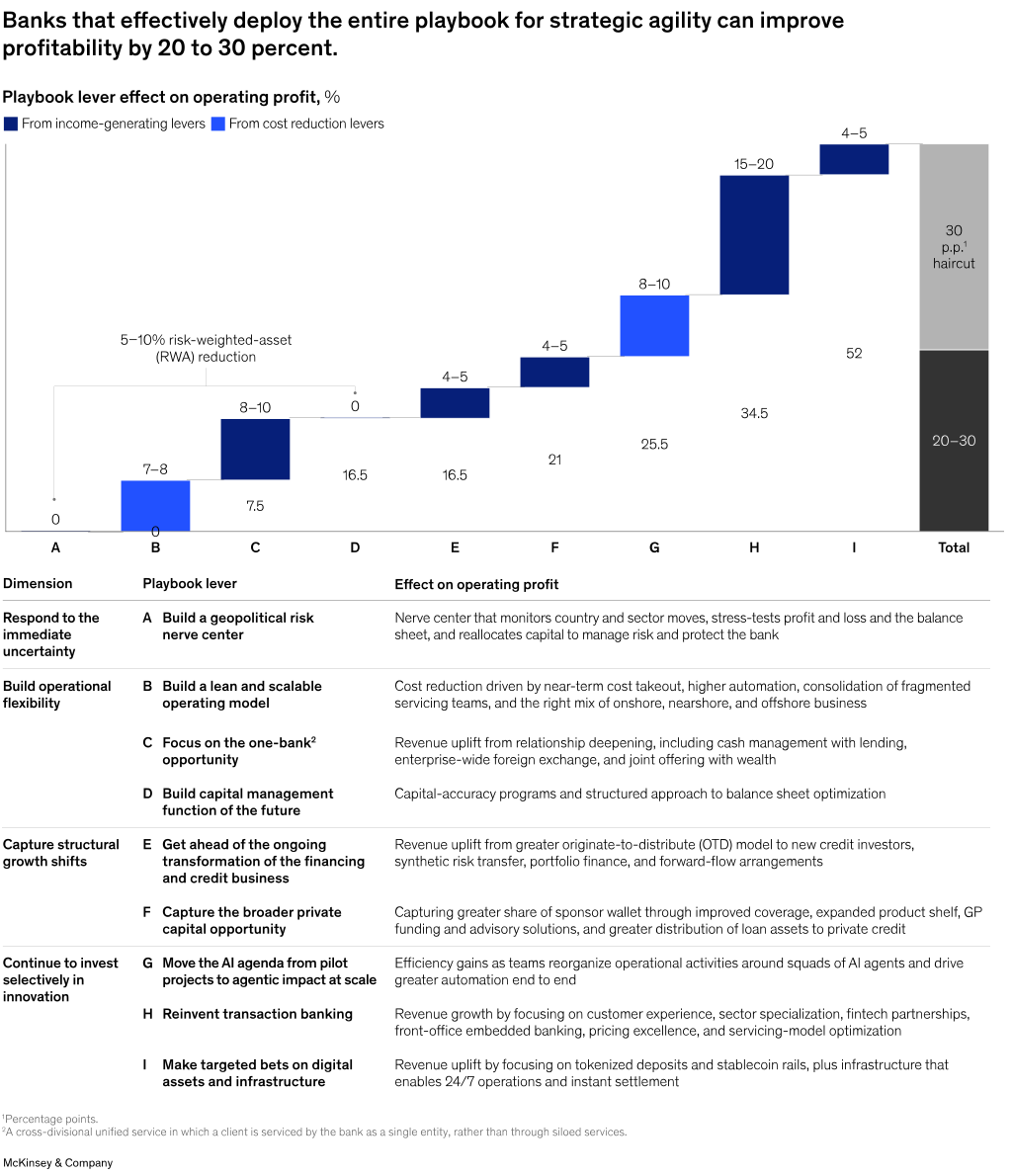
If fully deployed, the nine strategic initiatives outlined in the playbook could lead to a net 20 to 30 percent increase in profitability in the long term, before macroeconomic effects, according to our estimates. This would include new revenues (for example, by driving growth through the one-bank opportunity and reinventing transaction banking) and cost savings (through initiatives such as building a lean, efficient, and scalable operating model and launching AI at scale). There would be only a modest net increase in RWA as capital management capabilities are strengthened. Taking a structured approach to implementing these plays could lead to a bank that is structurally different: faster, fee-led, capital-efficient, and shock-resilient.
Critically, the playbook is designed to deliver impact across time horizons:
- In the short term, initiatives to respond to immediate uncertainty and reduce costs would release capital, increase earnings resilience, and create room for maneuvers. These could deliver more than half of the potential operating profitability improvement within the first cycle.
- In the medium term, building operational flexibility and new capital productivity tools could support a step-change in profitability, shifting the mix of income toward scalable, lower-risk businesses with sustainable margins.
- In the long term, bets on private capital, agentic AI, and digital platforms could deliver compounding returns and secure competitive differentiation, helping the bank position itself for the future of finance.
In a context of rising investor scrutiny, intensifying competition, and shifting macroeconomic dynamics, this is not about marginal improvement; it is about redefining what best-in-class looks like. Banks that deliver this agenda can confidently target ROEs structurally above 15 percent while remaining agile and shock-resistant.