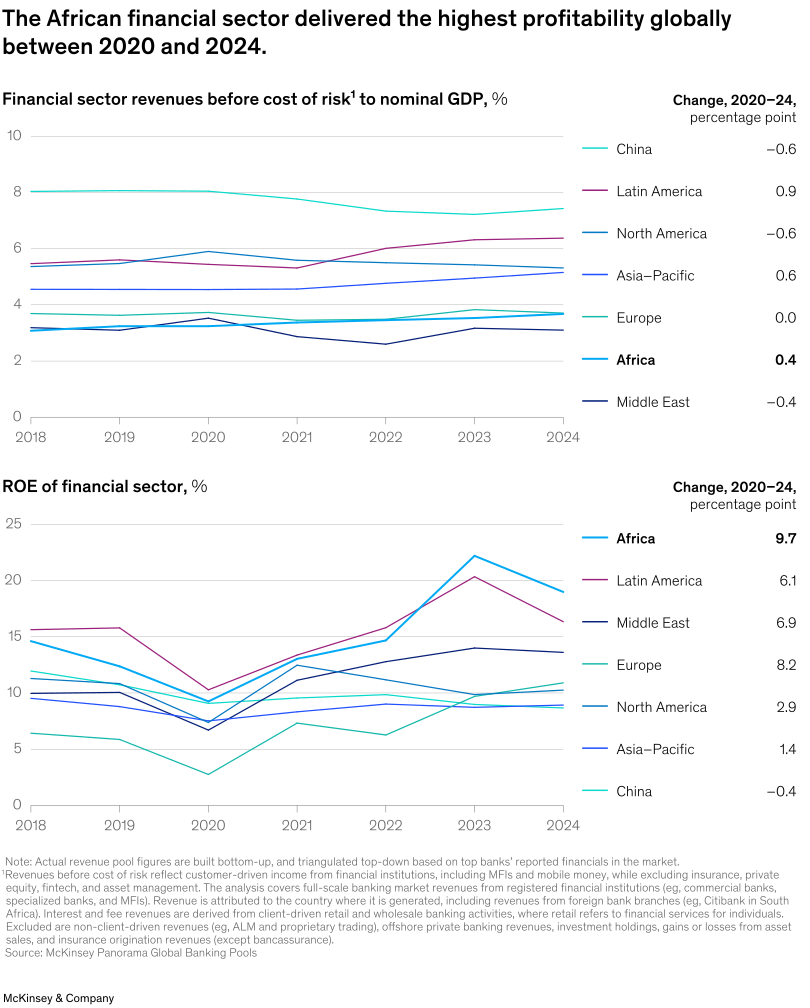
Africa’s financial markets, with banking at the helm, are among the most dynamic in the world. Buoyed up by high interest rates and growth in noninterest income, African banks delivered an ROE of 19 percent in 2024 and 17 percent in 2025, well above the global average of 10 percent over the same time period.1 While the sector’s long-term potential for scale is great, persistent challenges—such as gaps in access, infrastructure, and trust, along with macroeconomic headwinds—continue to limit its full potential.
This report provides a deep dive into banking performance over the past five years, exploring the forces driving growth, from rising financial inclusion to digital transformation. It also highlights how leading players in five major markets—Egypt, Kenya, Morocco, Nigeria, and South Africa—are navigating challenges and driving growth.
Six common themes that are likely to drive future profits and can help players prepare for what’s next are identified. To lock in gains as tailwinds fade, African banks could pursue a unified strategy that addresses financial stability, disciplined growth, and future capabilities—fortifying cyber, fraud, and operational resilience to protect core assets, while industrializing AI and strengthening data foundations.
The analysis in this report is based on reported data through the end of 2024, estimated data for 2025, and forecasts through 2030. It also draws extensively on data from McKinsey’s Panorama Global Banking Pools (see sidebar, “More about McKinsey Panorama and Banking Pools”).
Global resilience and African outperformance
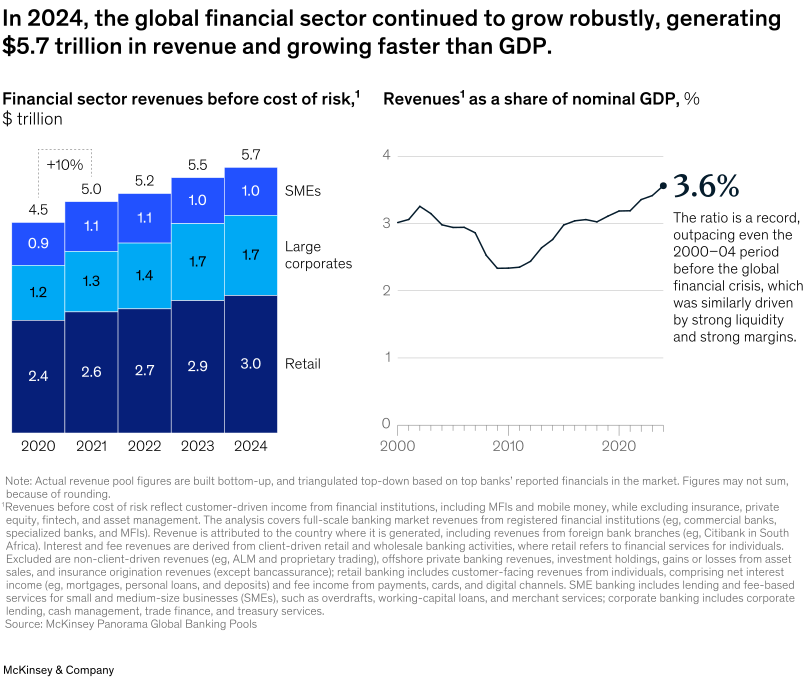
The global financial system had a record-breaking year in 2024. Demonstrating remarkable resilience in a challenging climate, the sector outpaced global GDP growth, generating $5.7 trillion in revenue before risk costs—up from $4.5 trillion in 2020 (Exhibit 1). This helped to push the sector’s net income to $1.2 trillion, the highest total ever for any industry.2 Growth continued into 2025 at 5 percent, lifting revenues to $5.9 trillion, while ROE held steady at around 10 percent,3 a performance supported by strong cash reserves, healthy loan-to-deposit ratios, and solid core capital levels (with an average Common Equity Tier 1 [CET1] ratio of 13 percent, the highest in recent years).4 Retail banking accounted for the largest share of revenue at approximately $3.0 trillion, while large corporates and SMEs contributed $1.7 trillion and $1.0 trillion, respectively.
Even against this backdrop of global strength, Africa’s financial sector stands out. The sector significantly increased its footprint within the economy, growing its share of GDP by 0.4 percentage points between 2020 and 2024 (Exhibit 2).
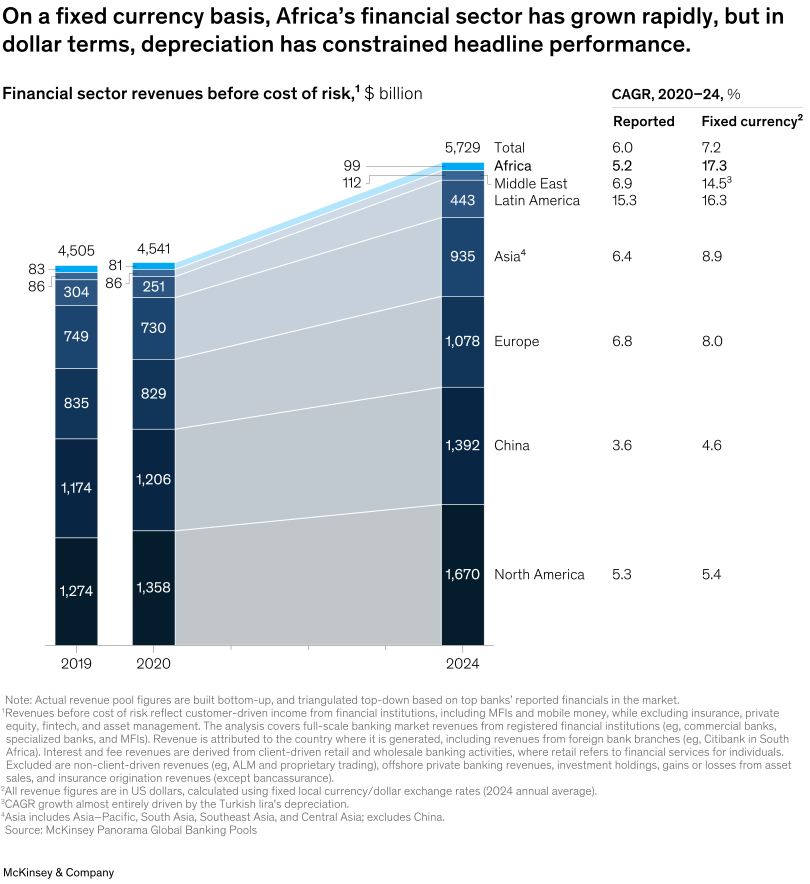
African banks delivered rapid revenue growth on a constant-currency basis from 2020 to 2024, with the banking sector expanding at a CAGR of approximately 17 percent, compared with a global average of 7 percent over this period. However, this performance was masked by currency volatility. When measured in US dollar terms, currency depreciation, inflation, and foreign exchange volatility weighed on performance. Consequently, in dollar terms, revenues grew at a more modest 5.2 percent CAGR from $81 billion to $99 billion from 2020 to 2024, in line with the global average (Exhibit 3). More recently, in 2025, African revenues in dollar terms accelerated to 7 percent, as a result of improving macroeconomic conditions.5
Looking ahead, the sector is likely to be shaped by a complex mix of forces and trends. On the one hand, operators can expect tailwinds from a growing, rapidly urbanizing, and digitally savvy youth demographic, which is expanding the market and driving inclusion. Africa has the world’s fastest-growing population, expanding by more than 2 percent each year between 2020 and 2025, while the continent’s working-age population is increasing at almost 3 percent a year.6
On the other hand, headwinds such as persistent unemployment, low GDP per capita, continued exchange-rate pressure, and volatile inflation (expected to reach 4 to 6 percent by 2030, compared with 2 percent worldwide) may heighten risks and undermine growth.7
African banking: A dynamic and evolving market
Strong fundamentals position African banking to sustain, and perhaps even increase, its profitable streak. With a total market size of around $107 billion in 2025, Africa’s banking market is sizeable yet highly concentrated.8 Approximately 70 percent of the sector’s revenue in 2024 was generated by the top five markets (Exhibit 4). South Africa alone accounted for more than a quarter of the total, with revenues of $26.4 billion in 2024.9 These markets are likely to continue to dominate the banking sector in Africa, although double-digit growth in smaller markets signals that new growth frontiers may be opening up.

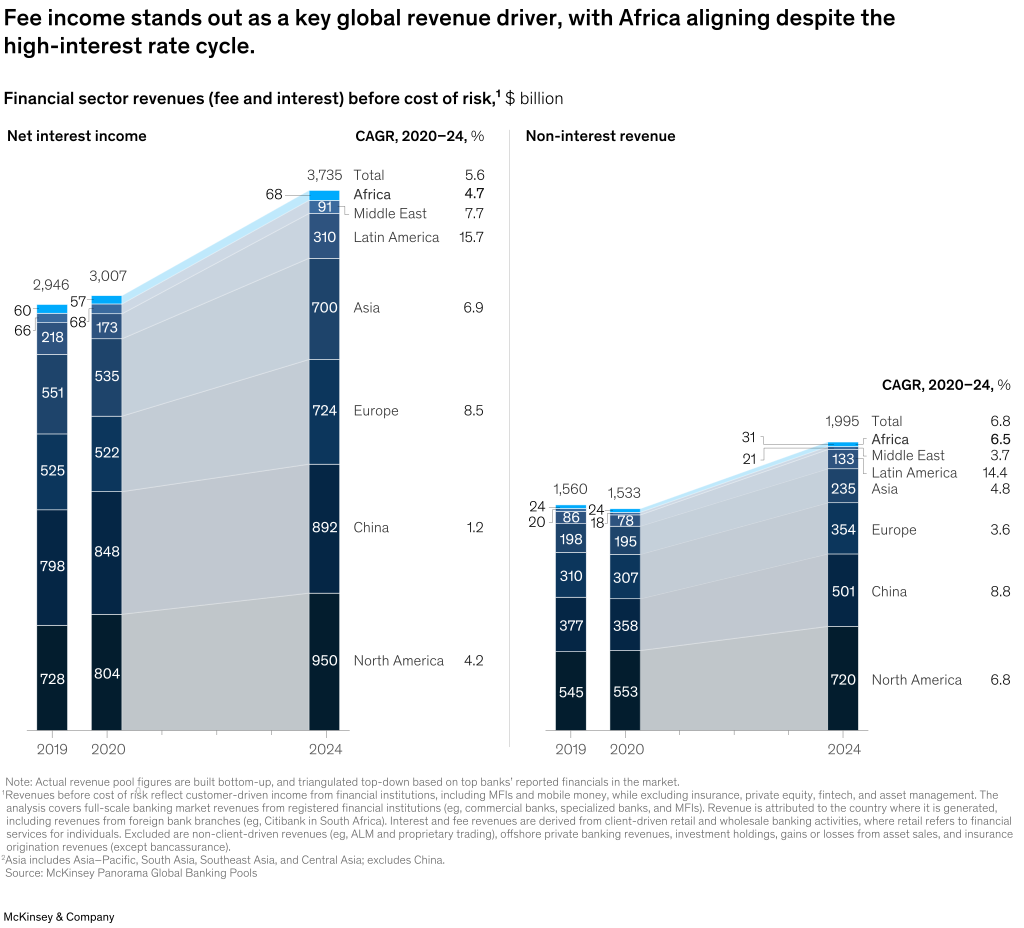
The way banks generate revenue is also shifting. Globally, banks are seeing revenue from fees and commissions (non-interest revenue [NIR]) grow faster than revenues from traditional lending and deposit taking (net interest income [NII]), and African banks are seeing a similar pattern. Despite consistently high interest rates over the last four years, growth from fees and services outpaced NII growth on the continent by 1.8 percentage points annually between 2020 and 2024 (Exhibit 5).
Retail and corporate segments drive the market, but the SME segment is poised for the fastest growth
The retail and corporate segments in Africa accounted for around 88 percent of total revenue at $48.9 billion and $38.1 billion, respectively, in 2024.10 Retail is expected to remain the largest segment, accounting for approximately half of all banking revenue by 2030, while the SME segment is projected to grow at the fastest pace, at 8 percent CAGR through 2030. Historically, it has proved difficult to bring SMEs into the banking system; poor credit histories and a lack of customer data are among the factors constraining SME access to credit.11 Rising digital adoption and the spread of digital payment ecosystems, however, are helping to change this by enriching data trails, with digital payment histories, mobile-money transactions, supplier records, telecom usage patterns, and utility payments all offering insights into the viability of business models that traditional credit assessments overlook.12 This could unlock further lending and fee growth for banks. However, a paradigm shift away from legacy processes may still be required to realize the full opportunity. For example, one Egyptian bank has reimagined its SME lending model by creating a dedicated digital SME lending platform that offers instant approval and funding within 24 hours, with a seamless digital experience.
Lending is projected to continue as the largest product category through 2030
Customers’ growing appetite for digital payment solutions drove rapid growth in payments between 2020 and 2024, making this one of the fastest-growing categories in African banking, with several new fintech players entering the market.13 However, lending products are expected to remain the largest revenue pool, valued at just over $30 billion in 2024 and making up 30 percent of total banking revenues, driven equally by corporate and retail lending at approximately $13 billion each (Exhibit 6).
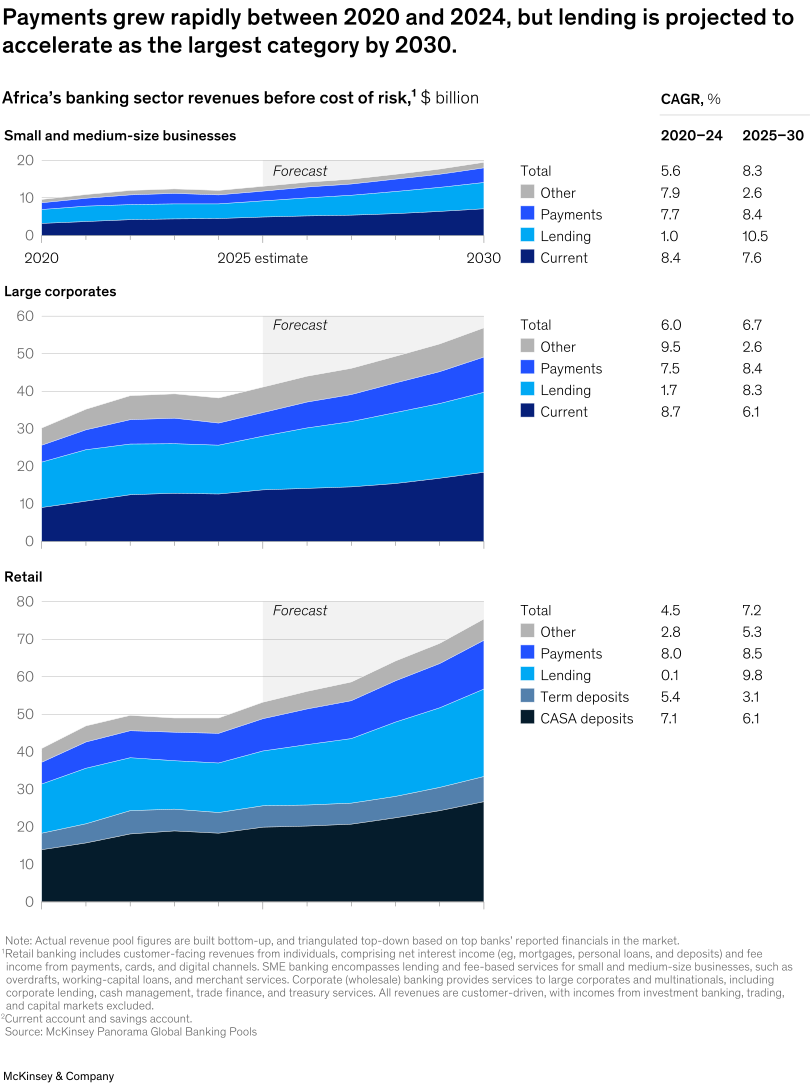
As interest rates ease, the lending market is expected to expand significantly to almost $52 billion by 2030. While SME lending will remain a smaller segment of this, it is also expected to grow rapidly as specialized SME lending products proliferate, with a CAGR of 10.5 percent projected through 2030.
Profitability is improving, with further opportunities for efficiency gains
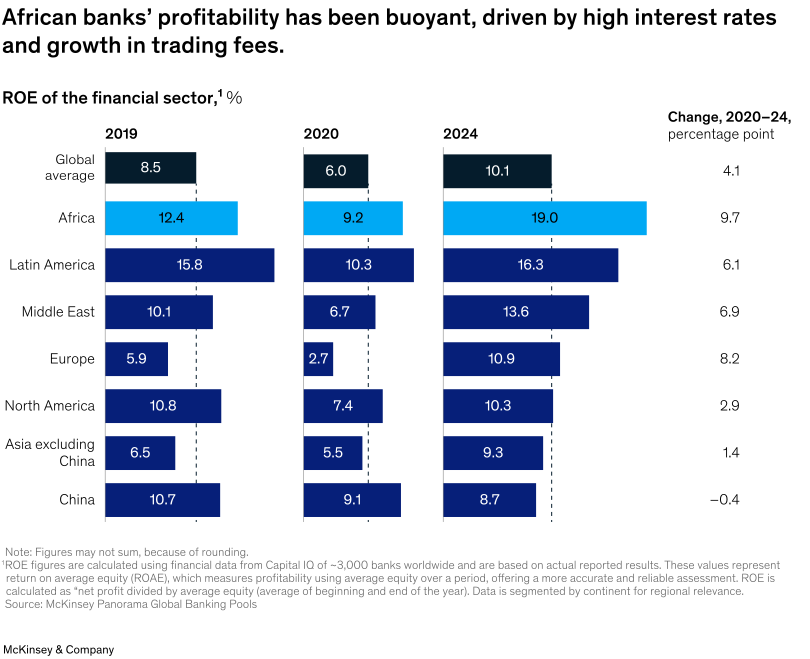
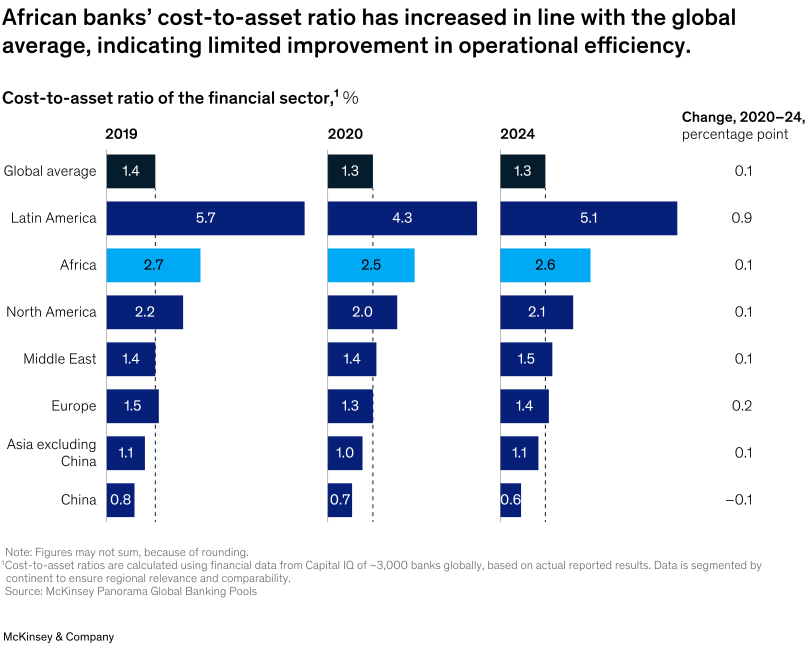
Average ROE at African banks soared from 9.0 percent in 2020 to 19.0 percent in 2024, before dropping back to 17.0 percent in 2025,14 as interest rates eased in many major African countries. This buoyant performance, well above the global average ROE that held steady at 10.0 percent in 2024 and 2025, has been fueled by elevated interest rates, growth in loan volumes, and significant profits from trading and foreign exchange activities (Exhibit 7). The continent’s cost-to-income ratio also improved, reaching 49.0 percent in 2024 and 2025, compared with the global average of 51.1 percent.15 However, this improvement is largely attributable to sustained top-line growth rather than increased cost efficiency. At 2.6 percent, the cost-to-asset ratio of African banks remained double the global average of 1.3 percent in 2024—a disparity that suggests there is significant room for future gains in operational efficiency (Exhibit 8).
Spotlight on performance: Key markets driving success in African banking
Performance in Africa’s banking system is driven by a diverse mix of markets, each with its own unique strategies and challenges. The continent’s success is a story of distinct national banking systems adapting to local and global realities—from the highly concentrated, digitally advanced players in South Africa to the rapidly growing, agile markets in Kenya and Nigeria. Africa’s leading financial markets offer valuable insights and lessons for the continent as a whole.
Egypt: Steady growth and structural transformation
High nominal interest rates, rapid balance-sheet repricing, and currency volatility have significantly influenced banking performance in Egypt over the past five years. Repeated currency devaluations have seen the Egyptian pound-to-US-dollar exchange rate move from single digits in early 2016 to a peak of over 50 to 1 in early 2024, while interest rates peaked at 27.5 percent in 2025, as currency depreciation eroded local purchasing power and drove up inflation.16
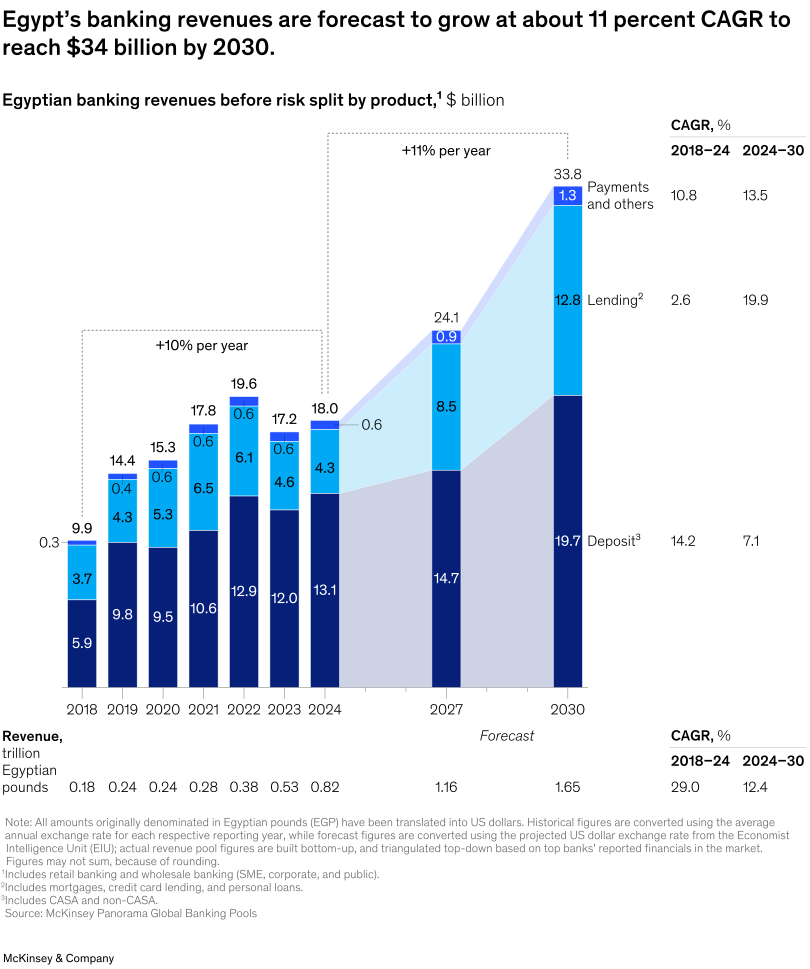
Against this macro backdrop, Egypt’s banking sector expanded between 2020 and 2024 in local currency terms, supported by elevated interest rates and balance-sheet expansion. US dollar growth was more moderate but still solid at about 10 percent CAGR between 2018 and 2024, with client-driven revenues reaching about $18 billion in 2024 (Exhibit 9).
The market is concentrated, with the top five banks accounting for about 66 percent of total assets in 2024. Notably, the two largest institutions—both state-owned—represent over half of system assets, shaping competitive dynamics and credit allocation.17
Looking ahead, banking revenues before risk are projected to grow at about 11 percent CAGR to reach $34 billion by 2030, with growth increasingly supported by a more stable inflation and currency outlook. Deposits are expected to remain the largest revenue pool; however, their relative share may gradually decline in a lower-rate environment as savers rebalance toward alternative stores of value such as gold and foreign currency, while lending and payments gain momentum.18
Key shifts that have shaped the Egyptian banking market
Financial inclusion in Egypt has accelerated significantly in recent years, fueled in part by new regulations, with the number of financially included citizens rising to 53.8 million in June 2025 out of a total of 70.5 million.19 Government-led initiatives such as the Instant Payment Network and its flagship app, InstaPay—now serving more than 16 million users and processing trillions of Egyptian pounds (EGP) in transactions—have materially expanded access to real-time digital payments. In parallel, the rollout of the national Meeza scheme and the expansion of prepaid card limits have strengthened low-barrier entry points into the formal financial system, enabling broader participation and creating a scalable foundation for fintech growth through bank–fintech partnerships and regulated digital payment solutions.20
While lending and financing continue to drive scale in Egypt’s fintech sector, embedded finance is emerging as a new category, with fintechs integrating payment and card capabilities into traditional platforms and gradually expanding into compliance, lending, investing, and insurance. At the same time, digital wealth management platforms are democratizing access to investment through distribution partnerships, bringing new segments—including women and investors outside Greater Cairo—into capital markets. Alternative SME lending models are addressing structural financing gaps through tailored, nontraditional structures, while marketplaces embed financial products to monetize captive demand. In parallel, digital liquidity and cash management solutions are gaining traction, enabling individuals and corporates to actively manage short-term liquidity through digital tools and yield-generating products.
Outlook to 2030: Digitization, digital banks, and disciplined growth
As inflation moderates and interest rates decline, the operating environment for Egyptian banks is expected to change. In this context, three areas are likely to be central to banks’ strategic agendas over the next five years.
Scaling AI and digitization with local constraints in mind
Globally, banks are increasingly deploying generative AI at scale to improve efficiency, accuracy, and the delivery of personalized services across the credit life cycle.21 Generative and agentic AI are projected to deliver value equal to an additional $200 billion to $340 billion in productivity impact annually, including a reduction of up to 20 percentage points in cost-to-income ratios from agentic AI use cases.22 Egyptian banks could selectively scale AI and analytics in areas such as customer value management, credit risk modeling, fraud detection, and collections, where the impact is highest, while working around constraints such as public cloud limitations, lower labor costs, evolving regulations, and uneven data quality.
Accelerating digital bank and ecosystem partnership models
The new licensing framework for digital banks, which came into effect in mid-2023, creates an opening for digital-only models with structurally lower cost-to-serve economics that are better suited to Egypt’s young, low-balance customer base..23 In parallel, incumbents and new entrants can partner with telcos, retailers, and large platforms to embed accounts, payments, and credit into daily use cases such as bill payments, salary wallets, and e-commerce checkout. In this way, they can replicate early ecosystem plays in which banks provided the regulated balance sheet and risk management, while partners owned the front-end relationship, to drive new growth.
Unlocking SME growth with disciplined risk management
The Egyptian SME segmentremainsstructurally underserved. About 88.0 percent of SMEsremainunbanked, and SME banking credit represented only about 6.6 percent of GDP in 2022, compared with an average of about 20.0 percent in peer markets.24 Banks can industrialize SME underwriting by combining tax, point-of-sale, and payments data with sector-specific scorecards to automate smaller‑ticket decisions and shorten turnaround times from weeks to days, while reserving human underwriting for larger or more complex exposures. Partnerships with fintech lenders and B2B platforms could extend reach into micro- and small-business segments, provided that banks maintain rigorous risk-appetite frameworks and early-warning systems to protect asset quality as volumes scale.
Kenya: Digital innovation and a focus on scale
Kenya’s banking sector has delivered strong profitability. Six of the country’s nine top-tier banks, which together account for 80 percent of the sector’s total assets, achieved ROEs above 19 percent in 2024, surpassing the African average.25 Revenues grew at 7 percent CAGR between 2018 and 2025, and the market is expected to grow at 6 percent CAGR to 2030, reaching an estimated $8 billion (Exhibit 10).
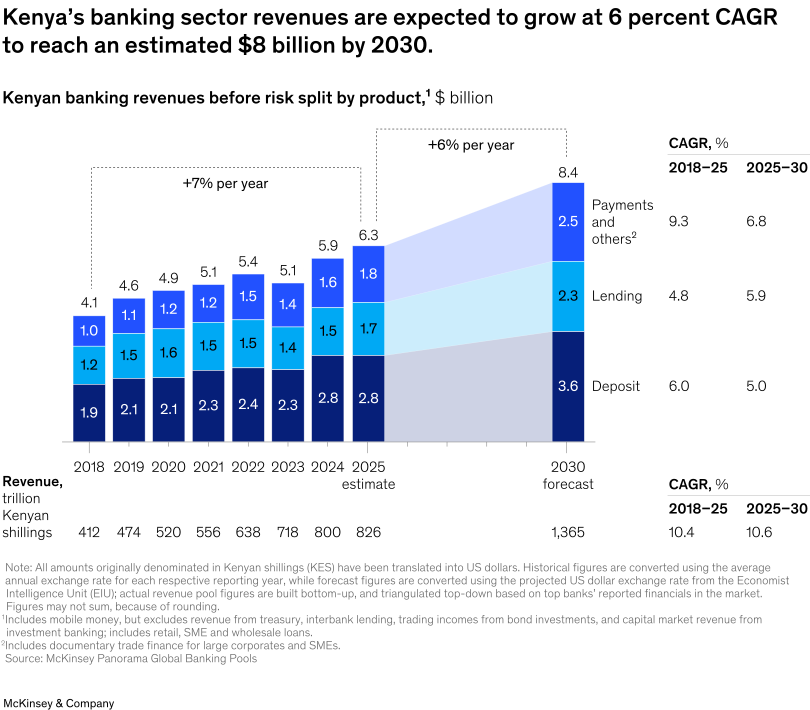
Payments and deposits drove past growth, and while future deposit revenue growth may slow, lending revenue is set to accelerate at 6 percent CAGR through 2030 as economic conditions improve, interest rates decline, and credit becomes more accessible. Payments will likely also continue to grow strongly, even as competition from fintech models increases.
Key shifts that have shaped the Kenyan banking market
Over the past five years, Kenya’s financial landscape has evolved significantly, with traditional banks, telcos, and fintechs all shaping it in different ways.
Incumbent banks are growing and diversifying revenue streams. For example, Equity Bank and KCB have both made strategic acquisitions in Eastern Africa to pursue regional growth, positioning these deals as part of their regional expansion strategies.26 At the same time, foreign-owned banks such as Access Bank, which acquired the National Bank of Kenya in 2025, are expanding their presence in Kenya.27 Most recently, South Africa’s Nedbank Group announced an offer to acquire a majority (around 66 percent) stake in NCBA Group, underlining Kenya’s appeal as a market for diversification and as a gateway for East African expansion.28 Additionally, as revenues from traditional lending decrease with falling interest rates, Kenyan banks are shifting their focus to fees and trading income. Some are expanding into nonbanking services, such as insurance and wealth management, while others are exploiting digital adoption trends to deepen payments activity through in-house product development and acquisitions, such as KCB’s recent acquisition of a 75 percent stake in Riverbank Solutions.29
Our analysis shows that digital innovation is also opening new opportunities for telcos, which have leveraged their customer data to create new revenue streams in financial services. For example, Safaricom has transformed into an integrated fintech platform, using mobile money to power payments, lending, insurance, and wealth management offerings. M-PESA—which has more than 35 million one-month active customers—powers mini-apps in sectors like agritech and e-commerce, creating new revenue streams and growing its contribution to Safaricom’s revenue from 31 percent in 2021 to 42 percent in 2025.30
Fintechs have been leading the way in addressing gaps in SME financing with data-driven, low-cost lending that moves away from collateral-heavy requirements. Digital lending grew by 32 percent from 2020 to 2024, with demand for digital credit providers jumping by a remarkable five times between 2023 and September 2025.31
Merchant payments also remain a key area of innovation, with interoperability at the forefront. Payment gateways and point-of-sale (POS) platforms now enable seamless payments, invoicing, and billing, along with the implementation of loyalty programs across mobile money, cards, and bank application programming interfaces (APIs), while fintechs are collaborating with banks and telcos to combine their specialized technology with the incumbents’ reach. For example, NALA partnered with M-PESA to enable diaspora users to send money directly into local M-PESA wallets via the app, enabling cross-border and domestic peer-to-peer transfers, while Kwara offers a backend-as-a-service solution that includes cloud-native core banking, collaborating with Workpay to integrate streamlined HR and payroll solutions directly into its SACCO banking platform.32
Outlook to 2030: Three forces shaping success
Sustained growth for Kenyan banks is likely to require new and diversified strategies amid declining yields. In this dynamic and fast-moving ecosystem, three key tactics could set banking participants up for success: achieving scale and integration, monetizing their ecosystem, and driving digital innovation.
Regulation and consolidation
The Kenyan banking market is likely to become more concentrated, with new regulations from the central bank, including higher core capital requirements for 2029, likely to spur industry consolidation and mergers and acquisitions.33 Banks can build resilience and expand their operations through acquiring competitors or by buying niche fintechs to gain new specialized capabilities. They can also form equity partnerships and alliances by co-owning payment service providers (PSPs) and digital-bank licenses. These actions will likely help them meet the central bank’s capital targets and scale their business, including by leveraging advanced analytics to drive cross-selling across a broader customer base and optimize digital investment and spending.
Monetizing ecosystems
To help mitigate exposure to interest rate volatility and credit cycles, banks could diversify revenue streams and build earnings resilience by monetizing proprietary data. For example, by launching data-as-a-service marketplaces with anonymized APIs and integrating nonfinancial mini-apps, operators could generate stable fee income through targeted advertising and lead generation, reducing reliance on traditional lending margins.
Driving digital growth and innovation
Leveraging gen AI with unified telco bank data could help create instant, hyperpersonalized offers for loans, insurance, and savings. Sector players could also integrate AI-powered loan risk assessment with this data to enable dynamic, real-time credit scoring and limit adjustments. They could also deploy virtual assistants and chatbots with enriched profiles to help onboard customers, give advice, and sell additional services. These applications could help boost revenue through cross-selling and upselling, reduce operational costs, and strengthen banks’ portfolios by improving risk control.
Morocco: Adapting to change
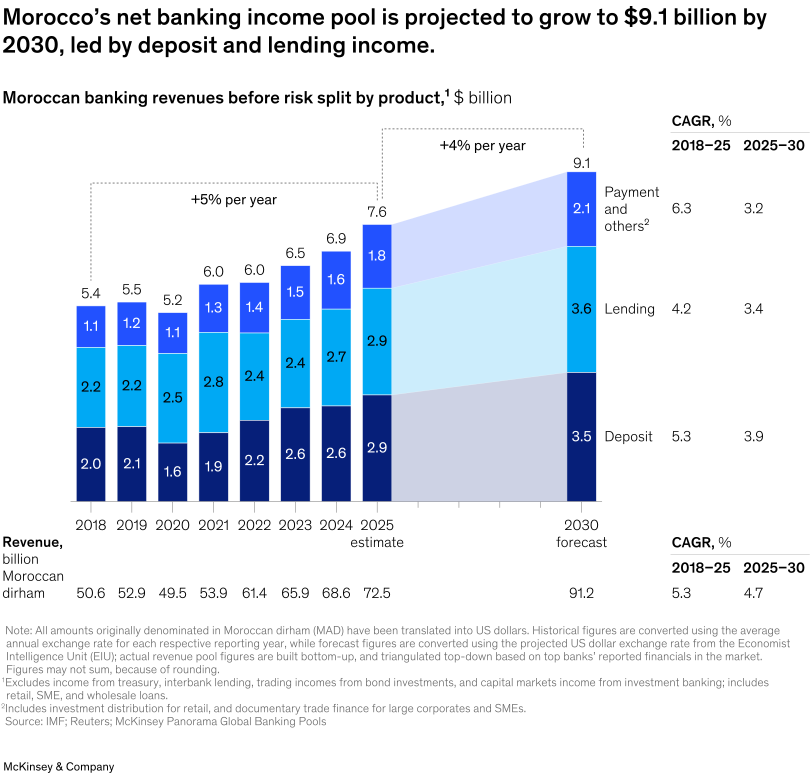
Morocco’s banking sector is a mature market that has grown steadily over the past decade. Between 2020 and 2025, as GDP returned to pre-COVID-19 levels, the sector’s banking revenue before risk pool grew at 8 percent CAGR and is expected to increase from current levels of $7.6 billion to $9.1 billion by 2030 (Exhibit 11). Macroeconomic stability—driven by solid GDP growth, controlled inflation, and sound monetary policy—is benefiting the banking sector by boosting credit demand, securing stable profit margins, reducing credit risks, and enhancing operational efficiency.
Key shifts that have shaped the Moroccan banking market
Market competition, combined with banks’ increasingly disciplined approach to credit risk management, is prompting the market to evolve and diversify.
The top eight banks, which currently hold around 90 percent of market share, are rebalancing their income mix and developing fee-based models to diversify their revenue streams.34 At the same time, the sector is abandoning the traditional one-size-fits-all approach in favor of more tailored, segment-driven models. There is a significant opportunity, too, to create more personalized banking experiences to meet the distinct needs, behaviors, and inclusion levels of specific groups, including the youth, affluent clients, the diaspora, and the unbanked, and banks are starting to tailor their retail offerings accordingly. Challenger banks are leading the way here, outperforming the market on both growth and profitability. For example, CIH Bank, which has positioned itself as a digital leader focused on capturing the youth market, grew its assets twice as fast as most banks in the country between 2020 and 2024, with a CAGR of 11.1 percent compared with the market average of 5.2 percent.35
Banks are also pursuing greater operational efficiency by reallocating resources from physical infrastructure to digital platforms and by optimizing branch footprint. This move has led to significant cost reductions: The average cost-to-income ratio improved by 9.2 percentage points, reaching 47.4 percent in 2024.36
This disciplined approach is paying off in ROE, which rose to 9.3 percent in 2024, from 4.8 percent in 2020, driven by higher trading income, increased leverage, and cost efficiencies.
Outlook to 2030: Balancing resilience with returns
The next five years are likely to require continued focus on boosting revenues and efficiency, while also monitoring evolving market conditions. The forces of digitization (including automation and agentic AI), rising customer expectations, and regulatory changes are making Morocco an increasingly complex market, pushing banks to adapt their pricing, risk processes, and partnerships. Additionally, global neobanks, for example Revolut, have announced plans to enter into the market.37 To succeed in the future, Moroccan banks may need to explore these three areas: next-phase digitization, activation of new lending engines, and building scale and sharpening portfolio discipline.
Mastering the power of AI for efficiency and customer experience
The next frontier involves automating the entire customer life cycle, integrating AI for onboarding, servicing, and collections, and delivering data-driven personalization. Moving toward instant processing could ensure that core processes are instantaneous and reduce the approval time for new products. Critically, this digital core would need to be built for easy integration to connect directly with broader telco, retail, and travel partners, extending the bank’s services far beyond its traditional walls.
Financing national ambition by boosting lending to SMEs and critical sectors, including infrastructure, renewable energy, housing, and construction
The next wave of growth will likely require smarter, faster lending. Banks could move beyond serving large corporate clients and expand into the underserved retail and SME markets by using innovative tools. These include assessing customers using nontraditional data, such as payment history, funding suppliers and customers through supply chain finance, and offering instant working-capital tools to businesses. The banking sector also has a major role to play in meeting the long-term credit needs of major national investment plans in sectors such as infrastructure, renewable energy, and housing—for example, the construction for the 2030 FIFA World Cup.38 To help banks make smarter, safer investment decisions in these specialized areas, banking players could create specialized tools or custom scorecards to evaluate the performance, risk, and returns of these large-scale lending activities. Additionally, they could partner with government-backed programs to expand their market reach while mitigating potential losses.
Sharpening portfolio and partnership discipline
To guarantee sustained returns, optimization and portfolio discipline are likely to be key. Banking players can pursue domestic mergers and acquisitions to achieve scale faster and drive efficiency. By optimizing their footprint, operations, and technology systems, banks can improve productivity and free up capital to invest in core growth areas. Banks can also exercise portfolio discipline by critically reviewing their portfolio of subsidiaries to ensure that capital is allocated to the highest-performing assets. This dual focus on efficiency and investments into growth areas can help achieve sustained ROE while meeting all regulatory expectations.
Nigeria: Maturing digital disruption and a race for scale
Despite currency volatility, Nigerian banks are highly profitable, surpassing the African average due to repriced loans, higher interest rates, and stronger foreign-exchange gains.39 Nigeria’s banking market is forecast to grow at a 7 percent CAGR, reaching about $16 billion by 2030 (Exhibit 12).
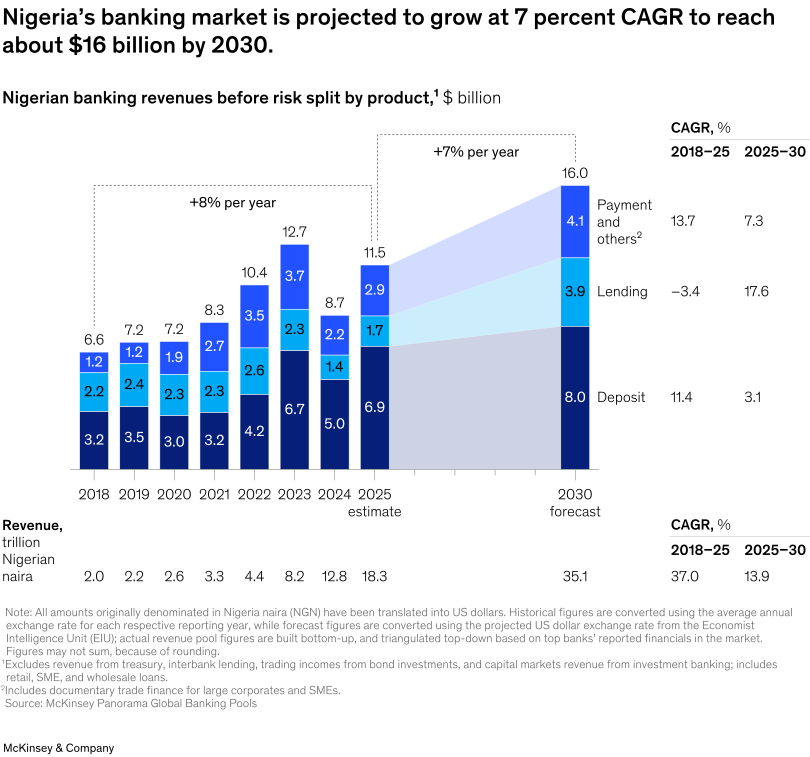
Between 2019 and 2024, corporate banking accounted for the largest share of new revenue growth in Nigeria’s banking sector; however, the retail and SME segments grew faster, leveraging digital payments and agency banking to capture previously untapped markets.
While the Nigerian market is less concentrated than some, consolidation is increasing. Between 2019 and 2024, the top banks increased their domestic asset share from 59 percent to 64 percent.40
Key shifts that have shaped the Nigerian banking market
The Nigerian banking sector over the past five years has been affected by macroeconomic shocks, increased regulation, and the maturation of digital disruption. A weaker local currency has driven a revenue drop in dollar terms, but top banks are mitigating this by expanding into new markets, with, for example, Access Bank’s foreign operations now accounting for 23 percent of the bank’s total operating income.41 In 2023, following the liberalization of Nigeria’s foreign exchange market, the top five banks by market share recorded over $1.7 billion in foreign exchange gains, representing about 40 percent of their total operating income—100 times the exchange gains in 2022.42 For several banks, this exceeded their operating income from the previous year. At the same time, devaluation and high interest rates led to a 57 percent annual increase in stage 3 nonperforming loans (NPLs) between 2022 and 2024.43
In response, the government introduced a 70 percent retrospective levy on realized foreign exchange gains, encouraging banks to focus on sustainable service offerings.44 Additionally, the central bank has significantly raised capital requirements from $33 million (50 billion naira) to $330 million (500 billion naira) for international banks, and from $16 million (25 billion naira) to $130 million (200 billion naira) for national banks by March 2026 and halted capital distributions for banks under forbearance to strengthen balance sheets and build resilience in the sector.45
A key feature of the landscape has been the evolution of fintechs like OPay and Moniepoint into major players that now rival traditional banks. OPay has surpassed 50 million downloads on the Google Play store, while Moniepoint ranks among the leading merchant acquirers, rivaling traditional banks in user adoption.46 Both companies offer savings wallets, debit cards, and business tools, building attractive ecosystems where individuals, agents, and SMEs alike want to stay.47 Traditional banks are responding by investing heavily in IT and digital in response. Recent filings show tens of billions of naira per bank per year in software additions and IT/e-banking expenses.48
Outlook to 2030: A race for scale
To navigate this dynamic and shifting environment, Nigerian banks are building reliability and scale, and embracing the digital reality to reach new consumers, notably young, digitally native Nigerians and micro-, small, and medium-size enterprises (MSMEs). In this context, there are three key areas of opportunity.
Building resilience through consolidation and financial discipline
Nigerian banking faces a pivotal moment of consolidation and financial discipline. The Central Bank of Nigeria’s March 2024 decision to increase capital requirements, alongside equity raises and license changes, is driving consolidation through mergers and acquisitions, such as the merger between Unity Bank and Providus Bank.49 To build resilience, banks can consider merging with smaller, undercapitalized players to achieve synergies and align risk profiles. This strategy could boost earnings and internal capital generation, ultimately enabling entities to seize growth opportunities while ensuring compliance in a shifting regulatory framework.
Data-driven retail
The Nigeria Open Banking Framework could end the era of siloed financial data, effectively shifting control of financial data from banks to consumers, enabling consumers to decide how, when, and with whom their data is shared.50 This is likely to unlock a wave of integrated products from nonbank competitors.
In this new digital future, the competition to serve young, mobile-first customers will likely intensify. Nigeria’s large, young population—over 60 percent of whom are under 25—is already online, with more than 160 million active internet subscriptions.51 Banks could prepare for the operational transformation required to operate in this new environment by establishing integrated, data-driven digital ecosystems that capture and deepen customer relationships at scale. They could do this by enhancing their API capabilities and integrating with fintech, e-commerce, and telco platforms to develop mobile-first, all-in-one platforms with seamless user experiences.
Automating MSME credit with data
A solid technological foundation could also deliver the personalization and profitability required to successfully capture growth opportunities within the highly lucrative, but untapped, MSME segment. Agile fintechs have been first movers in this space, but traditional banks can invest in digital platforms and build the capabilities to use transactional data for automated, efficient credit decisions and unlock the speed and personalization required to profitably serve this segment. They can also collaborate with fintechs and digital platforms to access data, broaden their reach, and offer tailored learning solutions.
South Africa: Embracing innovation to grow
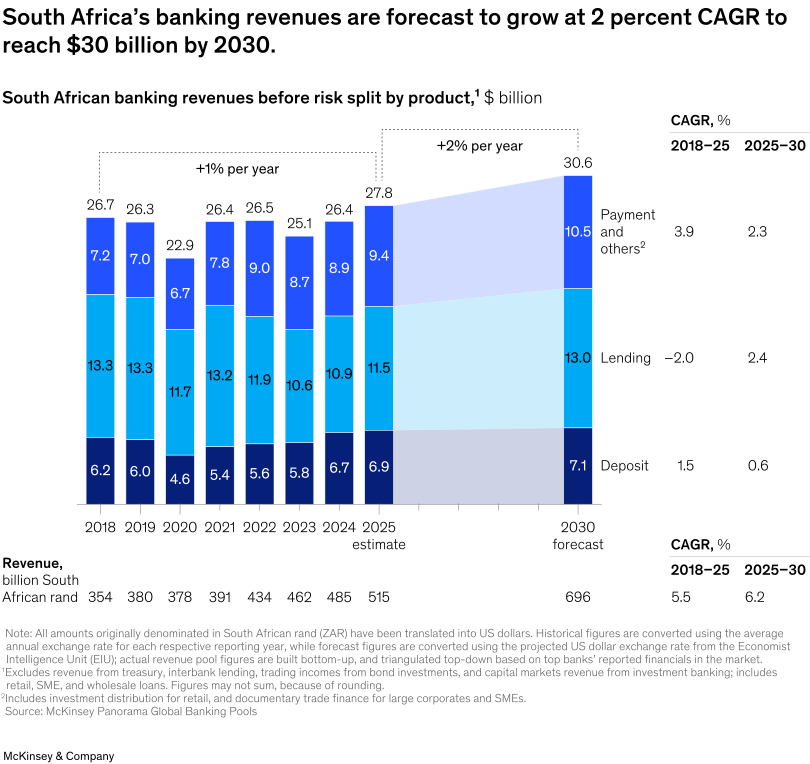
South Africa’s banking sector is recovering well from the challenges of COVID-19. Client-driven revenues have grown consistently at 4 percent annually since 2020—above the GDP growth rate—and are forecast to reach $31 billion by 2030 (Exhibit 13). Despite a slight downturn over the past five years, lending is expected to remain the primary engine of growth, with other services, such as payments, also expected to contribute more strongly in the future. The sector’s resilience is anchored in a highly concentrated market, with the top four banks—Standard Bank, FirstRand, Absa, and Nedbank—accounting for roughly 82 percent of domestic assets, although specialized players such as Investec and Capitec have gained market share.52
Key shifts that have shaped the South African banking market
A weaker currency through to 2024, muted GDP growth, and rising competition from nontraditional financial service providers over the past five years have been pushing South African banks to adopt innovative growth strategies. Banks have been optimizing operations and diversifying revenue streams, both within South Africa by increasing fee generation, and beyond South Africa’s borders by expanding into new markets.
Some specialized players like Capitec are seeing notable results. By prioritizing digital transformation to improve efficiency and expanding value-added service fees to diversify its domestic revenues, Capitec almost doubled its client base between 2019 and 2024 and achieved an ROE exceeding 25 percent. Capitec also outperformed the sector as a whole, growing by 18 percent between 2019 and 2024, compared with 4 to 6 percent growth for other top banks.53
Outlook to 2030: Opportunities in gen AI, ecosystem primacy, and digital agility
Looking ahead, improved GDP growth and declining money market rates are expected to drive income growth and reduce provisioning in the South African market, although necessary technology investments may increase technology and service costs.54
In this context, three core themes are likely to shape the evolution of South African banking and offer a clear playbook for success in this market.
AI-native operating economics
South African banks, particularly large incumbents, are moving AI from early experimentation toward scaled, enterprise-level programs to reduce costs, accelerate decision-making, and unlock new revenue streams. Recent regulatory and industry studies show that many institutions have deployed AI in key areas such as fraud detection, credit and risk processes, customer service, and sales and marketing, and are now investing to scale these capabilities from fragmented pilots into groupwide initiatives that deliver measurable value.55 Banks are increasingly focused on embedding AI into core processes, strengthening data and technology foundations, and aligning governance, talent, and operating models to ensure AI drives sustainable productivity gains, improved risk outcomes, and meaningful financial impact across the enterprise.
To help them succeed in the future, banks could prioritize AI adoption to automate decisions, optimize their business, and speed up lending decisions for customers and SMEs. Crucially, this advanced automation will need to be secure and compliant, with embedded explainability and Protection of Personal Information Act (POPIA)‒grade consent across credit, collections, and fraud models. By becoming more efficient, banks can successfully reinvest capital into high-growth, fee-based businesses like trade, cash management, and wealth services.
The race for ecosystem primacy
Embracing ecosystem partnerships to meet customers where they already spend time, such as in retail aisles, super-apps, or wellness platforms, to build a dominant, integrated, and trusted position within the market will likely deliver a competitive advantage to banks. The South African Reserve Bank’s embrace of data-driven, app-based underwriting has allowed new entrants to compete directly with traditional banks using their unique ecosystem data. For example, Discovery Bank (a fully digital, shared-value bank that rewards clients for good financial behavior through personalized features and discounts) has integrated its banking and insurance services, directly linking data from its sister company, Discovery Health’s wellness rewards, to deposit rates and credit pricing; while Vodacom’s Airtime Advance allows prepaid customers to borrow small amounts, secured against future airtime top-ups.56 Neobanks, like TymeBank, meanwhile, are reshaping mass-market banking by leveraging national retail partners to run over 1,000 in-store onboarding kiosks and around 15,000 retail points. This has enabled a low-cost, digital-first funnel where, according to the bank, about 85 percent of new accounts are opened at kiosks, helping TymeBank pass 10 million customers in 2024.57
By mastering shared liability and collecting data from users or devices with their explicit permission, banks can improve pricing and approval processes, offering customers a seamless experience in which core banking services—payments, lending, investments, and even nonfinancial services—are interconnected. This deeper integration can drive engagement, customer loyalty, and higher profitability. The next strategic step could be to deploy embedded-finance tool kits—from digital cards and wallets to working capital—across major retail and insurance partnerships.
Operating like a software company
The shift to digital is driving players to act more like software companies, releasing new features every week and continuously simplifying their product offerings. In the market we serve, we see frontrunners are setting up dedicated digital teams and modernizing their core platforms with cloud-native technology and reliable APIs. This agile operating cadence lowers the cost-to-serve, improves customer experience, and provides a crucial competitive edge.
By continually issuing new features faster, cutting low-performing products, or modernizing legacy systems, banks can build more agile operating models that boost customer conversions and revenue while keeping costs low. This approach could include simplifying operations and reducing expenses across the board. The players that can launch updates in days, not months, are likely to thrive in this fast-paced environment.
Six emerging themes to guide a new era of African banking
The story of African banking is no longer just one of emerging potential, but of proven performance, innovation, and resilience, creating a solid base from which to build toward 2030. Nevertheless, the evolving African banking sector requires that banks adapt their strategies for long-term growth amid intensifying competition and economic volatility. Insights from our deep dive into Africa’s five largest banking markets suggest the next wave of evolution—and the path to defining success beyond the current rate cycle—will be driven by six emerging themes.
1. A two-speed reset: Protect returns for real value
Africa is operating on a two-speed economic track. While countries like Morocco have largely stabilized and avoided major currency challenges, Sub-Saharan Africa continues to grapple with persistent inflation and currency pressure, affecting credit demand and provisioning needs. In response, we observe that regulators in high-inflation markets are simultaneously tightening prudential standards and encouraging consolidation to strengthen the system’s resilience, while also advancing pro-innovation frameworks for open banking and fintech to boost competition.58 The banks most likely to succeed will be those that effectively price currency risk, manage sovereign exposure, and secure hard-currency liquidity. Returns can be protected by diversifying sources of funding, ensuring that local profitability converts to a durable value.
2. A tilt toward non-interest revenue: Shift the mix to fees
To protect earnings from volatile interest rate cycles, banks are shifting their focus to stable fee income from services like payments, cards, wealth, and insurance. This reduces their sensitivity to interest rate changes and minimizes their reliance on profits derived from lending as interest rate tailwinds fade. Since instant payment technologies are increasing competition on fees and making individual transactions less profitable, banks can respond by focusing on increasing customer usage and offering value-based bundles to protect their economics and deepen customer engagement. Additionally, cross-border and corporate cash flow services are becoming primary anchors for reliable, sticky fee growth.
3. Scale and consolidation: Scale only where unit economics improve and optimize capital
Banks are actively pursuing mergers and acquisitions and cross-border expansion to achieve scale and compete with agile fintechs, telcos, and neobanks. Many central banks support this consolidation by raising minimum capital requirements, effectively pushing banks toward mergers that create fewer, stronger institutions. Consolidation also targets efficiency by removing duplicate branches, operations, and technologies to reduce the cost-to-income ratio and free up capital.
The successful players of the future are likely to be those that scale selectively, simplify products, and digitize operations, while vigorously pursuing operational efficiency. Additionally, expanding across borders can help reduce exposure to exchange-rate fluctuations and uneven growth, helping to smooth earnings volatility. As nontraditional competitors expand into deposits, credit, and insurance, banks can partner with, white-label, or acquire these entities when collaboration yields better unit economics.
4. New capabilities: Industrialize AI, starting with costs while strengthening the foundations
To compete in a rapidly digitizing market, banks are likely to need stronger data foundations to replace outdated legacy systems and allow for better customer insights and increased operational efficiency. However, these need not be fully resolved before scaling AI. Open banking and APIs are reshaping distribution, enabling banks to embed products directly into telco and retail platforms and lower customer acquisition costs. Rather than first fixing fragmented data systems and then deploying AI, banks can scale priority use cases while progressively modernizing data architecture and governance. With cloud-ready platforms and robust machine learning operations (MLOps), pilots can transition to reliable, large-scale production quickly. Banks could then deploy advanced scoring models and gen AI for automation, reduce approval times, improve customer servicing and operations, reduce costs, and scale MSME lending, while enhancing early-warning systems and improving data collection.
5. The resilience equation: Fortify cyber, fraud, and operational resilience
The swift expansion of real-time payment rails, mobile platforms, and agent networks simultaneously broadens financial inclusion, but increases the risk of digital attack and heightens the risk of severe service outages and disruptions. To mitigate these issues and build operational resilience, institutions can invest strategically in advanced fraud analytics, multifactor authentication, and specialized SIM-swap detection. Additionally, banks can enforce stringent API uptime/latency service-level agreements (SLAs), ensure efficient dispute and chargeback processes are in place, and secure branch and agent liquidity so that there is always sufficient cash and electronic money to perform customer transactions. This comprehensive, layered approach yields a clear payoff: significantly lower fraud loss ratios, fewer service disruptions, and stronger customer trust. By balancing profitability with fairness and transparency for customers, banks can protect critical fee economics.
6. Deeper inclusion: Execute profitable inclusion at scale
Youth, SMEs, and township economies represent Africa’s largest pool of untapped customers. Financial players can leverage mobile-money infrastructure, nontraditional data, and national programs to close credit gaps and deepen deposits and payments. National enablers like digital ID, instant-payment schemes, and access programs lower onboarding friction and transaction costs, and strong consumer protection, fraud controls, and agent-liquidity management keep trust high and unit economics intact.
Moving forward on this front is likely to require converting this vast market access into active, profitable usage. This may be achieved by using cash flow and alternative data scoring models for lending products, alongside buy-now-pay-later offers, cards, and microinsurance, combined with using mobile-money rails, e-wallets, and agent networks to drive everyday usage—bringing new customers with little credit history into the formal system and increasing overall profit per user. Additionally, strong consumer protection and robust fraud prevention could help maintain trust.
These six themes are reshaping business models and offer a potential road map to future success, and will be explored in greater depth in our upcoming African banking outlook report. To catch the next growth wave as tailwinds dissipate, banks can look to digital transformation, shifting consumer behaviors, and a more challenging macroeconomic environment as catalysts for resilience and change. Those that proactively protect returns against currency volatility, pursue strategic consolidation to gain scale, and invest in data-first operations are likely to be best positioned to sustain growth. Additionally, by targeting underserved segments like youth and SMEs and leveraging innovative technologies, Africa’s financial players can convert today’s momentum into lasting success.