In 2021 and 2022, the world’s economic recovery after the COVID-19 pandemic coincided with sharp cuts in pipeline gas deliveries from Russia to Europe, sending spot prices for liquefied natural gas (LNG) surging.1 The LNG market evolved from an era of undersupply and elevated prices to a more balanced phase in 2023 and 2024 as additional production—particularly from the United States—became available and demand softened in key regions.2 For instance, in Europe, milder winters and efforts to curb natural gas consumption led to declining gas imports.3 With supply normalizing and volatility easing, a new wave of capacity is now expected to enter the market from Qatar and the United States, and shifting geopolitical and trade conditions are set to remake global energy flows.
About the survey
McKinsey’s Liquefied Natural Gas (LNG) Buyers Survey examines the attitudes and preferences of LNG buyers against the backdrop of the global energy market (exhibit). This year’s survey, the sixth edition since 2016, was conducted online and by interview in July 2025. It includes 41 respondents representing oil and gas companies, integrated energy companies, trading houses, and power and gas utility companies in 17 countries across the Americas, Asia, and Europe. The 30-question survey explores key factors that influence LNG buyers’ decisions and captures sentiment on a range of issues related to natural gas. These include drivers of demand, strategies for risk management, criteria for supplier selection, and preferences in contracts.
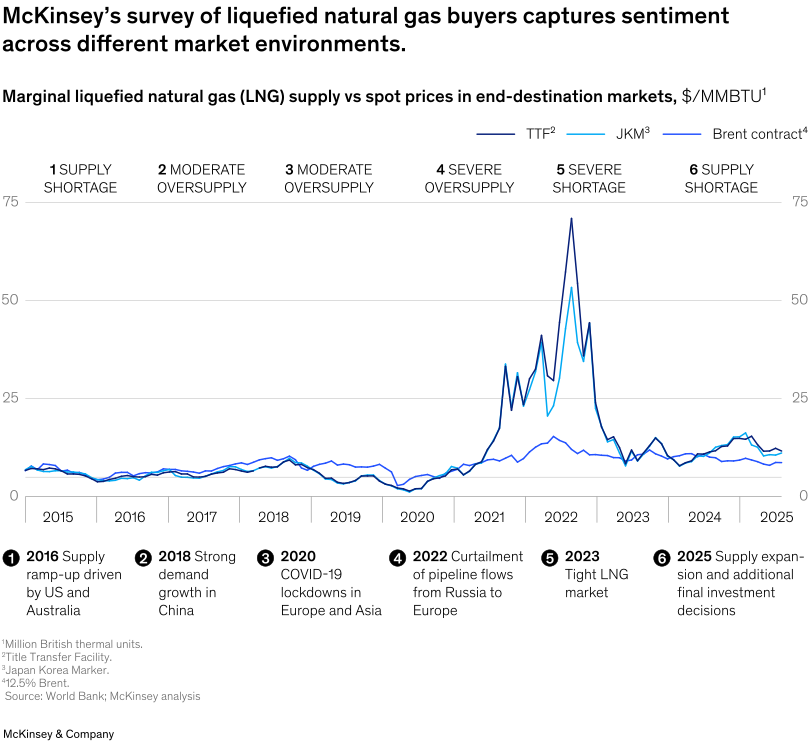
To learn how LNG buyers are reacting to these moves, McKinsey surveyed 41 buyers across important global markets in the biennial LNG Buyers’ Survey in July 2025 (see sidebar, “About the survey”). The buyers’ responses reveal their perspectives on future gas demand, risk management, and market opportunities. In a global energy market facing potential price volatility, supply chain challenges, and considerable uncertainty, the survey finds that LNG buyers are prioritizing flexibility, including diversifying supply and varying contract terms. This article examines recent trends in buyers’ procurement strategies and identifies opportunities for suppliers to proactively address LNG buyers’ evolving priorities and needs.
Results from the 2025 LNG Buyers’ Survey highlight a pivotal shift in global procurement strategies that’s driven by an increasingly balanced market, evolving geopolitical dynamics, and regional differences in demand. Buyers are responding to these changes by prioritizing flexibility in contract terms and supply sources, actively managing risk through diversification, and adopting a mix of short- and long-term agreements. As new supply enters the market and prices stabilize, these adaptive approaches position LNG buyers to capitalize on emerging opportunities while remaining resilient amid ongoing uncertainty in the global energy landscape. For suppliers’ part, those that tailor their offerings to buyers’ needs are in the best position to establish strategic partnerships and achieve long-term growth.