Investment activity in private markets across Asia–Pacific has generally contracted in recent years, pressured by everything from significant geopolitical shifts to the reorientation of global supply chains and foreign exchange volatility. However, India has emerged as an increasingly attractive destination for limited partner (LP) allocators. Its regional weight has increased amid China’s slowdown, and improved performance has seen investment activity from private equity and venture capital deals expand 1.6-fold to $207 billion between 2016–20 and 2021–25.1 Exits for the same period more than doubled to around $120 billion.2
Yet India also faces challenges. While its regional standing has improved, its capital pool remains narrow. Private-capital intensity relative to GDP has stagnated: Deployment is heavily concentrated in a limited set of sectors, while other sectors central to India’s growth ambitions do not attract meaningful private-market investment. This concentration extends to fundraising among fund managers. While fundraising by domestic private equity firms has increased, capital remains skewed, akin to a winner-take-all dynamic: The six largest general partners (GPs) accounted for 64 percent of the total of $13.68 billion raised between 2022 and 2024, up from 59 percent from 2016 to 2018.3
Addressing structural constraints limiting the breadth and depth of India’s private markets could create additional investable opportunities and enable a more diversified capital pool across sectors, asset classes, and fund managers. To better understand the country’s investment dynamics and measures that broaden its appeal, we surveyed more than 50 global LPs about their perceptions, preferences, and anticipated activities in India (see sidebar, “About our research”).4 Here’s what we found.
India’s private markets outperform regionally
After attracting just $6.4 billion in investment in 2006, India’s private markets are today central to the country’s economic growth.5 Private-capital deployment across asset classes was $44 billion in 2025, with its share relative to the country’s GDP more than doubling to 1.42 percent in the past decade compared with 0.68 percent from 2006 to 2015.6
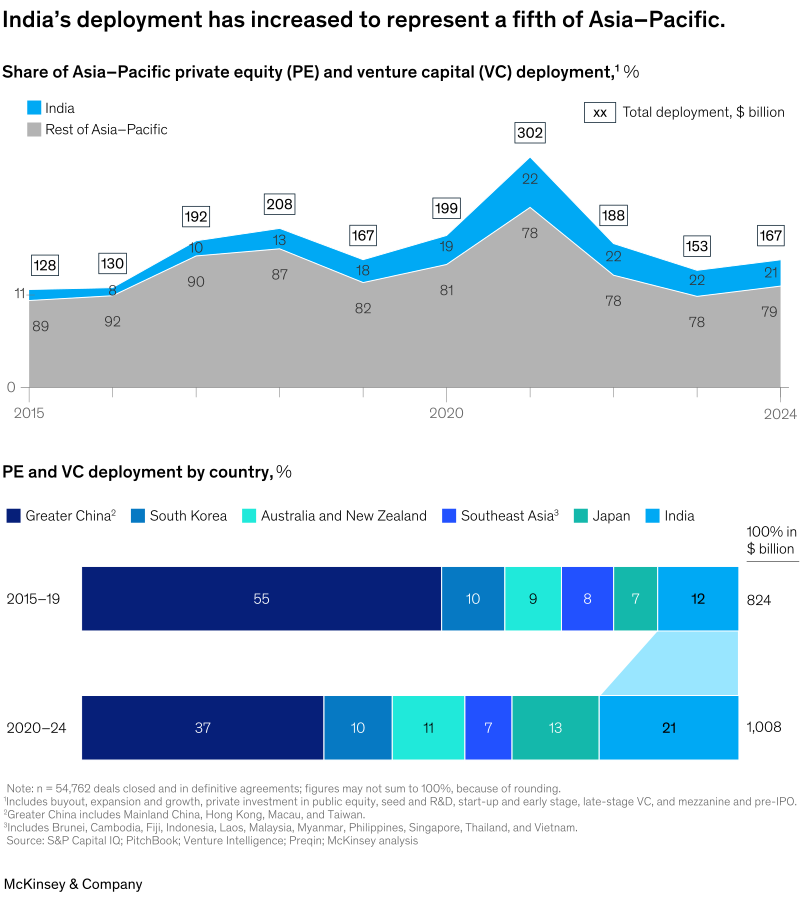
India has also emerged as a relative outperformer in Asia–Pacific’s contracting private-markets landscape.7 While the country has not been immune to the regional slowdown—private-capital deployment has plateaued since peaking at $74 billion in 2021—India’s total share of Asia–Pacific private equity (PE) and venture capital (VC) deployment has increased from around 12 percent between 2015 and 2019 to about 21 percent from 2020 to 2024 (Exhibit 1).8 And its attractiveness as a destination for alternatives investors seeking diversified long-term growth may further increase; India’s share of global GDP is projected to rise from 3.7 percent in 2025 to 7.0 percent by 2050.9
Limited partners are increasingly prioritizing India
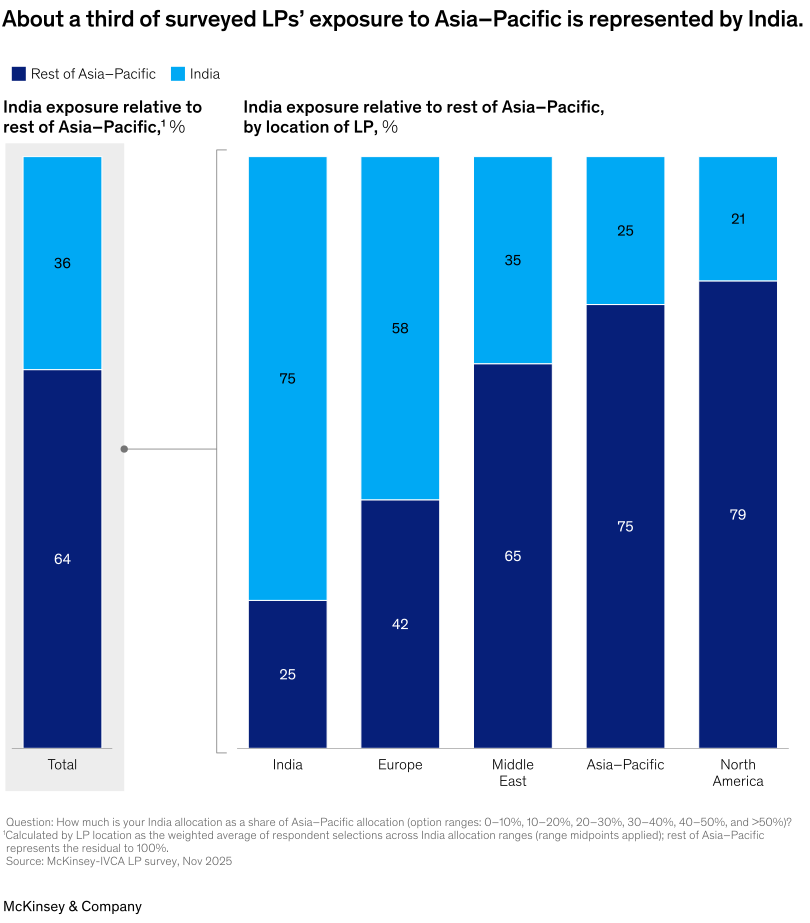
India accounts for more than a third of all Asia–Pacific investment exposure among surveyed LPs. Europe-based LPs indicated the highest exposure (around 60 percent), while exposure among those based in the Middle East, Asia–Pacific, and North America was about 20 to 30 percent of their total Asia–Pacific capital (Exhibit 2).
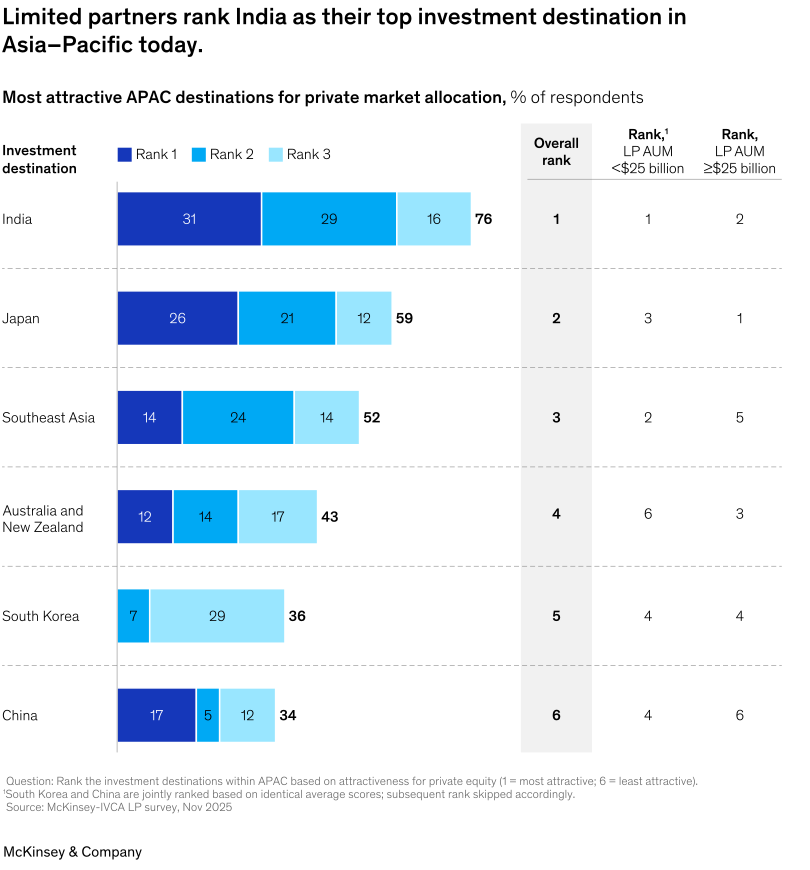
India was the most attractive private-market destination in the Asia–Pacific, with 31 percent ranking it first and 76 percent placing it within their top three choices (Exhibit 3). More nuance emerges by LP size, with Japan preferred by LPs with more than $25 billion in assets under management (AUM). China’s ranking was polarized: 17 percent ranked it first, but 66 percent placed it fifth or sixth relative to other Asia–Pacific markets.10 These broad allocation preferences also reflect how markets have shifted in the past decade. For example, within Asia–Pacific, India and Japan’s joint share of PE and VC investment increased to 34 percent for 2020 to 2024 from 19 percent in 2015 to 2019. For the same period, China’s share declined to 37 percent from 55 percent.
Investors have two lenses on India
Two views of India’s attractiveness as an investment destination have emerged. High-allocator LPs—major global investors characterized by a proactive stance to Asian exposure for growth and diversification, sustained allocations, higher future allocation intent, active co-investment participation with GP partners, and more frequent on-ground visits—tend to view the country as a complex, yet scalable, opportunity-rich private-markets destination. Moderate allocators, which carefully weigh known opportunities at home against emerging market risks, episodic exposure and track records, and more muted allocation intent, view India as a bright spot for GDP growth supported by a reform-oriented government. Yet while they feel accessing India’s opportunities remains highly contested and richly valued, it requires a look beyond the macro context and they approach the country with greater caution.11 As one group bets on India’s future, the other is more anchored on its past record.
India is a complex environment, where granular opportunity identification often matters far more than macro bets, with opposing views on whether India’s opportunities outweigh its risks. Consistent with those attributes, respondents provided insights into measures investors and policymakers can take to improve the country’s attractiveness as an investment destination. The survey compared high and moderate allocators across three areas: their views of India’s macro environment, PE market fundamentals, and private-market manager quality and selection considerations.
Investor perceptions of the India opportunity
How do LPs view the opportunity presented by India? It depends. While participation in India has become more intentional, it is deliberate and risk managed. LP preferences are consistent with historical deployment trends around asset class, strategy, sector, and co-investment choices, and are designed to mitigate perceived macro and local private-market risks and access opportunities. Our survey examined these elements in depth, as well as attitudes toward allocations to India-based general partners (GPs).
Several pathways can enhance India’s position as a destination for greater pools of foreign investment capital
Investor belief in the potential of India’s private market is strong and growing. Yet, relative to the size of the Indian economy, private-capital investments remain modest. Unlocking additional capital would require addressing execution and structural gaps, including the comparatively lower ranking of Indian GPs on DPI and exit record, and ease-of-doing-business factors (especially in manufacturing and capital-intensive sectors), as well as the need to mitigate several perceived country-specific risks. High allocators appear to be able to navigate some of these risks through their manager selection construction and investment portfolios and sector construction, pointing the way to the kinds of measures required to broaden India’s investment attractiveness.
India general partners retain significant room to grow
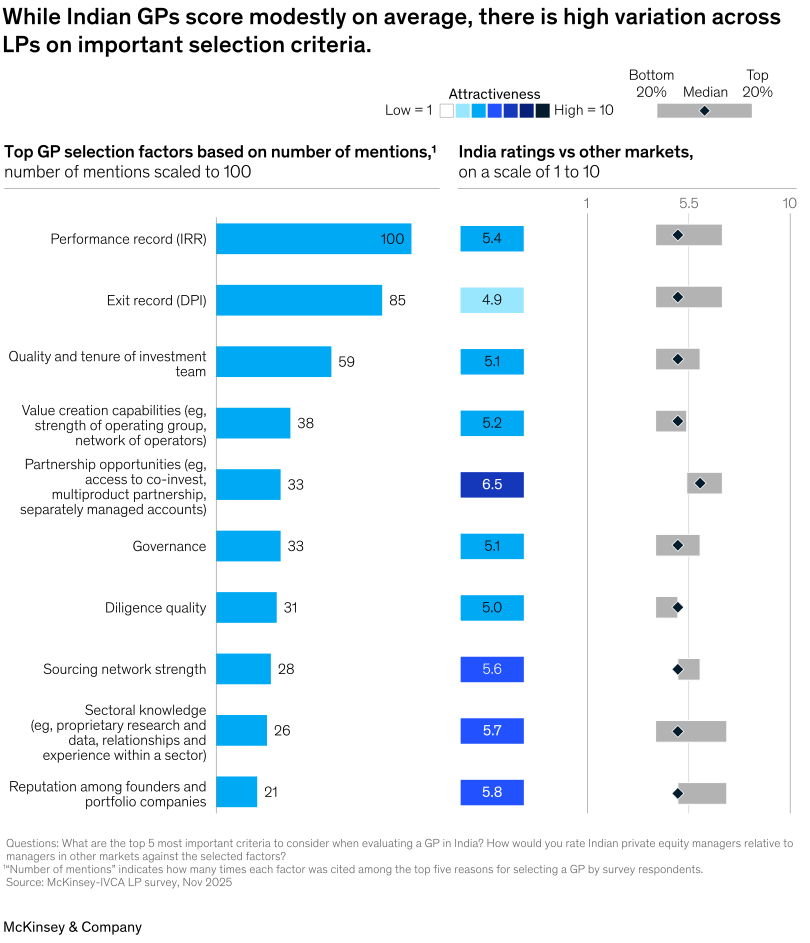
Returns on PE deals in which exits have occurred have improved over time, with the median IRR rising from 18.0 percent for the 2008 vintage year to 33.1 percent for the 2019 vintage year.12 Yet even though exit activity has improved in the past five years, a meaningful share of invested capital remains unrealized. Survey respondents ranked India’s GPs relatively modestly compared with other market GPs across numerous important selection metrics, including performance and IRR, exit record, diligence record, and the quality and tenure of investment teams (Exhibit 4). There remains wide variance among LPs based on their individual exposures and experiences. For example, top- versus bottom-quintile scores for both IRR and DPI were 7.0 versus 4.0.
Strengthening liquidity and exit pathways will be critical to improving global competitiveness. Measures such as expanding listing opportunities, deepening domestic capital markets, and easing cross-border capital flow could enhance options for investors to exit and improve DPI outcomes over time.
Making doing business easier and mitigating macro risk
LPs highlighted the need for a more predictable and less complex tax regime, faster regulatory approvals, clearer capital flow processes, and easier talent mobility. While currency risk persists, LPs account for annual Indian rupee depreciation of 2 to 3 percent in their underwriting. Some also view a weaker Indian rupee as a lever to raise the cost of imports, boosting demand among Indian domestic producers and export competitiveness.
To address macro risks, LPs highlight streamlining processes, enhancing regulatory clarity to make doing business easier, and facilitating smoother capital flows into and out of India, which includes greater clarity around valuation norms and tax treatment (including carried interest taxation and pass-through status), and simplifying approval processes for cross-border transactions. It also encompasses shaping next-generation reforms for alternative investment funds; enabling structures that better accommodate long-term institutional capital (such as longer-duration vehicles with periodic liquidity windows); and aligning regulatory, capital gains tax, and disclosure standards more closely with global norms.
Addressing structural issues could support sector diversification
High capital concentration in a limited set of sectors contributes to valuation pressure. Addressing structural constraints could unlock capital into India’s emerging growth arenas, such as those identified by the McKinsey Global Institute, including AI software and services, urban construction, medical devices, aerospace and defense, leasing, digital infrastructure (for example, data centers), specialty chemicals, and cloud services.13 These sectors present opportunities for growth equity, roll-ups, and platform plays, particularly where deal sizes have historically been subscale and India’s endowments are favorable. However, LPs and GPs note several sunrise sectors are capital intensive, and ease-of-doing-business delays increase risk and impact returns.
Broadening asset class participation can expand the market
Beyond traditional PE and VC, there are opportunities across additional asset classes. Infrastructure and infrastructure investment trusts have seen renewed interest as investors seek predictable, long-duration cash flows. Roads, renewables, transmission, and pipelines offer predictable cash flow attractive to stable low beta yield-oriented investors. Real estate has gained momentum, with around $25 billion deployed from 2021 to 2025,14 particularly in logistics and warehousing. Structural growth in e-commerce, manufacturing, and supply chain localization is driving demand for high-quality industrial assets.
Recent updates to REITs and infrastructure investment trust (InvITs) regulations15—including expanded investment flexibility, streamlined issuance pathways, tax benefits, and broader eligibility for institutional capital—are designed to enhance operational efficiency and portfolio optionality. Together, these measures could support deeper institutional participation and improve liquidity across India’s real estate and infrastructure investment trusts.
Private credit is also an emerging opportunity. About $36 billion was deployed in India from 2020 to 2024,16 driven by factors including demand for bespoke financing, improved creditor resolution frameworks, and persistent funding gaps for mid-market enterprises. Indeed, LPs note that several domestic funds have launched plans to participate in select credit areas, including investment-grade bonds, senior or subordinated debt, mezzanine financing, and distressed private credit.
Finally, recent moves by India’s pension regulator to widen investment options for private pension funds to alternative investment funds (AIFs) is expected to bring more capital to domestic funds, providing a much-needed expansion of the LP base beyond foreign investors.
India is an increasingly attractive institutional investment destination within Asia–Pacific. Yet while firms with both high and moderate allocations agree on the country’s strengths, addressing weaknesses they have identified and areas where their views diverge is critical to making India more attractive as an investment destination. Doing so could not only unlock a deeper pool of investable opportunities but foster a more diversified capital pool to power an increasingly critical driver of the country’s economic growth in high-potential sunrise sectors.