At The View, one of Union Square Hospitality Group’s (USHG) newest restaurants, New York City unfurls in a single, 90-minute revolution. The 360-degree rotating restaurant in the sky, which first opened in 1985 but closed during the pandemic before USHG took over, is a concept befitting USHG.
Unlike many restaurant groups that concentrate exclusively on one category, USHG operates across the sector. Its portfolio includes Michelin-starred restaurants such as Gramercy Tavern and The Modern, a chain of all-day cafés called Daily Provisions, a growing consulting business, and an investment arm, Enlightened Hospitality Investments. Founded in 1985 by restaurateur Danny Meyer, the New York–based company employs roughly 1,900 people. That breadth gives USHG a panoramic perspective on how customer preferences and restaurant operating models are evolving.
In August, McKinsey Senior Partner Ben Mathews sat down at The View with Chip Wade, the group’s chief executive officer, and John Ragan, president of full-service restaurants, for a wide-ranging conversation on what it means to put employees first, how technology and data are reshaping the guest experience, and what the future of dining might look like.
This interview has been edited for length and clarity.
Ben Mathews: We’re here at The View, New York’s only rotating restaurant. It’s one of the newest and biggest restaurants in the Union Square Hospitality Group portfolio. It’s also a beautiful space. Why did The View make sense for USHG? Is it a harbinger of what USHG might do in the future?
Chip Wade: When we were thinking about this design, we really wanted to make sure we had a design that was indicative of the community of New York and really was a place both tourists and New Yorkers would fall in love with. Ultimately, in the decision process, we evaluate whether we feel now is the right place and time to bring a certain concept to market before getting to work.
Putting employees first
Ben Mathews: USHG has a unique management philosophy called “enlightened hospitality,” which also serves as the name of the company’s investment arm. Rather than the usual restaurant adage of “the customer is always right,” you put employees first, followed by guests, community, suppliers, and then investors. How does that philosophy show up in practice?
Chip Wade: Enlightened hospitality is really the foundational pillar of USHG. It is not a typical pyramid. It is a virtuous cycle where all five of those stakeholder groups can win. The pandemic was the best example of this philosophy in practice. New York was hit tremendously hard during the COVID-19 pandemic. We made the decision to close our restaurants before the city mandated it, and it was largely because we wanted to make sure that our employees’ well-being and safety came first.
At the time, we had an organization that was approximately 2,400 employees, chefs, leaders, and servers. We had to lay off 95 percent of our workforce. But because we follow enlightened hospitality, we found a way to be a great “unemployer” and stay engaged with the employees, help them find other jobs in the communities, knowing that we would come back. And when we came back, we called our employees—and a majority of them returned.
Ben Mathews: That’s impressive. How did your investors react?
Chip Wade: We’re privately held, and we have a fantastic board. They were very supportive of the steps we took. We often talk about “tomorrow dollars” at USHG, which is really a second philosophy around taking a long-term view on the workplace, about business, about new restaurant growth. When you start with the framework of tomorrow dollars, then it’s easy to make decisions.
Leadership that is compassionate and flexible
Ben Mathews: That’s certainly an example of values in action. But is there an example of when those values slipped? And how did that failure shape your leadership style?
Chip Wade: Much earlier in my career, I was a general manager of a restaurant in Boston. We were having a very difficult shift, and a server approached me and wanted me to talk to a guest. It was clear to me that the guests were not having a great experience. I took some of my frustration and anger out on the guests, and as I came back down to have a conversation with the server, my immaturity and my frustrations came out. I’m not proud of this, but I berated this young leader, giving feedback in a very stern voice, and he began to cry.
For me, that was a profound moment because a leader’s role is never to inflict pain. For the next week I went about publicly apologizing, whether that employee was there or not, to the rest of the staff. What I learned from that is the power of connecting with our employees at all levels, the power of my voice or a leader’s voice, and the importance of not inflicting pain on the individual.
Later in my career, I ran development for a casual-dining chain. I was strong willed and determined to put a restaurant in Fenton, Missouri. I convinced the president and the board to do that—and it was a complete and utter disaster. That taught me the power of making sure you know the communities where you aspire to put a restaurant. When you put a brick-and-mortar restaurant in a town or in a city, it will only be successful if you’ve made meaningful strides into building networks and communities.

The future of restaurants: Precision in the kitchen, connection at the table
John Ragan: When you open a restaurant, you might work on it for three, four, or five years before you unlock the doors for the first time. In our industry, you have to stay flexible because the minute you open those doors to the world, that’s not your restaurant anymore. It’s their restaurant.
Technology as the great enabler
Ben Mathews: What’s your vision for the future of restaurants and the future of the guest experience?
Chip Wade: Thinking about restaurants of the future begins with the consumers. What’s happening with the younger demographic? What do they need, want, and expect from a fine-dining, full-service restaurant or from a fast-casual restaurant? Often, when we’re in a conversation with Danny [Meyer, USHG founder], John, and a developer, and we’re talking about a new project, one of Danny’s favorite questions is, “What does this community need? Does it need a great Italian spot—and, more specifically, is it a Roman trattoria or is it Tuscany inspired?” From there, we start to ideate.
We know that the use of technology is going to continue to accelerate. It will become one of the great “solves” for both the employees as well as the guests. We think about technology as being an enabler to remove pain points from their dining experience.
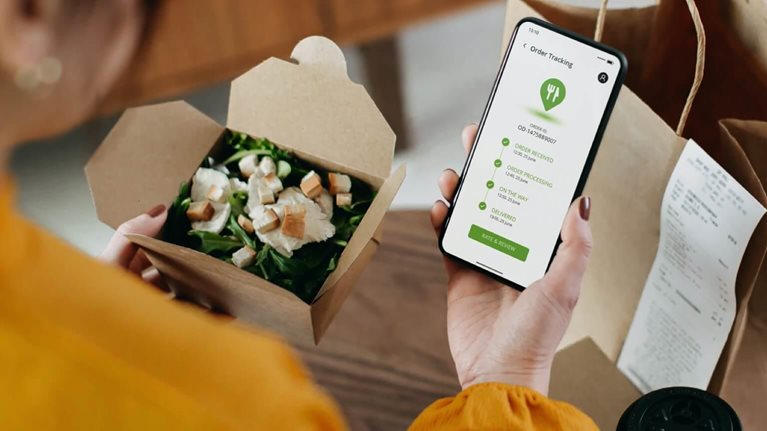
Daily Provisions is a great example of a restaurant of the future. It was curated by Danny [Meyer] in 2017 as an all-day neighborhood kitchen. We learned a lot from the first one. Then COVID came, and one of the things we saw was a significant increase in revenue via third parties. People were ordering on their app, and delivery became a sizable revenue stream for that brand. So we had to update our packaging and menu offerings, and we had to make sure our employees understood that speed was paramount.
Ben Mathews: Bringing new technology into a restaurant to accelerate speed of service is tempting for any restaurant operator, but how do you do so while also maintaining the customer experience?
Chip Wade: It is possible for us to infuse hospitality while simultaneously inserting technology that makes it easier for both the guest and the employees. The guests are still going to interface with the maître d’; they’re still going to have a great conversation with the bartender. But technology should enable the bartender to do their job faster.
John Ragan: When we can use technology, we can multiply hospitality. I’ll give you an example: I had dinner six months ago, and I really loved the bottle of wine I had, but I can’t remember exactly what it was. But thanks to reservation platforms that allow us to keep guest preference notes, we can remember; we’re also using digital dining platforms, which eliminate the need for check drops and table-side payments, to deliver even better hospitality.
Chip Wade: Like most organizations, we’re taking an aggressive approach to AI to improve productivity. You’ll never see robots in the kitchen of USHG; but if we can use AI and technology to better forecast inventory needs, run quality assurance checks, and conduct supply chain market analyses, we can procure better and improve our supply chain management. Then we can spend more time in the dining rooms. And that, for us, is where the wins happen.
Ben Mathews: How might technology change how USHG employees spend time in the kitchen? Will it allow a chef to come out to the dining room and engage with diners more often and for longer?
John Ragan: Years ago, a chef would just be head down in the kitchen, but in so many of the restaurants that we love today, you know the chef. They’re part of the brand, shaking hands and kissing babies and going to events.
All of these things are very important for the visibility of a restaurant. But there’s a time crunch because if they’re doing that, they can’t spend 60 hours a week in the kitchen. So we leverage inventory and ordering platforms that allow chefs to complete ordering with a lot less friction. These platforms allow chefs to see real-time product usage and auto-generate reorders when stock is low. That way, our chefs can just approve the order rather than having to put their hands on every single item every day. A lot of these technologies are cutting edge but will become more common in time, helping our chefs not only be great leaders but also be great ambassadors of the business.
Chip Wade: I’ve been at this for about 40 years. When I was writing schedules for hourly employees, it was literally pen and paper, then that morphed into Excel spreadsheets. Today, we’re able to gather data on sales trends for food or wine that are happening in real time. We can also tell what events or holidays are coming up in the city, and we get all that information to our chefs faster today. That allows them to write a schedule using data in real time. It’s not only the production of a schedule for the hourly employees, but it’s also a well-informed schedule to make sure we have the right employees at the right stations at the right time when the business requires it.
Soft skills: Front-of-house must-haves
Ben Mathews: As for the front of the house, I imagine there are new skills and capabilities that will be required in the future. How do you expect those roles to change?
John Ragan: In the coming years, you’ll see restaurants continue to get smaller from a footprint standpoint. Very rarely do you see large grand restaurants anymore, at least not in the heart of New York. When you think about restaurants that have a smaller footprint, I think in the front of the house you’ll see leaders who are generalists. They’re able to do most aspects of the leadership of the restaurant, whether it be directing the staff, working on the reservations, and everything in between. I think the days of saying, “I am a very specialized leader” are probably behind us.
Chip Wade: When we think about our front-of-house teams, and much of this applies to our culinarians as well, we often approach this from a perspective of what we often call “51 percent and 49 percent.” We want all our employees to score a “100” on their test. For us, we describe the 49 percent as the technical skill sets to be very proficient in your job. That includes how you greet a guest, how fast you can deliver a beverage, the way you bring the food and the entrees from the left versus the right. The 51 percent is about emotional intelligence. We’re constantly looking for employees who have a high degree of curiosity. They show a high degree of empathy. In the front of the house, those skills—those behaviors—are even more important.
A lot of restaurants often ask the question, “How’d you do in sales last night?” or “How many covers1 did you do last night?” That’s important to us as well, but we also think about, “How many new memories did we create?”
On the tech wish list: Frictionless payments and deeper consumer insights
Ben Mathews: What tech would you like to see come to the restaurant industry?
John Ragan: When we think about the restaurant experience, people have less time now. The idea of having a two-hour dinner is a stretch most nights of the week. We want to make sure people can have a great experience at the table but not be tethered to the table. We talk a lot about the notion of “get up and go,” for example. When I’m done eating, is there technology that can take care of the check for me so I don’t need to wait 15 minutes to sign a piece of paper?
Chip Wade: One that we’re working on is accelerating the guest payment process so that the guest can experience their payment process very similarly to what they experience in an Uber: When my ride ends, I say goodbye to the driver, and I get out. If we can achieve that in the restaurant, it’s also better for the restaurant because we’re able to turn tables faster.
We’re constantly looking at technologies that will enable us to communicate with our workforce faster and more efficiently. If there is an emergency, for example, and John wants to send a message to his chefs and general managers, email is probably not the most efficient way to get in touch with them, since they may not always have access to their email. Right now, we use the same platform to message our team members that they use to clock in and out.
Software that will enable us to capture consumers’ preferences will be key. I like bourbon, I’m allergic to eggplant, and I don’t like raw walnuts. If the server has all that information as she’s approaching the table, then you remove a lot of awkwardness and dialogue. She can say, “Mr. Wade, I understand you love bourbon. We have a great drink that our beverage director just created.” She can get right into the business of making the guest feel valued and special.
John Ragan: That server could also say, “And this pasta dish is excellent. You’ll notice that the menu says it has walnuts, but we’d be happy to make it for you without walnuts.”
Moonshots on the menu
Ben Mathews: I was in Southern California with my family and passed one of these robots that was clearly delivering a pizza or a sandwich to someone. Ten years ago, that would have been considered a moonshot in the restaurant industry. What’s your moonshot idea for the future of the restaurant industry?
Chip Wade: Young adults want more experiences. The question becomes: How can I have not just an eating experience but a full dining experience? In the future, the restaurant could move beyond a four-wall brick-and-mortar location. You could have a dining experience on a private yacht, or a dining experience that moves with you on vacation. Imagine taking [Gramercy Tavern executive chef] Mike Anthony with you and your family on vacation, and he becomes your private chef as you move through villas of Tuscany. I don’t know if that’s going to happen specifically, but I can see a future where the dining experience meets travel in new ways. In short: How can I bring my favorite restaurant with me on vacation?
John Ragan: You’re already seeing green shoots of that. When you go to a baseball game now, you can get great food. It used to be that you had to eat what was on offer. There are all kinds of examples of that because of the demand of the guest.
Chip Wade: While we can’t predict what’s going to happen in ten or 15 years or where consumers are going to dine, we can predict pretty confidently that a gathering place, where a community feels valued and cared for, will trump everything else that’s happening in the future.