China’s economy in the first half of 2025 presents a complex and often contradictory picture. Consumer confidence remains low, the property market is under sustained stress, and households continue to save at historically high levels.
Yet beyond these headlines, consumers appear to have quietly moved on, as reflected in data we published in May 2025.1 Indeed, a comprehensive look at the first half of 2025 confirms this trend: Retail sales are climbing in key categories, air travel has surpassed 2019 levels, auto exports have risen to the top globally, and Chinese pop culture is gaining an international foothold.
In this edition of the China Brief, we examine the broader macro signals—and then zoom in on five surprising new developments that highlight China’s next consumer wave. These are not simply niche trends; they are harbingers of structural shifts in mobility, culture, capital, and consumer behavior.
Consumer confidence remains subdued
Despite the return of growth in several sectors, China’s Consumer Confidence Index (CCI) remains near historic lows and has only gradually been recovering. Concerns about employment, economic stability, and especially the ongoing property downturn are still top of mind. Real estate continues to weigh heavily on sentiment, with new home transactions—as measured by square meters sold— still below prepandemic levels. While consumer sentiment has only seen marginal improvement, we reported in June that it remains well above the levels of sentiment in mature markets like the United States, Western Europe, or Japan.2
Households continue to save aggressively
The caution among households is also reflected in savings behavior. Total household deposits reached 163 trillion renminbi in H1 2025. The personal savings rate has remained above 30 percent since 2020. According to the People’s Bank of China, net new household savings deposits in the first half of 2025 (1H 2025) reached 17.94 trillion renminbi, a sharp increase from 11.46 trillion renminbi in 1H 2024 and 6.53 trillion renminbi in 1H 2023. The preference among consumers for stashing their money in savings suggests ongoing uncertainty—but also hints at potential demand waiting to be unlocked.
Retail sales show resilience in select categories
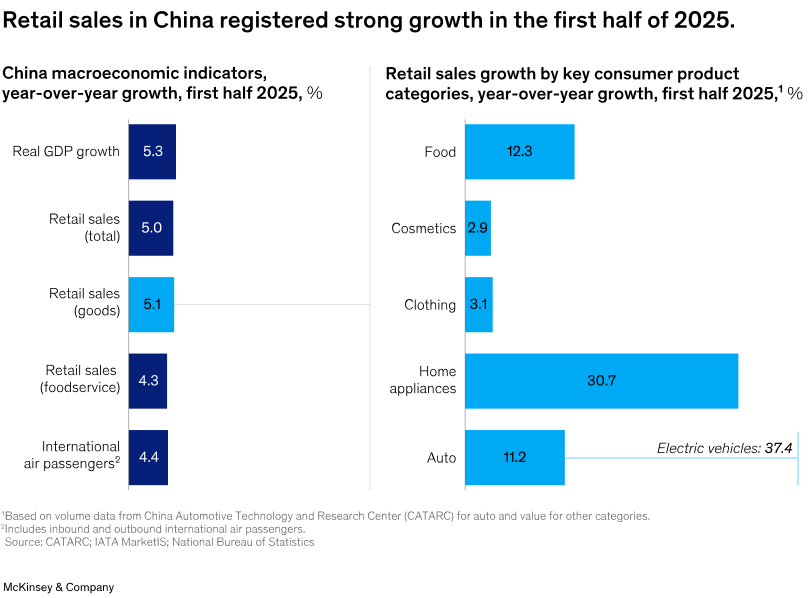
While some categories such as apparel and cosmetics continue to face challenges, recent data paints a picture of a Chinese consumer that is willing to spend again. As we wrote in our report in May, the Chinese consumer has “moved on.”3 Retail sales grew 5 percent year-on-year in the first half, exceeding expectations, with May posting a particularly strong 6.4 percent increase. Food led with 12.3 percent growth. This was driven by the rapid expansion of new channels such as snack specialty stores (for example, Hotmaxx), membership and discount retailers (for example, Sam’s Club, Aldi, and regional chains), a consumer shift toward healthier choices, and the launch of innovative beverage categories such as energy drinks and sugar-free teas.
Auto sales rose by a robust 11.2 percent, driven by a 37.2 percent year-on-year increase in electric vehicle (EV) sales (Exhibit 1).
Another sign of this momentum came during this year’s 618 Shopping Festival, which registered a robust 15.2 growth in gross merchandise value (GMV), according to market research firm Syntun. Categories like appliances, sports and outdoor, and consumer health posted double-digit growth.
Outbound travel has fully recovered
Travel has roared back. Chinese consumers are flying in large numbers again. In the first and second quarters of 2025, inbound and outbound international air passenger traffic exceeded 2019 levels by 9 percent and 13 percent, respectively. Domestic travel continued to surge with 329 million trips taken in the first half of 2025, an 18 percent increase over 2019 levels.
Electric vehicles are powering confidence and competitiveness
Perhaps the most powerful symbol of China’s dual industrial and consumer transformation is the electric vehicle boom. In 2024, EVs accounted for 46 percent of all passenger vehicle (PV) sales in China—up from just 4 percent in 2019. In the third quarter of 2024, the share of EVs tipped past 50 percent for the first time, and continues to occupy roughly a 50 percent share of all cars sold today. Domestic automakers now lead their home market, with a combined 58 percent of China’s PV market share in 2024—nearly double the 33 percent share they held in 2019. Notably, domestic brands control nearly 90 percent of the EV market but just 32 percent of the non-EV segment.
Five surprising facts about China’s consumer recovery
In the previous edition of China Brief, I maintained a cautiously optimistic outlook, noting the limited availability of fresh market data. Today, the situation is markedly different. Although macro indicators remain mixed and headwinds persist, several lesser-known developments are signaling deeper shifts in how China consumes, innovates, and competes both at home and on the global stage. These changes may not dominate daily headlines, but they are actively reshaping China’s economic future in real time.
Chinese EVs are a global phenomenon
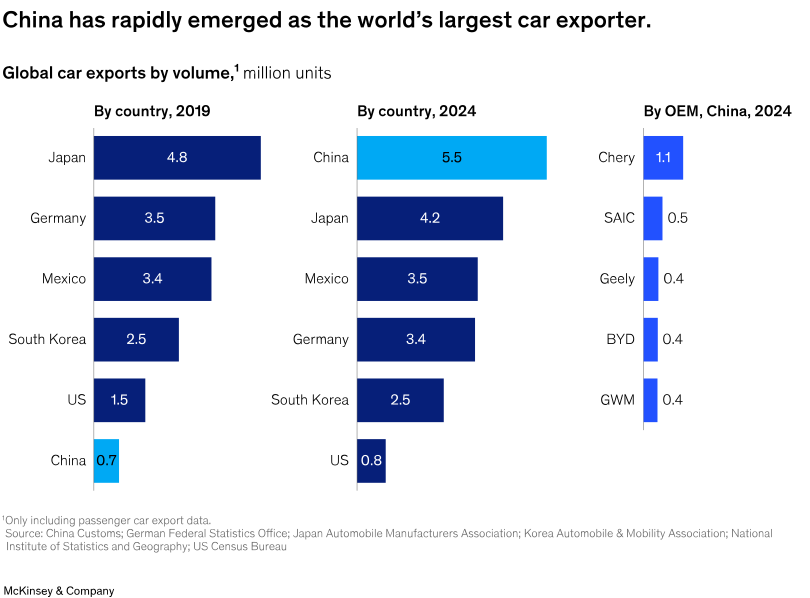
One of the most surprising developments is the rapid emergence of China as the world’s largest car exporter, surpassing the world’s long-established auto exporting behemoths Japan and Germany in 2023. In 2024, China exported nearly 5.5 million cars, an eightfold increase over the 725,000 units shipped in 2019. Even more astonishing is the meteoric rise of the value of China’s auto exports, driven by the doubling of the average unit price per vehicle from just 47,000 renminbi in 2019 to 111,000 renminbi in 2024 (Exhibit 2).
EVs have occupied a major share of China’s auto exports, with nearly 40 percent of China’s PV exports in 2024 and nearly half of all PVs in the first half of 2025 comprised of electric vehicles. Remarkably, BYD surpassed Tesla in 2024 to become the largest EV manufacturer in the world, selling 4.27 million EV units in 2024 compared to Tesla’s 1.79 million units, generating $108 billion in sales compared with Tesla’s $97.7 billion. Tesla, BMW, and other foreign manufacturers have leveraged China as a production base and launching pad for exporting EVs, with Tesla shipping EVs from its plant in Shanghai to Europe, Australia, and Asian markets including India, the Philippines, and Thailand.
China’s rapid emergence as the world’s largest exporter of autos is not just a story of low-cost production; it’s also a story of innovation and scale. Xiaomi, long known as a consumer tech company and bestselling manufacturer of smartphones, surprised the auto industry with the launch of two new EV models, the Xiaomi SU7 in March 2024, followed by the SU7 Ultra in February 2025. Despite its premium sticker price of 529,900 renminbi, the SU7 Ultra sold 15,000 units within the first 24 hours of hitting the market. And in June, Xiaomi sent shockwaves through the industry again when the SU7 Ultra broke the speed record for a mass-produced EV at the race track in Nürburgring, Germany with a lap time of just 7:04 minutes.
China’s carmakers are no longer playing catch-up in the global auto race. They’re taking pole position—in design, performance, and global reach.
Record numbers of global travelers visiting China
While much attention has been paid to the impressive post-pandemic recovery of outbound travel from China, inbound tourism is experiencing a less well-publicized but equally astonishing growth spurt. Following a 50 percent surge in inbound flights in 2024, interest in China among business travelers and tourists continued to explode in 2025. In Q1 2025, China welcomed over 35 million inbound visitors—a 19.6 percent year-on-year increase and the highest quarterly total in history. Year-on-year growth in the entire first half of 2025 hit 22 percent (Exhibit 3).

China’s easing of entry restrictions and the expansion of its visa-free transit policy in December 2024 are the primary catalysts for this step-change growth in inbound travelers. China now offers 240-hour visa-free entry to travelers from 55 countries, up from 144 hours.
With large airports that offer extensive connections to the world’s major air hubs, Beijing, Shanghai, Guangzhou, and Shenzhen remain the natural entry points for global travelers to China. But they aren’t just completing their trips there: international travelers are venturing well beyond China’s megacities and exploring a greater variety of tourist destinations in inland and western China, such as Chengdu, Xi’an, Kunming, and Chongqing.
Consumer growth funded by strong capital markets
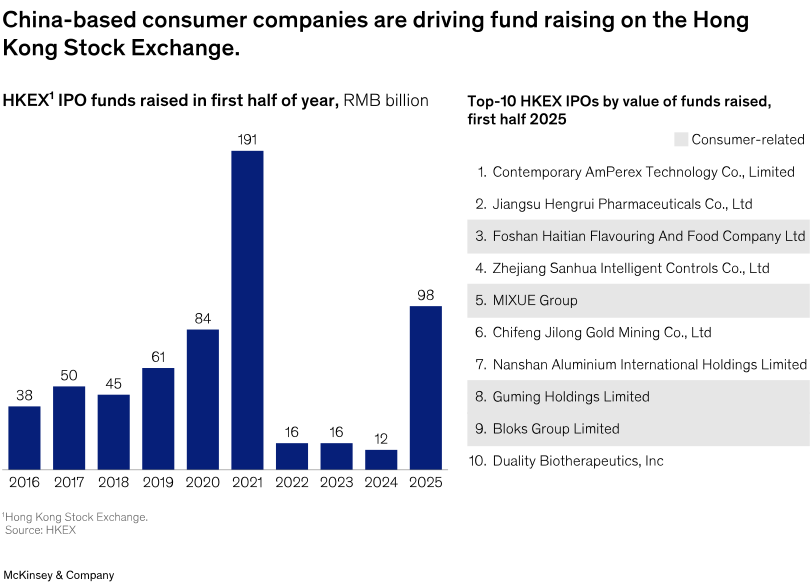
The revival of capital markets in 2025 offers a clear indicator of the revival in economic activity underway in China. After a prolonged lull, fundraising on the Hong Kong Stock Exchange (HKEX) has experienced an impressive rebound. Funds raised jumped to Hong Kong Dollars (HKD) 107.1 billion in the first half of 2025, compared to just HKD 13 billion in the same period in 2024. In Mainland China, 51 IPOs raised 37.3 billion renminbi in the first half of 2025—while not yet at 2021–2022 peaks, this represents a robust figure.
Interestingly, consumer companies played a significant role in this revival, a sign that investors are confident about the medium and long-term prospects of Chinese consumption. During the first half of 2025, four of the largest ten IPOs in Hong Kong—as measured by funds raised—were executed by consumer companies. Two popular retail brands—Mainland-based tea shop chains Mixue and Guming—featured prominently on the leader board of the top ten IPOs. Mixue, now the world’s largest food and beverage chain by store count—46,479 globally, surpassing McDonald’s and Starbucks—ranked fifth by IPO proceeds on HKEX in the first half of 2025. With nearly 4,900 overseas locations, Mixue is rapidly making inroads into global markets. Guming ranked eighth among the top ten IPOs during this period. Proceeds from these IPOs will largely be used to fund product innovation as well as domestic and international expansion (Exhibit 4).
The second quarter of 2025 has seen a substantial increase in private equity and venture capital activity, with investments of 228 billion renminbi, more than double that of the prior quarter and the strongest quarter since the fourth quarter of 2022. Including the recently announced transactions involving China’s leading hypermarket chain RT Mart and leading luxury department store SKP, these numbers would be even higher.
Two investment theses are particularly attractive for investors. On the one hand, asset-heavy retail and quick service restaurant players are seeking investors and strategic partners to reduce costs, launch innovative store formats, identify new go-to-market channels, and pursue growth opportunities in lower-tier cities and markets outside of China.
One the other hand, as consumer confidence gradually returns, global brands backed by Chinese private equity firms are likely to accelerate their expansion into the Chinese and Asian markets, with a view to replicating the success of Amer Sports and other pioneers that have succeeded at building global brands aimed at China’s rising middle class.
We increasingly see private equity investors from China looking for companies in Southeast Asia and Europe that could benefit from Chinese technology and innovation.
Chinese pop culture is going global
Chinese cultural exports are making noteworthy inroads in global markets, with video games and collectible toys leading the charge. The video game Black Myth: Wukong has become a cultural phenomenon, with 30 percent of its players hailing from outside China. Drawing inspiration from Chinese tourist landmarks, the game has sold over 28 million units since its August 2024 launch, generating 9 billion renminbi in revenue and becoming the highest-grossing buy-to-play game in Chinese history. At its peak, it reached 3 million concurrent players on the popular gaming platform Steam, the second-highest number of simultaneous players of all time.
The game’s influence extends beyond the digital realm. Shanxi province, home to 27 of the game’s 36 scenic locations, has seen a surge in tourism, with Xiaoxitian, the location of an ancient Zen Buddhist monastery, experiencing a threefold increase in visitors year-on-year. Additionally, a Wukong-themed art exhibition in Hangzhou attracted 100,000 visitors in a single month, while a symphonic concert tour blending gaming and live performance has captivated audiences in nine cities.
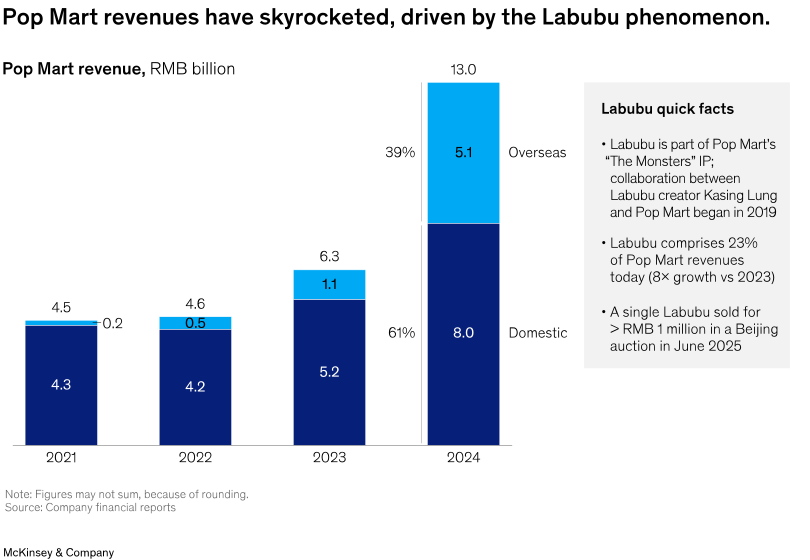
In the collectible toys category, Pop Mart’s Labubu character has become a global sensation. In 2024, after gaining initial traction in Southeast Asia thanks to a viral social media post by Lisa, a singer with the Korean pop group Blackpink, Labubu has since expanded into North America and Europe. Endorsements from celebrities such as Rihanna, Kim Kardashian, and David Beckham have fueled global visibility. Inspired by Nordic mythology and classic European fairy tales, Pop Mart’s Monsters line of collectible toys, which includes the wildly popular Labubu character, experienced a staggering 726 percent revenue growth in 2024, reaching 3 billion renminbi and accounting for 23 percent of the company’s total revenues. Notably, international sales now make up 39 percent of Pop Mart’s revenue, a step-change increase from just 4 percent in 2021 (Exhibit 5).
The blind box collectible toy market, once a niche category, has grown into a 10 billion renminbi industry in China over the past decade. Pop Mart has been a key player in this segment, offering a diverse range of products.
Foreign brands are launching and scaling again in China
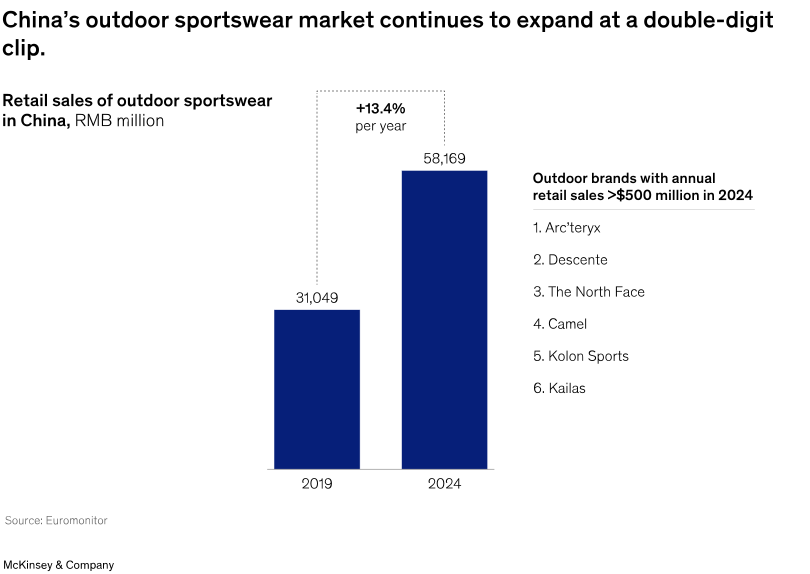
Despite a more tempered growth environment, foreign brands continue to find fertile ground for scaling in China, with several new entrants achieving remarkable success in recent years. The outdoor sportswear category exemplifies this trend, with six brands launched or significantly scaled in the past few years now surpassing USD 500 million in annual revenues. By comparison, no outdoor-dedicated brand had reached this milestone as recently as 2019. Over the past five years, outdoor sportswear sales in China have doubled, reflecting a growing consumer interest in active lifestyles and outdoor activities.
These brands represent a diverse array of countries, including the United States, Japan, Korea, Canada, and France. While some operate as wholly-owned entities, others have partnered with Chinese firms through joint ventures to navigate the local market. This resurgence of foreign brands highlights the enduring appeal of international products in China and underscores the opportunities for global companies to tap into the country’s evolving consumer landscape (Exhibit 6).
Closing thought
While challenges remain, the first half of 2025 reveals a more dynamic and globally engaged China than many had anticipated. Chinese consumers have moved forward, with retail sales showing double-digit growth across several major high-value categories—especially EVs. A surge in innovation and shifting consumer behavior are propelling this momentum, making China’s evolving consumer landscape one to watch closely.