Every organization aspires for its transformation to deliver sustainable impact. But achieving that outcome requires more than just a vision; it demands rigor.1 Rigor is the disciplined execution that turns bold ideas into measurable, lasting results. In addition to cultivating employee will2 and building critical skills, executing a plan for these bold ideas with rigor ensures ambitious transformation targets are met in a timely manner and cultures are set up to respond creatively and quickly to unforeseen circumstances.
We studied holistic transformations at 72 companies to see whether those that deployed a particularly rigorous approach performed better than the companies that did not (see sidebar, “Our methodology”). We found that companies that embody rigor in their approaches and cultures have an exponentially higher likelihood of successfully reaching their transformational targets.3 These companies consistently met transformation targets, demonstrated stronger organizational health, and yielded higher returns after their transformations were complete.
In this article, we discuss the attributes, behaviors, and actions that distinguish these high performers and the practices that helped them translate ambition into lasting performance.
Why rigor matters
The early stages of a transformation are often defined by intensity and momentum. Energy is high, change feels urgent, and teams rally around quick wins and visible progress. Sustaining the pace becomes significantly harder as competing priorities emerge and change fatigue sets in. Even when companies set bold targets, many struggle to stick to their plans, solve problems creatively, and inspire a culture that works quickly and well together to achieve big goals.
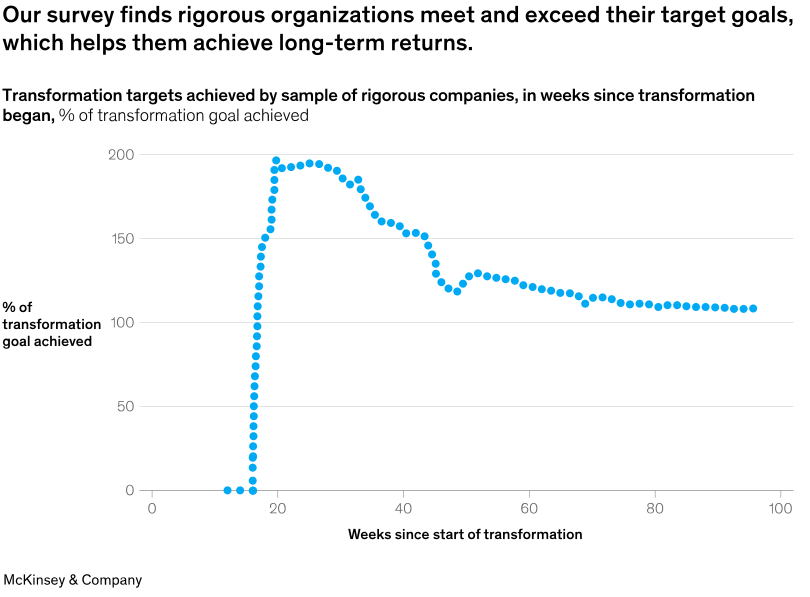
Rigorous companies embody three important traits: speed, resilience, and consistency. Companies that excelled in accomplishing their transformations exhibited these three characteristics throughout the entire effort. Companies that best exemplify rigor, however, consistently met or stayed above 100 percent of their overarching transformation targets even after their initial spikes in progress, signaling a greater potential for long-term returns from their transformation (Exhibit 1). Rigorous companies also achieved 1.9 times excess TSR from the start of the transformation to two years after, according to McKinsey analysis.
Rigor also reinforces a healthier transformation mindset and infrastructure within the company culture that sustains change. According to our analysis, rigorous companies were 1.6 times more likely to be in the top or second quartile of the Organizational Health Index score compared with less rigorous companies, proving that rigor also lends itself to better work cultures, management practices, and employee experiences.
The three elements of rigor
Rigor does not imply rigidity. Rigorous organizations hold a high bar. They commit to their plans and set a goal for when to achieve them, but they do so without becoming inflexible. These organizations are both resilient and adaptive.
Ultimately, rigor is about disciplined execution in service of outcomes, not blind adherence to a plan. It means knowing when to stay the course—when the value is real and within reach— and when to adjust the path to protect speed, consistency, and long-term impact.
Speed
Having speed means more than meeting deadlines; it means acting decisively and executing at pace without sacrificing expectations for performance. From our transformation interviews, leaders who sustained transformation momentum described how they created clarity of ownership for tasks or initiatives, empowered frontline teams to respond proactively, and removed bureaucratic barriers that slow decision-making. In these organizations, employees at every level understood the “why” behind each initiative and had the authority to move it forward. This combination of disciplined implementation and organizational agility enabled them to quickly translate their goals into real impact.
For example, one organization realized many decisions were unnecessarily escalated to higher levels of the company. In reviewing how value was being delivered against their plan, leaders saw that delays were not because of lack of capability but rather because of unclear decision rights and diffused accountability. Through structured discussions across business units and senior leadership, they clarified which decisions truly required enterprise-level input and which could be owned regionally. They used templates and frameworks to help facilitate these discussions and outline decision rights. By resetting those guardrails without compromising on performance expectations, the organization preserved a high bar and reduced friction in the way teams worked. The result was faster execution, clearer accountability, and empowered teams.
Top-performing companies launch high-value initiatives quickly and execute them faster, and when companies quickly achieve milestones, the chances of them reaching their overall transformation goal on time or early are higher. Our research showed top-quartile companies stick to their plans and deliver their goals on time. Rigorous organizations moved through the planning phase of the transformation faster, spending a median of 6.8 months in this stage compared with 8.7 months for nonrigorous peers, and maintained discipline on execution in the months that followed. More-rigorous companies saw an acceleration in progress in their transformations between 12 and 18 months and completed most of their overall target within 24 months (Exhibit 2). This finding suggests that once companies build strong execution skills, progress accelerates rather than plateaus.

In our discussions with leaders in rigorous organizations, executives described how during transformations they focused resources on critical initiatives that could reap the greatest value and removed structural barriers to improve their speed. One leader shared, “We stopped trying to move 50 things an inch and instead moved five things a mile.” Another noted that empowering initiative owners to make decisions without multiple layers of approval significantly cut cycle times for decision-making. These practices not only accelerated progress but also reinforced the mindset across the organization that rapid, high-quality execution was possible.
Fundamentally, every successful transformation begins with a clear, unifying mission and vision that articulates what the organization aims to achieve beyond the bottom line and why it matters. Starting with this mission catalyzes an organization to operate at a new clip. A company that rallies behind a shared vision will more effortlessly move in the same direction to achieve big goals with speed, energy, and conviction, translating their ambitions into sustained, meaningful impact.
This clear purpose coupled with active engagement from senior leadership sets the tone for the entire organization and ensures transformation efforts continue steadfastly. When leaders visibly prioritize the transformation, it signals its importance to the broader team. For example, establishing a chief transformation officer to lead a transformation end to end with gravitas and excitement underscores that this effort is not just another project but the organization’s top priority. Leadership engagement also extends to taking swift and decisive action when challenges arise. Whether it involves providing immediate coaching to an individual who needs support or quickly allocating resources to address a gap, timely interventions by top leadership prevent small issues from escalating and ensure the transformation stays on track.
Resilience
Even the most well-designed transformations encounter unexpected obstacles. Rigorous organizations differentiate themselves based on how they respond when progress falters or priorities shift. Companies that lose momentum often cancel or delay initiatives, inhibiting their progress toward their transformation goals. By contrast, rigorous organizations display resilience and adapt without losing focus. They continue to accomplish the milestones, initiatives, and impact they set out to, even in the face of hardship or unforeseen challenges.
Rigorous companies also cancel fewer projects and have strategic initiative portfolios that offer them more opportunity to achieve their broader goals. Our research found that rigorous organizations canceled less than 10 percent of initiatives (Exhibit 3).
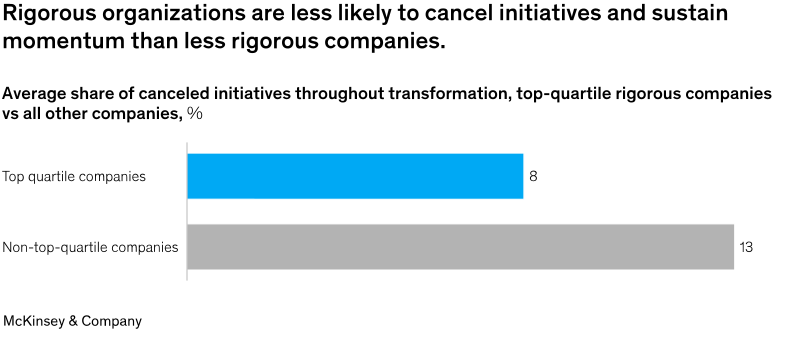
This combination of lower cancellation rates and an active initiative portfolio renewal shows that top performers remain dedicated to achieving the full value of their initiatives and can dynamically adjust to reality. Their steadfastness is paired with creativity: Rather than abandoning ambition when obstacles arise, they find ways to adapt the path forward, protecting outcomes while evolving the plan.
For example, one organization faced mounting operational challenges that threatened to derail progress mid-transformation. Rather than pause, leaders restructured the sequence of initiatives to sustain momentum. When early progress slowed, the transformation leaders ran additional ideation sessions to refill the pipeline and adjusted the meeting cadence to improve the quality of decisions. This adaptability allowed teams to stay aligned and energized to continue delivering value, even under pressure.
One way to improve resilience is to monitor performance using both an internal and external lens. Rather than relying solely on internal metrics, rigorous companies periodically step outside their own four walls to pressure-test their capabilities and assess progress against customers, competitors, and broader industry trends. This outside-in review helps surface early warning signs and identify where an organization may be falling behind or losing momentum, and it can uncover new sources of value. Organizations that institutionalize this review are better able to adapt, backfill stalled initiatives, and proactively sustain momentum over time rather than reacting when value is already at risk.
This ongoing commitment to transformation builds a “transformation muscle” within the organization. The rigor and discipline that built this muscle equip organizations to respond to new challenges and opportunities with greater agility and effectiveness.
Consistency
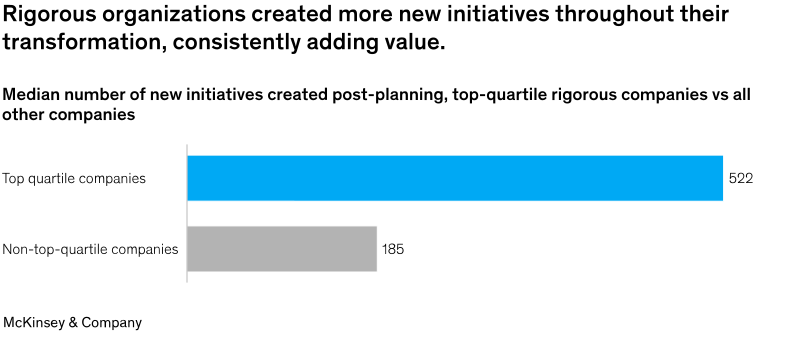
Consistency is an essential complement to speed and resilience. Rigorous companies are disciplined in applying their transformation methodologies to achieve their goals. Our research shows that top-quartile companies added more than four times the number of new initiatives after the planning phase compared with non-top-quartile companies (Exhibit 4).
In resilient organizations, leaders embed learning into their operating models to emphasize its importance. True transformation should be a sustained effort that becomes embedded in the organization’s DNA, not a one-time event. When transformation becomes the way of doing business, it ensures that the organization remains agile and forward-looking. This approach allows companies to consistently assess their performance and adapt to changing market dynamics.
Rigorous companies undergoing transformations establish a weekly performance cadence to review progress across all initiatives and use dashboards that track financial impact, milestones, and initiative progress. By measuring progress in these ways, leaders can identify underperforming projects quickly and intervene early. And teams that get into a rhythm of transparent tracking and rapid course correction tend to stay focused on execution.
When it comes to consistent performance management, we found that rigorous companies define a focused set of critical metrics tied directly to value creation and review them routinely in structured forums, including both weekly calls for individuals who are responsible for initiatives and weekly leadership meetings to steer the direction of initiatives and provide support when roadblocks appear. As part of these meetings, rigorous organizations recognize clear triggers that signal when intervention is required. And when intervention is required, rigorous organizations act.
Psychological safety is important: Employees in environments that are supportive and that emphasize accountability tend to raise issues quickly and ask senior leadership for help. Decisions are informed by clear KPIs and metrics that are continually monitored and embedded into the operating rhythm of the transformation.
A final key element of rigor is ensuring role clarity. When leaders pair clear definitions of roles and responsibilities with consistent meetings and check-ins, they can build team structures that promote accountabillty and transparency. Roadblocks can be cleared quickly, and the organization remains aligned on its transformation goals.
Ultimately, rigor is what turns ambition into an enduring capacity to deliver the aspired impact from transformations. As our research shows, companies that embrace rigor not only achieve their transformation goals but also strengthen their culture, elevate their performance, and position themselves to thrive long after the initial effort is complete. Rigor doesn’t just become a way of doing things; it becomes a competitive advantage.