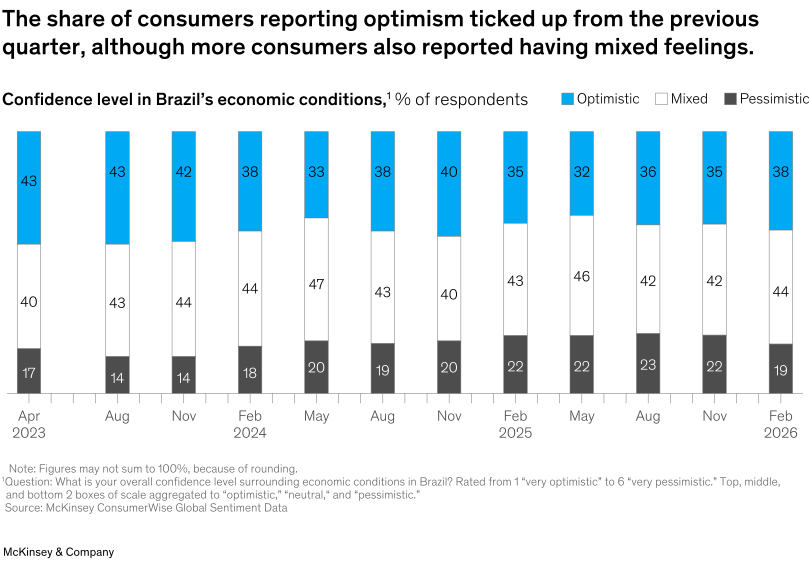
In the first quarter of the year, a higher share of Brazilian consumers reported feeling optimistic than at the end of 2025. But that uptick in confidence was not evident across all demographic groups—and it did not broadly translate into plans to spend more. Instead, the data reveal a more nuanced picture: steady spending on essentials, persistent trade-down behavior, and selective indulgence.
The following charts present insights from our latest ConsumerWise research, exploring how Brazilian consumers are feeling about the economy and their finances.
In the first few weeks of 2026, a greater share of Brazilian consumers reported optimism about economic conditions compared with the previous quarter. That improvement, however, was not evenly distributed. More lower- and middle-income consumers reported feeling optimistic, and fewer reported pessimism, contributing disproportionately to the overall lift in sentiment (some of this may be due to the tax relief proposal that went into effect in 2026 for low-income consumers). Among lower-income respondents, fewer reported inflation concerns versus last quarter (from 46 percent to 42 percent).
A smaller percentage of high-income consumers, by contrast, reported feeling optimistic than in December. The share of high-income respondents who described themselves as optimistic declined by seven percentage points quarter over quarter, while those reporting pessimism increased by four percentage points. Still, a higher share of high-income consumers remained optimistic than other groups overall.
Among high-income consumers, the percentage expressing concern about unemployment fell sharply—from 21 percent in the fourth quarter of 2025 to 11 percent in the first quarter of 2026—while anxiety about other risks rose. A growing share of high-income consumers reported worrying about tariffs, and the share citing personal safety concerns nearly doubled over the past 12 months, rising from 15 percent to 29 percent. Together, these shifts suggest that while labor market fears may be receding, broader unease is growing.
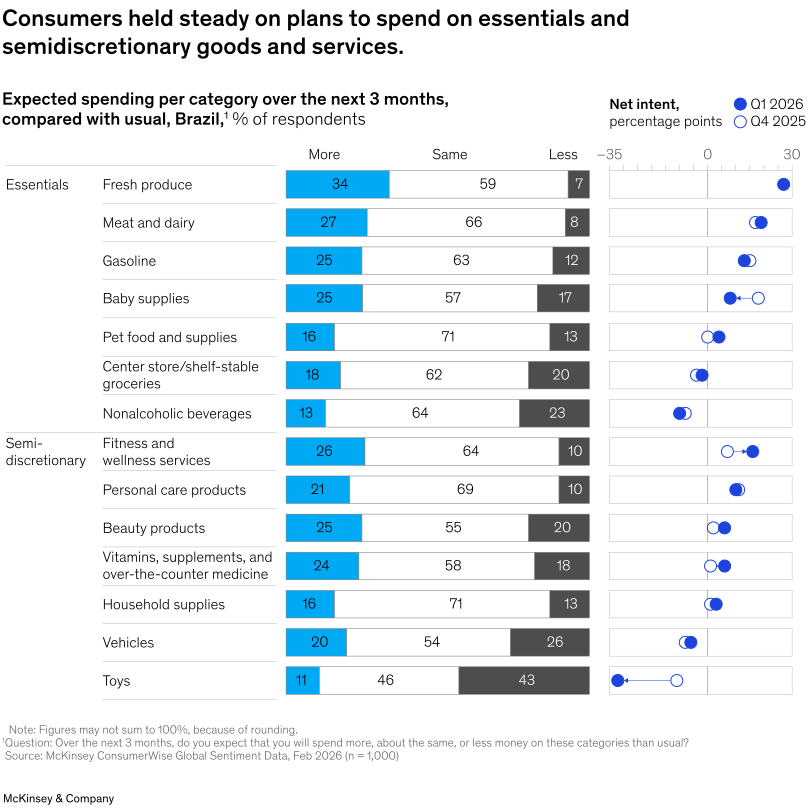
Across income groups, Brazilian consumers reported no major changes in their plans to spend on essential categories over the next three months. Net intent to spend in core areas, including groceries and household staples, held steady compared with the end of last year.
Seasonal patterns were also evident. Net intent to spend on toys declined across income segments compared with the previous quarter, consistent with typical postholiday spending patterns. Outside of seasonal categories and select big-ticket items, expected spending on most essentials and semidiscretionary items remained steady or increased.
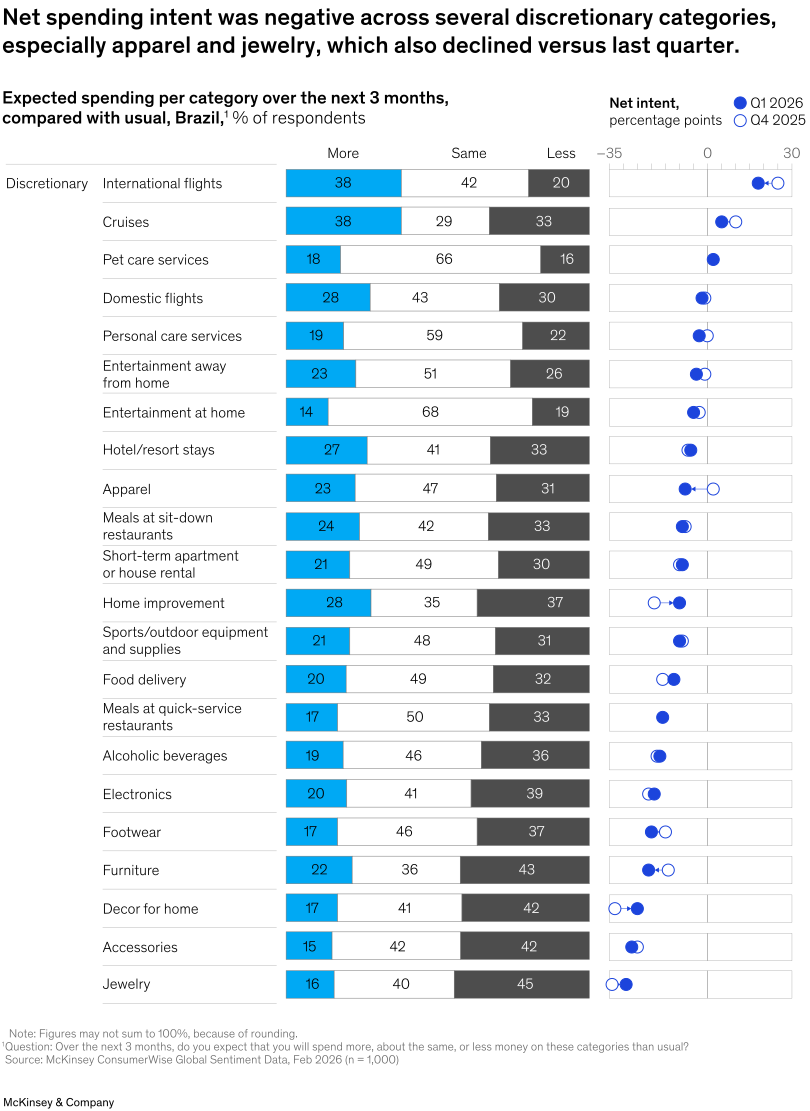
Consumers in Brazil reported negative net intent to spend across several discretionary categories. Changes in intent to spend on categories such as apparel and jewelry reflect seasonal spending patterns. Overall, the planned pullback in discretionary spending may indicate persistent caution in making nonessential purchases.
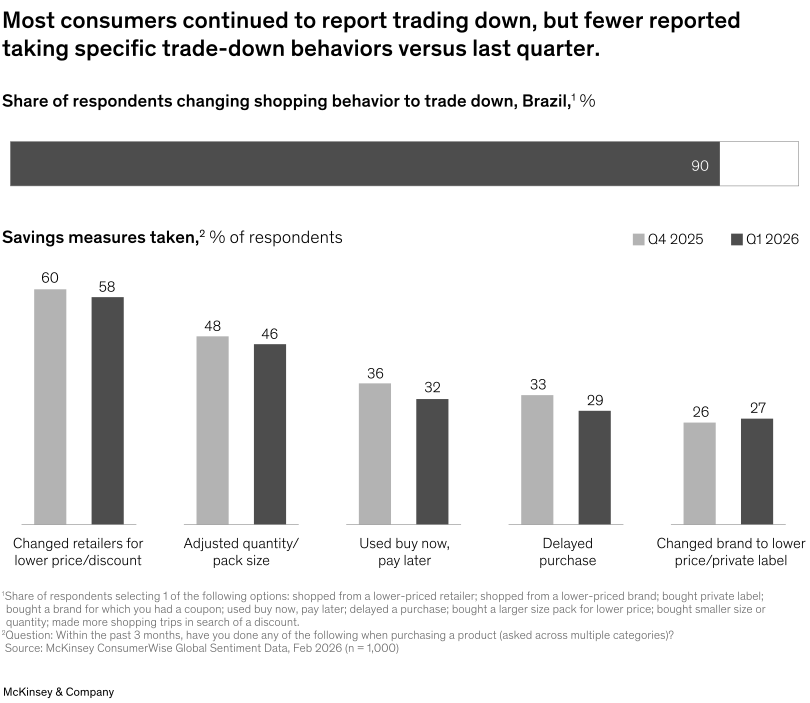
Ninety percent of surveyed consumers in Brazil reported that they had engaged in at least one trade-down behavior over the past three months—unchanged from the previous quarter. That level remains higher than historical norms but is aligned with what we have observed in other markets.
We also observed some variation among income groups. Fewer middle-income consumers reported adjusting pack sizes (down four percentage points), and the share reporting delays in purchases also fell (down six percentage points).
High-income consumers, meanwhile, reported a different approach to spending. The share who said they were delaying purchases increased from 19 percent to 31 percent quarter over quarter; similarly, more reported adjusting quantity or pack size (from 48 percent to 55 percent). At the same time, fewer high-income respondents reported switching to lower-priced brands or private labels.
Notably, a larger share of high-income households (rising from 54 percent in the previous quarter to 65 percent) indicated that their spending over the prior three months was substantially higher. These findings suggest that higher-income consumers are becoming more deliberate in when and how they spend—managing timing and basket size—without necessarily giving up their preferred brands.
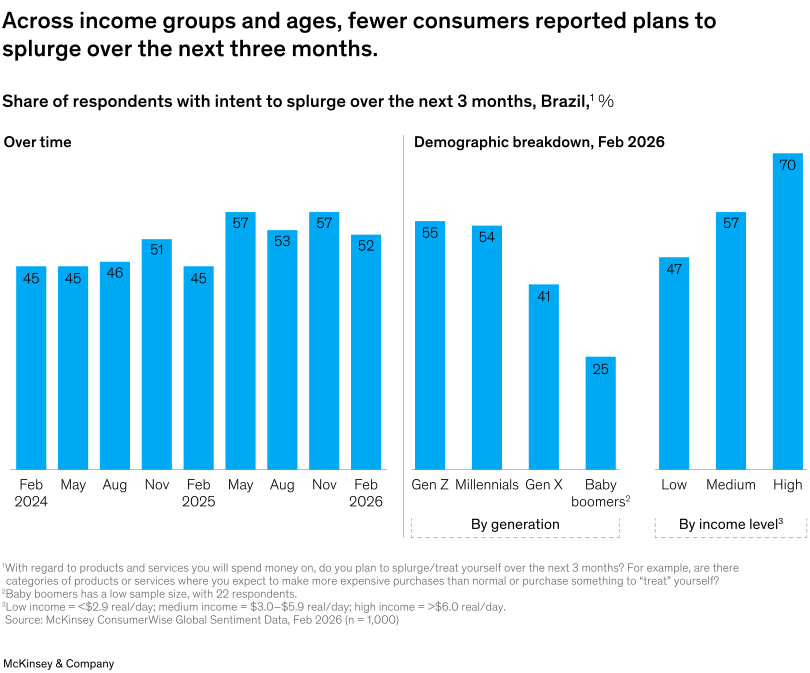
Consumers in Brazil reported a pullback in intent to splurge over the next three months. While a larger share of high-income consumers reported plans to splurge versus other income groups, that share declined by nine percentage points quarter over quarter, compared with a five-percentage-point decline among lower-income consumers.
As we’ve seen in other markets, more Gen Z consumers reported plans to splurge compared with other age groups, just slightly edging out millennials on this front.
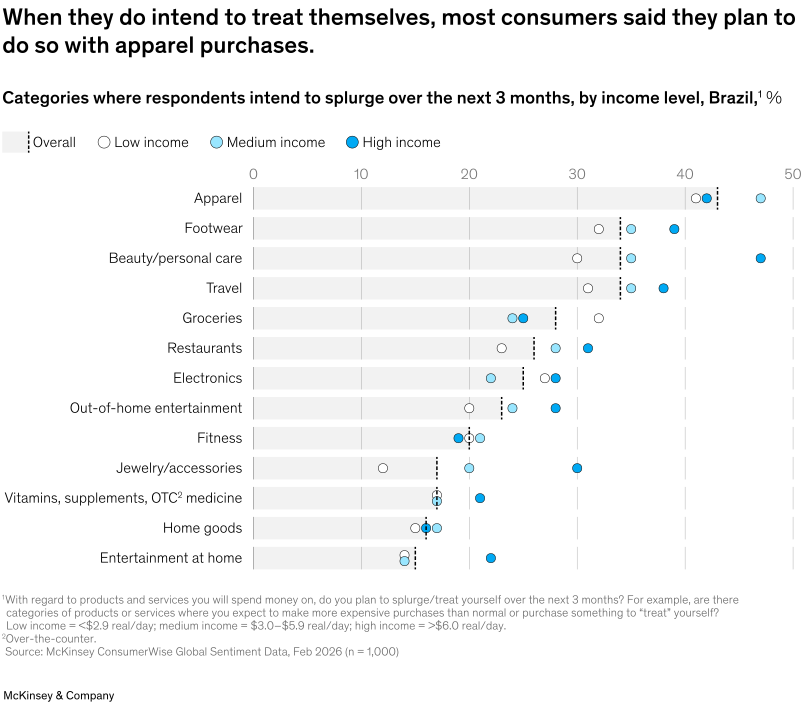
Apparel remained the leading splurge category overall. High-income consumers were more likely than other income groups to make room in their budgets for footwear, travel, jewelry and accessories, and dining out. Beauty is also a noteworthy category: High-income consumers reported the highest intent to splurge in this category, suggesting not only continued interest but also a shift toward more premium offerings. While penetration remains lower among lower-income groups, this likely reflects affordability constraints rather than a lack of demand, indicating potential for broader adoption over time.
Lower-income consumers, for their part, overindexed on groceries and food for home when treating themselves, suggesting that for some households, splurging skewed toward elevated everyday purchases rather than purely discretionary indulgences.
For consumers in Brazil, spending is becoming more deliberate, even among higher-income groups. Demand is relatively weak, and consumers continue to trade down and optimize their baskets. Understanding when consumers feel the need to restrain themselves—or when they feel justified in making selective indulgences—will help consumer businesses better capture growth in the year ahead. To explore more insights or connect with us, visit our ConsumerWise page.
To see previous ConsumerWise insights, visit our page of 2025 research.